AI Manga vs Traditional Manga Creation: A Practical Comparison
Compare AI-assisted and traditional manga creation workflows. Learn where AI saves time, where traditional skills still matter, and how tools like Oniichan bridge the gap between the two approaches.
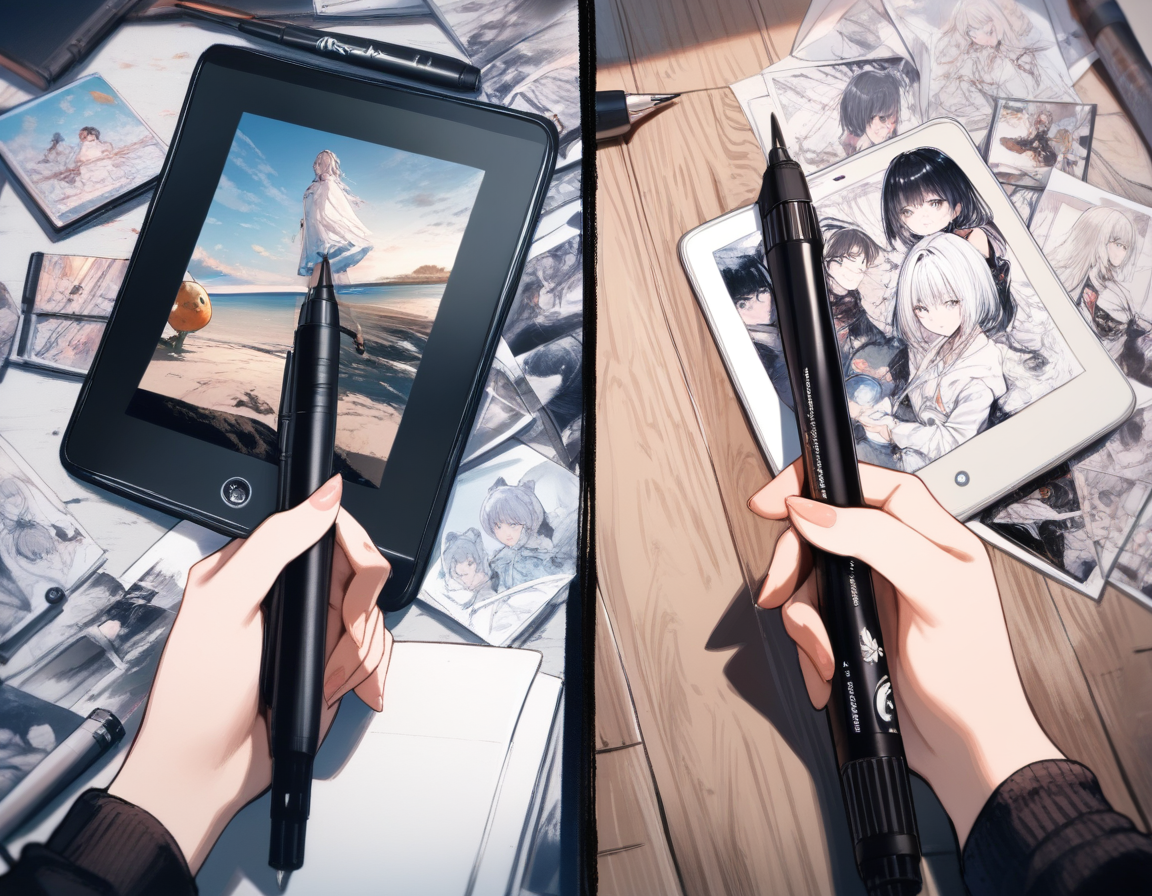
Manga creation has followed roughly the same workflow for decades. A creator develops a story, sketches rough layouts, pencils detailed pages, inks the line art, adds screentones, letters the dialogue, and publishes. This process produces incredible results. It is also extraordinarily time-consuming, requiring years of skill development and hundreds of hours per chapter.
AI-assisted manga creation is changing that equation. Tools that can generate page layouts, render character art, and produce finished panels from text descriptions are making it possible for people who have never picked up a G-pen to create visual stories. But AI is not a simple replacement for traditional skills. It is a fundamentally different approach with its own strengths, limitations, and creative tradeoffs.
This article is a practical, honest comparison of both workflows. No hype, no hand-wringing about the death of art. Just a clear-eyed look at what each approach actually involves.
The Traditional Manga Workflow
To understand what AI changes, you need to understand what the traditional process actually looks like.
Story and Script (1-2 weeks per chapter)
Everything starts with the story. A mangaka develops the plot, writes dialogue, and plans pacing. For serialized manga, this involves coordinating with editors, planning story arcs, and managing the brutal weekly or monthly publication schedule.
Thumbnails and Layout (2-5 days per chapter)
The mangaka creates tiny rough sketches called "name" (pronounced nah-meh). These establish panel layouts, camera angles, character positions, and pacing. This is arguably the most important creative phase because it determines how the reader's eye will move through the story.
💡 Tip: A skilled mangaka might produce 20-30 thumbnail pages in a few days. They look like chicken scratch, but they contain all the essential storytelling decisions.
Penciling (3-7 days per chapter)
Detailed versions of each page where character expressions, backgrounds, action poses, and environmental details get rendered properly. This requires strong foundational drawing skills: anatomy, perspective, composition, and consistent character design across dozens of pages.
Inking (2-4 days per chapter)
Creating clean, reproduction-ready line art. Inking is its own skill set, separate from penciling. The inker makes decisions about line weight, brush texture, and emphasis.
Toning and Effects (1-3 days per chapter)
Screentones, speed lines, impact effects, and background patterns. Modern digital workflows have made this faster, but it still requires aesthetic judgment about density, placement, and effect selection.
Lettering and Dialogue (1-2 days per chapter)
Dialogue, sound effects, and narrative text placed into panels. In Japanese manga, sound effects are often drawn as part of the artwork itself.
Total Time Comparison
| Metric | Traditional (Solo) | Traditional (With Assistants) | AI-Assisted |
|---|---|---|---|
| Time per 20-page chapter | 2-4 weeks | ~1 week | 1 day or less |
| Skill development required | 5-15 years | 5-15 years | Storytelling + aesthetic judgment |
| Cost per chapter | Time investment | Assistant salaries | Tool subscription |
| Iteration speed | Slow (redraw entire page) | Moderate | Fast (regenerate in minutes) |
The AI-Assisted Manga Workflow
AI manga creation follows a fundamentally different pipeline. Instead of manually drawing every element, the creator works at a higher level of abstraction.
1. Story and Outline (30 minutes to 2 hours)
With Oniichan, you describe your manga concept and the AI generates a structured outline with scene descriptions, character profiles, and a world bible. You then edit this outline to match your vision.
💡 Tip: This phase goes faster with AI not because the creative decisions are easier, but because you are working with generated suggestions rather than staring at a blank page.
2. Reference Art Generation (5-15 minutes)
AI tools produce character reference sheets and world reference images before generating manga pages. These ensure visual consistency across all pages. In a traditional workflow, this step would take days.
3. Page Generation (2-5 minutes per page)
Each page is generated from outline context, previous pages, character references, and the world bible. The AI handles layout, character rendering, backgrounds, and composition.
⚠️ Note: The pages will not look like hand-drawn manga. They will have a different aesthetic, with both strengths (consistent rendering, detailed backgrounds) and weaknesses (less dynamic line work, occasional anatomy issues).
4. Editing and Refinement (30 minutes to several hours)
Generated pages often need adjustments. AI manga tools support targeted editing: select a specific panel, regenerate just that area, or describe changes to a specific part of the page. This is where the creator's aesthetic judgment matters most.
Where AI Genuinely Excels
Iteration Speed
The single biggest advantage. In traditional manga, changing a page layout means redrawing entirely. With AI, you can regenerate with a different composition in minutes. Creators report trying 3-5x more layout variations per page.
Consistency at Scale
Maintaining character model consistency across 200 pages is one of the hardest challenges in traditional manga. AI tools using reference images can maintain remarkable consistency across an entire project, extending to backgrounds and environments as well. We explain the full consistency system in our article on character consistency in AI manga.
Background and Environment Detail
Backgrounds are the most time-consuming and least glamorous part of traditional production. Many mangaka hire assistants specifically for this. AI can produce detailed, contextually appropriate backgrounds for every panel without additional time.
Accessibility
Perhaps most importantly, AI manga creation is accessible to people who have great stories to tell but lack drawing skills. This is not about replacing artists. It is about expanding who gets to tell visual stories.
Where Traditional Methods Still Win
Dynamic Action and Composition
Hand-drawn manga has a kinetic energy that AI struggles to match. The best action sequences use exaggerated perspective, impossible camera angles, and deliberately distorted anatomy to convey movement. A skilled mangaka drawing a punch does not draw what it looks like -- they draw what it feels like.
Emotional Subtlety in Faces
The difference between a character who is sad and one who is trying not to be sad might be a single line near the eye. Traditional artists control these micro-expressions with precision. AI tends to produce more generic emotional expressions.
Unique Artistic Voice
Every mangaka has a distinctive visual style. Junji Ito's horror would not work with Eiichiro Oda's art style. ONE's deliberately crude art in One Punch Man is a deliberate creative choice. AI-generated manga has a more homogeneous visual quality.
Panel-to-Panel Storytelling Flow
How a reader's eye moves across the page -- varying panel size, gutter width, bleed, and overlap -- is one of the deepest skills in visual storytelling. Our manga panel layouts guide covers the eight fundamental layouts that AI tools now support. AI tools are improving, but the nuanced control that masters exercise remains a human strength.
Sound Effects as Art
In Japanese manga, onomatopoeia are drawn elements integrated into the artwork. These hand-drawn sound effects carry emotional weight through their lettering style, size, and visual integration. This is an area with a likely lasting human advantage.
| Dimension | AI Manga | Traditional Manga |
|---|---|---|
| Action sequences | Competent but static | Dynamic, kinetic, rule-breaking |
| Emotional subtlety | Broad emotions work well | Micro-expressions possible |
| Artistic voice | Consistent but homogeneous | Unique, recognizable style |
| Page flow control | Basic layout intelligence | Precise reader-eye management |
| Sound effects | Text-based | Art-integrated, emotional |
The Bridge Approach
The most interesting developments are hybrid workflows that use AI for what it does best and human creativity for what it does best.
AI for Drafting, Human for Finishing
Some creators use AI to generate rough page layouts, then draw over them to add dynamic line work and emotional subtlety. This combines AI iteration speed with hand-drawn artistic quality.
Human Story, AI Execution
Others focus entirely on story, dialogue, and pacing, using AI tools for all visual execution. The visual quality may not match hand-drawn manga, but the storytelling can be excellent.
AI Backgrounds, Human Characters
A practical middle ground: draw characters by hand for maximum expressiveness and use AI for backgrounds and environments. This mirrors the traditional mangaka-plus-assistants workflow.
Oniichan's Approach
Oniichan is built around the bridge philosophy. The platform handles technical execution while keeping the creator in control of every storytelling decision:
- You describe the concept -- the AI generates a structured outline
- You edit the outline -- adjusting story beats, characters, and scene details
- You review reference art -- ensuring characters look the way you envision them
- The AI generates pages -- from your approved outline and references
- You edit pages and panels -- refining until the output matches your vision
The Honest Assessment
AI manga creation is not going to replace hand-drawn manga. The artistic depth, emotional nuance, and distinctive personality of human-drawn manga are real advantages that current AI cannot replicate.
But AI manga creation is making visual storytelling accessible to millions of people who could never produce it traditionally:
- Writers who have always wanted to create manga but cannot draw
- Hobbyists who want to tell stories without a multi-year art investment
- Creators who want to prototype ideas visually before committing to full traditional production
The question is not "which is better?" The question is "which approach serves your creative goals?"
- If your goal is the highest possible quality manga art, traditional skills will take you further
- If your goal is to tell a visual story and share it with the world, AI tools get you there in a fraction of the time
- And increasingly, the best answer might be both
Try It Yourself
For a detailed comparison of how different AI manga tools handle these challenges, see our comparison of the best AI manga generators. If you are curious about AI-assisted manga creation, the best way to understand it is to try it. Oniichan lets you go from concept to complete manga pages in a single session. Start with a story idea, generate an outline, review the reference art, and produce your first pages.
You might be surprised by what you can create.
Ready to create your own character?
Turn your OC ideas into polished anime character art with consistent designs. No drawing skills needed.