Manga Panel Layouts Guide: 8 Layouts Every Creator Should Know
A deep dive into manga panel layouts and composition. Learn when to use full-page splashes, grid layouts, focus panels, and more to tell better visual stories.
Panel layout is the invisible language of manga. Before a reader processes a single word of dialogue or studies a character's expression, the arrangement of panels on the page has already told them how to feel. A full-page image screams importance. A grid of small panels accelerates time. A tall narrow panel builds tension. The layout is the grammar, and the panels are the words.
Understanding these eight fundamental layouts will transform how you approach manga creation, whether you are drawing by hand or generating pages with Oniichan's AI manga system.
The Fundamentals: How Panel Layout Affects Reading
Before diving into specific layouts, it helps to understand the underlying principles that make all of them work.
Reading Direction and Flow
Traditional manga reads right-to-left, top-to-bottom. Western comics read left-to-right. Manhwa and webtoons read top-to-bottom in a vertical scroll. The reading direction affects how panel layouts function, because the reader's eye follows a specific path across the page.
In manga, the reader's eye enters from the top-right and exits at the bottom-left. Panels guide this journey. The first panel should be positioned where the eye naturally enters, and the last panel should be where the eye naturally exits. When a layout violates this flow, the reader stumbles. When it follows the flow smoothly, the reading experience feels effortless.
Panel Size and Emphasis
Larger panels carry more visual weight. They tell the reader "slow down, pay attention, this matters." Smaller panels move the eye quickly, creating pace and rhythm.
A page with one massive panel and two small ones says "this is a moment of impact, with brief reactions." A page with eight equally-sized panels says "here is a steady sequence of events, each equally important." The relative sizes of panels on a page create a hierarchy of importance.
Gutters and Breathing Room
The space between panels -- the gutter -- controls pacing:
- Wider gutters create pauses and breathing room
- Narrow gutters create speed and urgency
- Overlapping panels create intensity and drama
- Borderless panels create a sense of openness or dreamlike quality
The gutter is the pause between beats, and its width is the length of that pause.
💡 Tip: Think of gutters as the musical rests in a composition. Without rests, music is just noise. Without gutters, manga pages are visual chaos.
Layout 1: Full Page
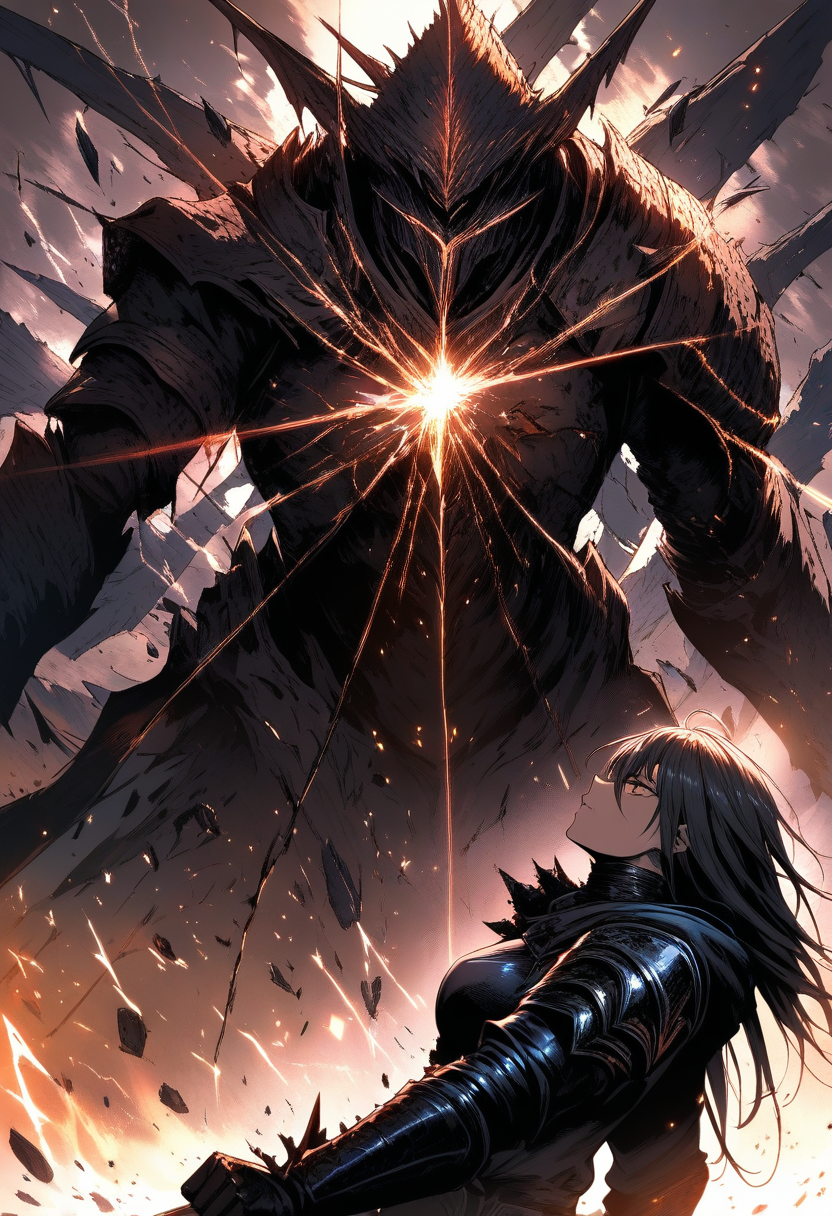
The full-page layout dedicates the entire page to a single image. No panels, no divisions, just one continuous scene filling the entire page space.
When to Use It
Full-page layouts are your most powerful tool for emphasis:
| Use Case | Example |
|---|---|
| Dramatic reveals | A villain's true form, a breathtaking landscape seen for the first time |
| Establishing shots | Introducing a new location -- a sprawling city, a dark forest |
| Climactic impacts | The final blow of a fight, the moment of confession in a romance |
| Chapter openings/endings | Setting the tone or leaving a lasting impression |
Famous Examples
Think of the first time Luffy uses Gear Fifth in One Piece. Or the double-page spreads in Attack on Titan when the Colossal Titan appears over the wall. Or any major transformation sequence in Dragon Ball. These moments use full-page layouts because the story demands maximum visual impact.
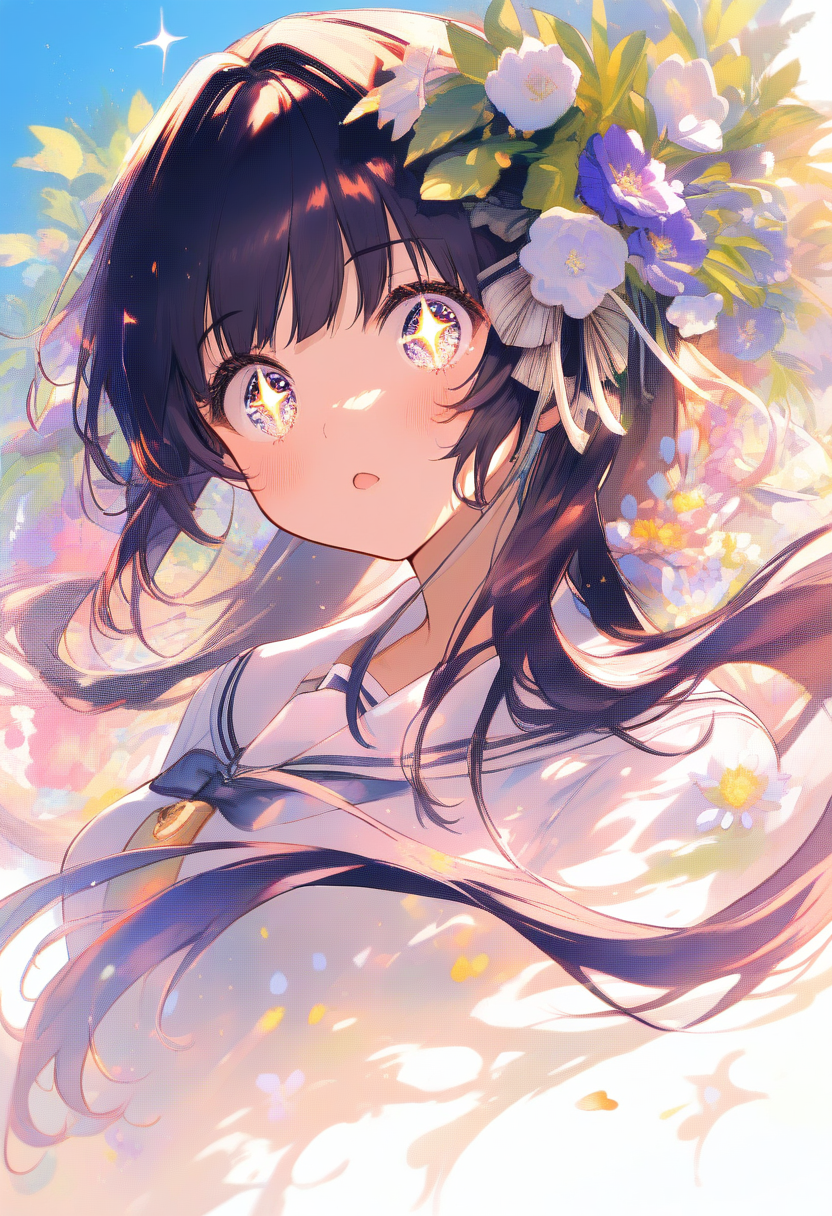
Layout 2: Vertical Two-Panel Split
The page is divided into two tall, vertical panels side by side. Each panel runs the full height of the page.
When to Use It
- Parallel moments. Two things happening simultaneously in different locations
- Confrontations. Two characters facing each other, each getting their own vertical panel
- Before and after. The same scene or character shown in two states
- Mirror compositions. Characters in similar poses, with the split highlighting symmetry or contrast
Famous Examples
Death Note uses this layout extensively during the cat-and-mouse exchanges between Light and L, giving each character their own visual space while maintaining the tension of their confrontation.
💡 Tip: The two panels in a vertical split are inherently compared by the reader. Whatever you place in them will be read as related or contrasting. Use this to your advantage -- juxtapose elements that create meaning through their pairing.
Layout 3: Horizontal Two-Panel Split
The page is divided into two wide, horizontal panels stacked on top of each other.
When to Use It
- Reaction sequences. An event in the top panel, the reaction in the bottom panel
- Time progression. The same location at two different times
- Establishing then focusing. A wide shot on top, a closer view below
- Dialogue exchanges. A slower-paced conversation, giving each statement room to breathe
Famous Examples
Slice-of-life manga like Yotsuba&! and Barakamon use horizontal splits for quiet, observational moments. A wide shot of a summer landscape on top, a character's peaceful expression below. The horizontal format creates a sense of calm and spaciousness.
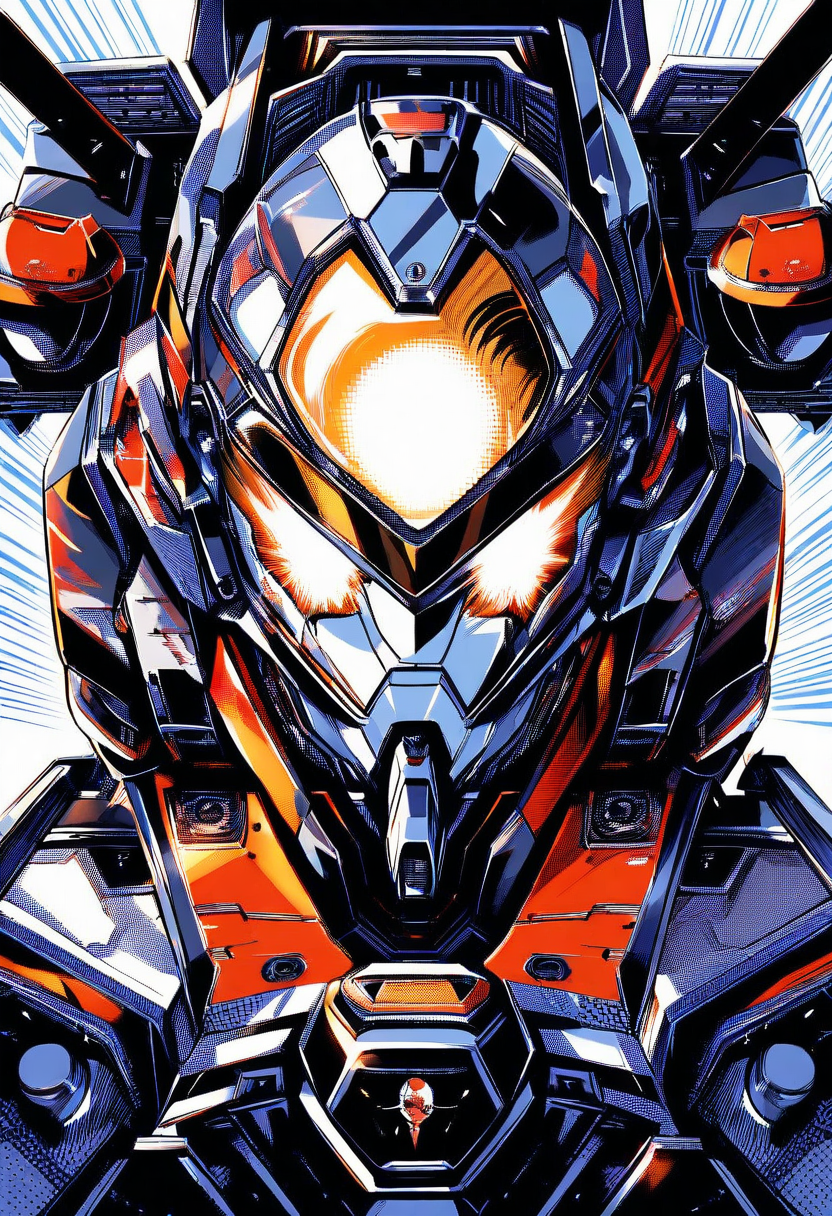
Layout 4: Top Focus
A large panel occupies the top two-thirds (or more) of the page, with one or more smaller panels along the bottom.
When to Use It
| Use Case | How It Works |
|---|---|
| Establishing shots with reactions | Dramatic scene on top, character reactions below |
| Action with aftermath | Big action moment on top, quick result beats below |
| Introductions | Character or location introduced prominently, supporting details underneath |
| Scene setting | Large establishing image, then transition panels below |
Famous Examples
Naruto uses top-focus layouts frequently when introducing jutsu. The jutsu activation fills the large top panel with dynamic energy, and the smaller bottom panels show opponents' shocked reactions.
Layout 5: Bottom Focus
The inverse of top focus. One or more smaller panels sit at the top, with a large panel dominating the bottom of the page.
When to Use It
- Building to a reveal. Small setup panels on top create context, then the large bottom panel delivers the payoff
- Escalation. Quick panels building tension, followed by a large panel that releases it
- Arrival moments. Small panels showing a journey, then a large panel showing the destination
- Emotional climaxes. Small panels building context, then a large panel showing emotional release
Famous Examples
Horror manga like Junji Ito's work uses bottom-focus layouts masterfully. Small panels at the top create normalcy, and then the bottom panel reveals something terrifying. The layout guides the reader's eye downward into the horror, with no escape.
Demon Slayer uses this layout when characters activate breathing techniques. Small panels show preparation, then the large bottom panel explodes with visual spectacle.
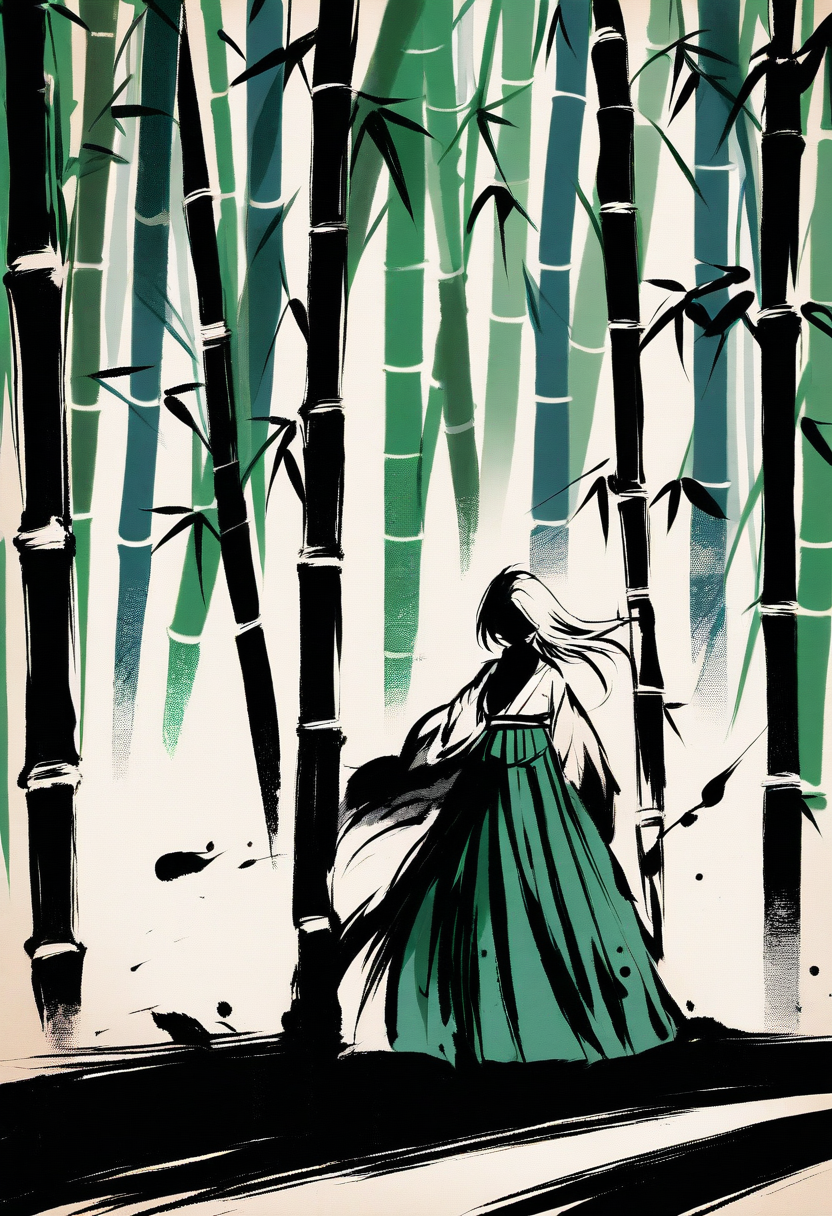
Layout 6: Three-Row
The page is divided into three horizontal rows, each containing one or more panels. This creates a structured, rhythmic reading experience.
When to Use It
- Sequential action. Three beats of a fight, three steps of a process -- beginning, middle, end within a single page
- Conversation. Dialogue exchanges where each row represents one beat: statement, response, reaction
- Training or montage sequences. Showing progress through three distinct moments
- Steady pacing. When you need the story to move at a measured, consistent pace
Famous Examples
Slam Dunk by Takehiko Inoue is a masterclass in three-row layouts for basketball sequences. Each row captures one beat: the setup, the move, the score (or miss). The structure mirrors the rhythm of the sport itself.
Layout 7: Four-Grid
The page is divided into four equal panels in a two-by-two grid.
When to Use It
| Use Case | Why It Works |
|---|---|
| Rapid sequences | Four quick beats in rapid succession |
| Multiple perspectives | Four characters reacting to the same event |
| Equal weight | Four equally important moments |
| 4-koma style | The classic four-panel comedy format |
Famous Examples
Yotsuba&! and Azumanga Daioh popularized the four-panel (4-koma) format for comedy manga. Each panel delivers one beat: setup, development, turn, punchline. The equal sizing gives each beat equal weight, perfect for comedic timing.
In action manga, Bleach uses four-grid layouts during fast sword clashes where attack and counter happen in fractions of a second.
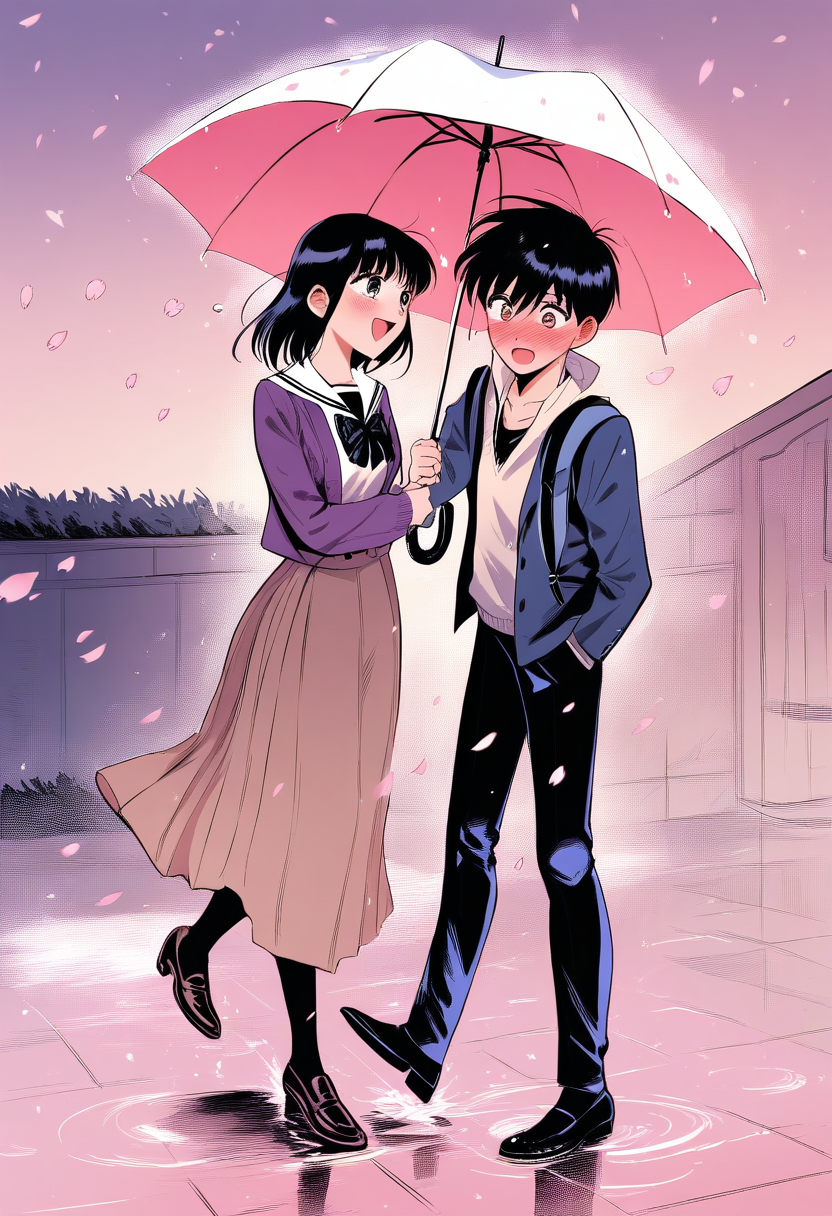
Layout 8: Focus-Detail
One large primary panel dominates the page, surrounded by smaller detail panels that zoom in on specific elements or show additional context.
When to Use It
- Scene with details. A wide shot of a room with close-ups of important objects
- Action with micro-moments. A large action panel with small panels capturing specifics -- a blade clash, feet pivoting, eyes widening
- Discovery sequences. A character exploring an environment, with detail panels showing what they find
- Emotional complexity. A character's overall demeanor shown large, with detail panels revealing subtle emotional tells
Famous Examples
One Piece uses focus-detail layouts brilliantly during emotional scenes. A large panel shows a character standing alone, while smaller panels zoom into trembling hands, watering eyes, and a clutched object. The combination creates emotional depth that neither wide shot nor close-up could achieve alone.
Detective Conan uses this layout to show crime scenes: the large panel establishes the scene, while detail panels highlight clues.
Using Layouts in Oniichan
Oniichan's manga generation system supports all eight layout types. When generating pages, the system selects layouts based on the scene content from your outline, or you can guide layout selection through your scene descriptions.
Understanding these layouts makes you a better collaborator with the AI system. When you write your outline, think about which layout serves each scene:
| Scene Type | Recommended Layout |
|---|---|
| Dramatic reveal | Full Page |
| Tense confrontation | Vertical Two-Panel Split |
| Quick action sequence | Three-Row or Four-Grid |
| Scene with important details | Focus-Detail |
| Building to a climax | Bottom Focus |
| Establishing a new location | Top Focus |
The more deliberately you think about layout during the outlining phase, the more effective your generated pages will be. For a full walkthrough of taking a story concept through outlining and into finished pages, see our guide on how to turn your story into a manga with AI.
Combining Layouts Across a Chapter
Individual layouts create moments. The sequence of layouts across a chapter creates rhythm.
A well-paced manga chapter varies its layouts deliberately. Consider this flow:
- Open with a full-page establishing shot
- Transition into three-row layouts for steady narrative progression
- Use a vertical split for a confrontation
- Build through four-grid panels of rapid action
- Land on a bottom-focus layout with a cliffhanger reveal
That variation keeps the reader engaged. A chapter that uses the same layout on every page feels monotonous regardless of content. A chapter that varies layouts creates visual dynamics that support and amplify the narrative dynamics. If you want to refine individual panels after generation, our guide to AI panel editing covers the full editing workflow.
Start Creating
Panel layout separates manga from illustrated prose. It is what makes manga a unique storytelling medium rather than just pictures with words attached. Understanding these eight fundamental layouts gives you a vocabulary for visual storytelling that will improve every page you create.
Try Oniichan's manga generator and see how these layouts work in practice. Generate a chapter, pay attention to how different layouts serve different scenes, and develop your own sense of visual rhythm. The more you create, the more intuitive layout choices become. And if you want to make the most of your scene descriptions, check out our prompt writing guide for AI manga generation.
Ready to create your own character?
Turn your OC ideas into polished anime character art with consistent designs. No drawing skills needed.