AI Marvel OC Maker
AI Marvel OC Maker
Marvel OC Maker: Hero Registration
The Marvel Universe is a crowded place. Thousands of heroes, villains, and everyone in between occupy every corner of New York City alone. What makes a new marvel oc maker character stand out isn't more power — it's a sharper identity. This superhero character creator guide walks you through the Marvel OC creation process the way Marvel's own character designers approach it: power source first, then identity, then costume, then story.
SECTION A: Power Source Classification
Every Marvel character's abilities trace back to a source. That source determines not just what they can do, but how society treats them, what organizations they align with, and what stories make sense for them.
MUTANT (X-Gene) Powers manifest at puberty (usually). Mutants are born, not made. The X-Gene is genetic, heritable, and the source of systemic prejudice in the Marvel Universe. A mutant OC automatically inherits a civil rights narrative — they didn't choose their powers, the world fears them for it, and they must decide whether to hide, fight, or advocate.
Design implications: Mutant powers are often visible. Physical mutations (blue skin, wings, extra eyes) are common and carry social stigma. The more visible the mutation, the harder the character's life.
ENHANCED HUMAN (Experiment/Accident) Captain America, Spider-Man, the Hulk — normal humans transformed by science, radiation, or freak accidents. Enhanced humans are made. They chose (or had forced upon them) a transformation.
Design implications: Enhanced humans often look normal when powered down. Their costume is their identity barrier. The suit matters more here than for any other category because it's the only thing that marks them as extraordinary.
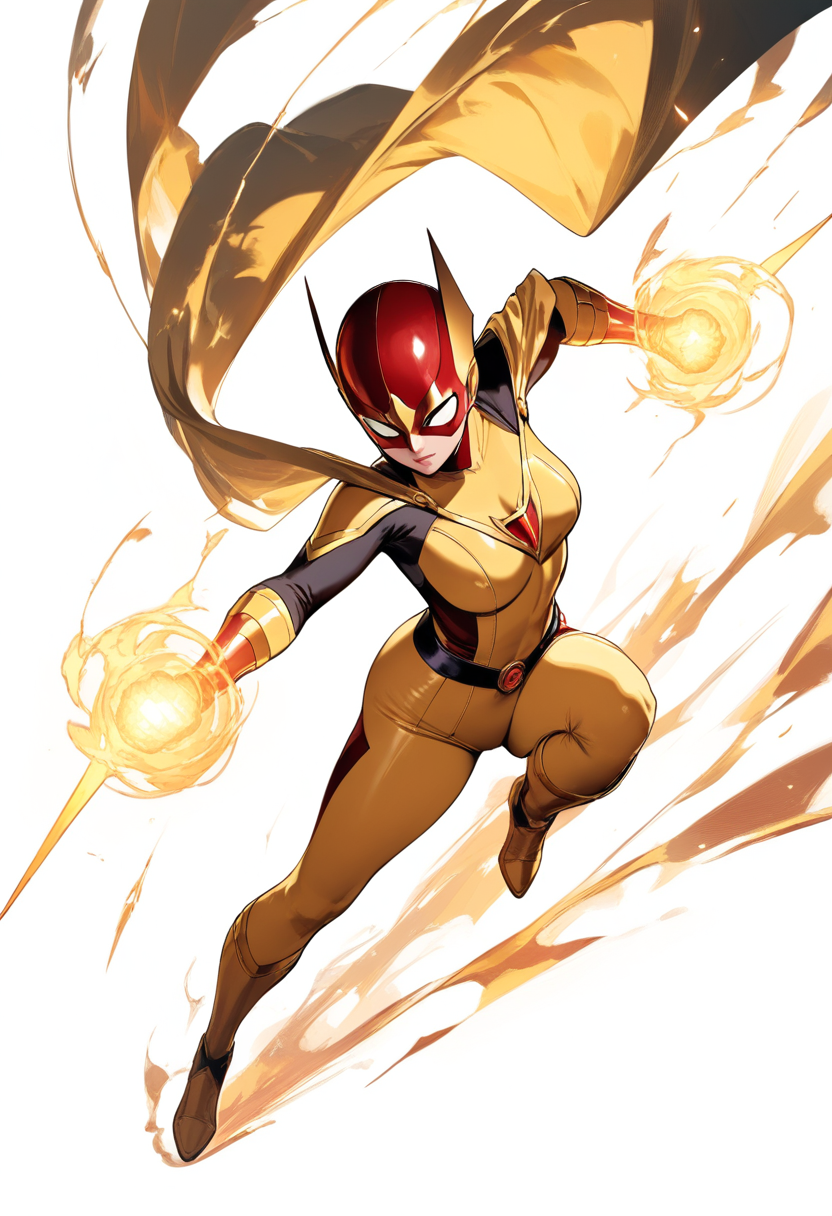
COSMIC (Space/Celestial Energy) The Silver Surfer, Captain Marvel (Carol Danvers), Nova — characters empowered by cosmic forces, alien technology, or celestial entities. Cosmic-tier characters operate on a different scale. City-level threats are beneath them; they deal with galactic extinction events.
Design implications: Cosmic characters glow. Literally — energy effects, star-field patterns, luminous eyes. Their designs trend toward the abstract and the vast. Colors skew toward deep purples, cosmic blues, golds, and silvers.
TECH (Genius/Gear) Iron Man, War Machine, Riri Williams — no innate superpowers, just exceptional intelligence and the resources to build solutions. Tech heroes are the most grounded and often the most relatable.
Design implications: The suit IS the character. Every design detail is an engineering choice. Tech heroes evolve visually as they upgrade — Mark I looks nothing like Mark 50. Design your OC's gear at a specific iteration.
MAGIC (Mystical Arts) Doctor Strange, Scarlet Witch, Magik — power drawn from mystical dimensions, ancient artifacts, or innate sorcery. Magic in Marvel has rules, but the rules are flexible enough to justify almost anything.
Design implications: Cloaks, glyphs, glowing hands, ancient symbols, levitation. Magical characters carry artifacts (the Eye of Agamotto, the Darkhold) that serve as both power sources and visual anchors.
SECTION B: Superhero Identity Design
A Marvel hero's identity has three components, and all three need to work together.
The Name
Marvel names follow patterns. Understanding them helps you create names that feel authentic:
- Descriptive power names: Spider-Man, Iceman, Storm — the name IS the power
- Title + modifier: Captain America, Captain Marvel, Black Panther — authority + identity
- Mythological/symbolic: Thor, Valkyrie, Loki — borrowed gravitas from existing mythology
- Abstract/evocative: Rogue, Gambit, Dazzler — a mood or concept rather than a literal power
- Real name only: Luke Cage, Jessica Jones — deliberate rejection of the superhero naming convention
Naming test: Say the name out loud. Does it sound like something J. Jonah Jameson would yell in a headline? Then it works.
The Costume Color Psychology
| Color | Marvel Association | Examples |
|---|---|---|
| Red | Aggression, passion, sacrifice | Spider-Man, Daredevil, Scarlet Witch |
| Blue | Trust, stability, authority | Captain America, Beast, Cyclops |
| Gold/Yellow | Power, cosmic significance | Wolverine, Sentry, Nova |
| Green | Nature, transformation, outsider status | Hulk, She-Hulk, Polaris |
| Black | Stealth, sophistication, anti-hero edge | Black Panther, Black Widow, Venom |
| White | Purity, cosmic power, new beginning | Moon Knight, Storm (mohawk era), Emma Frost |
| Purple | Royalty, mysticism, villainy | Hawkeye, Psylocke, Thanos |
Most Marvel costumes use two colors — a dominant and an accent. Three is the maximum before the design gets busy. Pick your two and commit.
SECTION C: The Costume Symbol
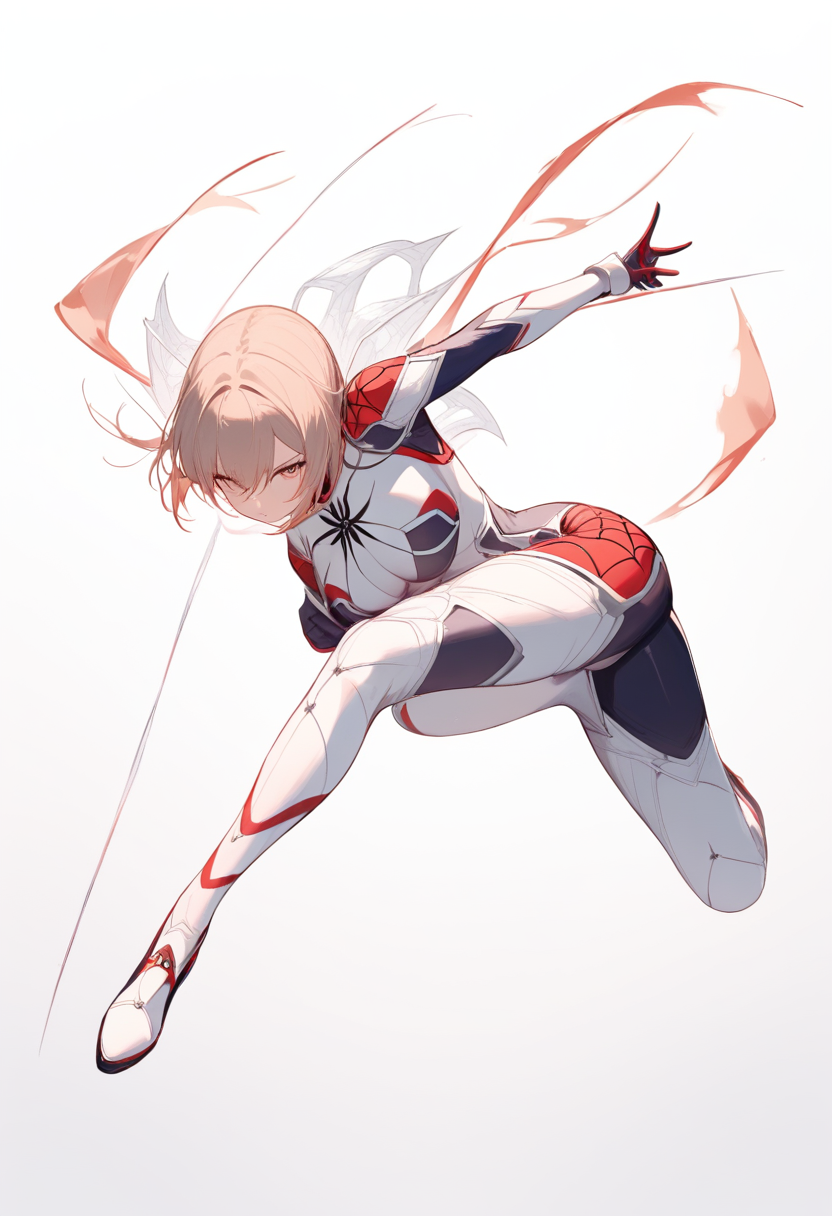
Every memorable Marvel costume has a chest symbol or visual focal point. It's the element that appears on merchandise, fan art, and that readers identify from across a comic page.
How to design a chest symbol:
- Take your hero's core concept and reduce it to one shape
- That shape must be recognizable at 1 inch tall
- It should work in black-and-white (no color dependency)
- It should connect to the character's story, not just their power
Spider-Man's spider. Punisher's skull. The X-Men's X. Captain America's star. Each is dead simple and loaded with meaning.
SECTION D: Origin Story Archetypes
Marvel origins tend to follow recognizable patterns. Knowing the archetypes helps you subvert them or lean into them intentionally.
The Accident: Power comes from an unplanned event. Spider-Man's radioactive spider, Hulk's gamma bomb, Daredevil's chemical spill. The character must decide what to do with abilities they never asked for.
The Legacy: Power is inherited or passed down. Black Panther, Captain America (Sam Wilson), Ms. Marvel (Kamala). The character struggles with living up to a predecessor.
The Experiment: Power is deliberately sought or inflicted. Captain America (Steve Rogers), Wolverine's adamantium, Deadpool. There's always a cost — physical, psychological, or moral.
The Awakening: Power was always there, dormant until triggered. Most mutants, Scarlet Witch, Inhuman Terrigenesis. The character's identity fractures around the question: was I always this?
The Bargain: Power comes with strings attached. Ghost Rider's deal with Mephisto, Doctor Strange's commitment to the mystic arts. The character's power and their sacrifice are inseparable.
SECTION E: Team Affiliation
Where your OC stands in the Marvel organizational landscape shapes their story more than their power set.
- X-Men — Mutant. Carries the civil rights allegory. Based at the Xavier School or Krakoa. Team dynamics are family dynamics.
- Avengers — Earth's premier team. High-profile, government-adjacent, media scrutiny. Membership is a status marker.
- Defenders — Street-level. New York neighborhoods, organized crime, personal stakes. Less cosmic, more grounded.
- Guardians of the Galaxy — Space. Misfits by definition. If your OC doesn't fit anywhere on Earth, they fit here.
- S.H.I.E.L.D./S.W.O.R.D. — Spy/military organization. Your OC works within a bureaucracy, with all the moral compromise that implies.
- Solo — No team. Punisher, Moon Knight, Ghost Rider. Loners carry their own stories but lose access to team dynamics.
- Villain organization — HYDRA, the Brotherhood, the Hand, AIM. Your OC might be a villain, a double agent, or someone trying to escape.
SECTION F: Prompt Techniques for Marvel OCs
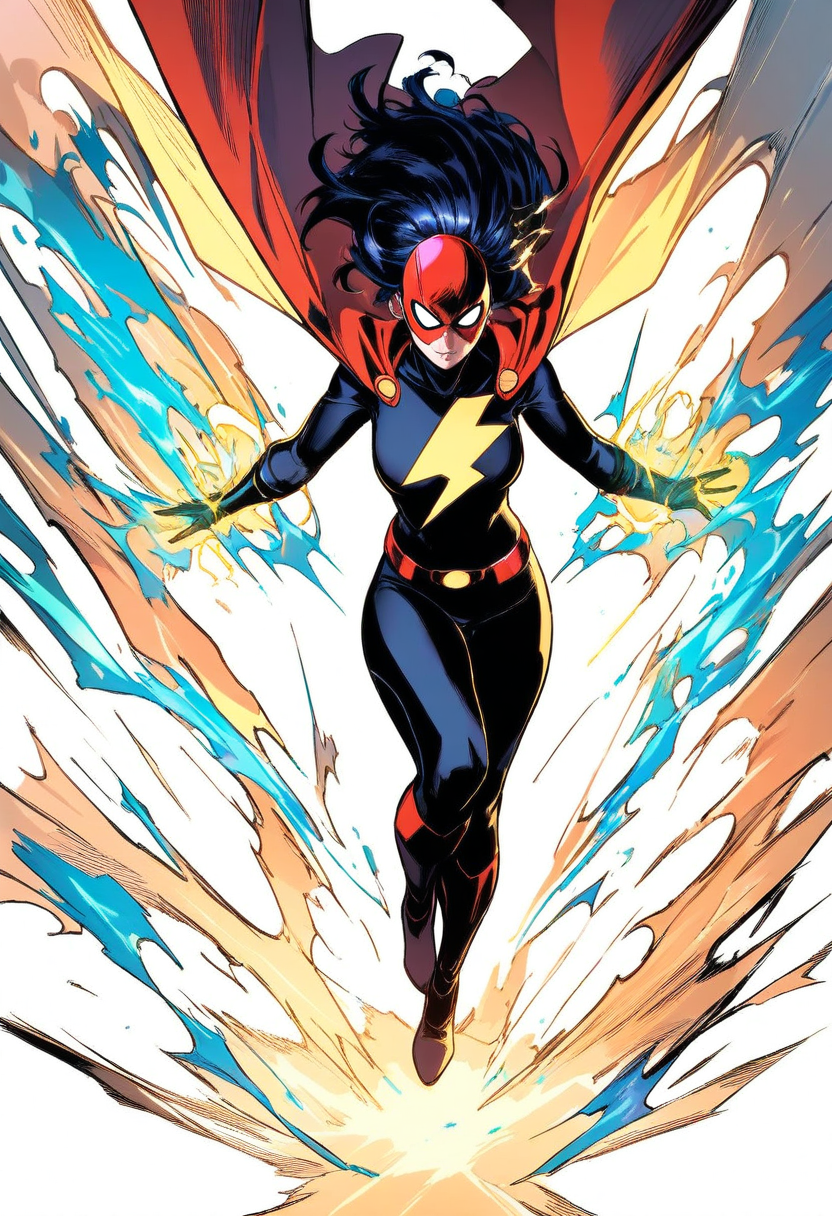
Marvel has a specific visual register — dynamic anatomy, dramatic lighting, bold ink lines, and kinetic poses. Your prompt should reference the comic art tradition:
"Marvel Comics art style, dynamic superhero pose, [power source] character with [color] costume, [chest symbol], [specific power effect], dramatic cape/energy flow, detailed musculature, bold ink outlines, comic book coloring"
Specify an artist influence if you have one: "in the style of Jim Lee" reads very different from "in the style of Alex Ross" or "in the style of Pepe Larraz."
Frequently Asked Questions
How powerful should my OC be? Match the scale to the story you want to tell. Street-level characters (Daredevil power range) have the richest personal stories. Cosmic-level characters (Silver Surfer range) need cosmic-level problems or they feel wasted.
Can my mutant OC have more than one power? Yes, but secondary mutations should be related to or extensions of the primary power. A telepath who also has telekinesis makes sense. A telepath who also shoots fire needs a very good explanation.
Should my OC be a hero or a villain? Marvel's best characters blur the line. Magneto, Punisher, Venom, Emma Frost — the morally ambiguous characters generate the most interesting stories. Design your OC with a clear motivation, and let the hero/villain label emerge from their choices.
Can I set my OC in a specific Marvel era? Absolutely. A 1960s Marvel OC looks and feels completely different from a modern one. Silver Age designs are simpler, bolder, and more primary-colored. Modern designs are more tactical, textured, and detailed.
Related Character Tools
Star Wars OC Maker
Design Star Wars original characters with lightsabers, Force powers, and species.
Harry Potter OC Maker
Create Hogwarts students and wizarding world characters with house sorting.
Avatar OC Maker
Design Avatar: The Last Airbender characters with bending styles and nations.
D&D Character Art Generator
Generate fantasy character art for your Dungeons & Dragons campaigns.
OC Generator
Create original characters for any fandom or original universe with AI.
Gawin ang Iyong Marvel OC
Gawing kamangha-manghang artwork ang iyong Marvel character idea. Subukan ang Marvel OC Maker ngayon!