AI Demon Slayer OC Maker
AI Demon Slayer OC Maker
Demon Slayer OC Maker: Design Your Breathing Style
Every demon slayer OC maker project begins and ends with one question: how do they breathe? The Breathing Style system is the creative backbone of the entire franchise—and the starting point for any kimetsu no yaiba OC maker workflow. It dictates your OC's sword technique, visual effects, movement philosophy, and even personality. This guide walks you through building a Breathing Style from the ground up—the same way Tanjiro learned Water Breathing before adapting it into something uniquely his.
The Breathing Style Family Tree
All Breathing Styles descend from Sun Breathing, the original technique created by Yoriichi Tsugikuni. The five fundamental styles branched directly from Sun Breathing, and every derivative style traces back to one of them.
| Fundamental Style | Element | Combat Philosophy | Derived Styles |
|---|---|---|---|
| Water Breathing | Flowing, adaptive | Redirecting force, fluidity | Serpent, Flower (then Insect, Love) |
| Flame Breathing | Explosive, forward | Overwhelming aggression, charge attacks | Love (partial) |
| Wind Breathing | Erratic, slashing | Wide-area sweeps, unpredictable angles | Mist, Beast |
| Stone Breathing | Heavy, grounded | Defensive stances, crushing blows | — |
| Thunder Breathing | Linear, instantaneous | Speed-focused, draw-cut techniques | Sound |
When designing a custom style, pick one fundamental parent. Your derivative inherits the combat philosophy of that parent but filters it through a new elemental metaphor. Mist Breathing takes Wind's unpredictability and makes it about obscuring—hiding movement behind deceptive footwork.
How Derived Styles Actually Work
A derived style isn't just "the parent but themed differently." It reinterprets the parent's mechanical principles through a new lens:
- Serpent Breathing (from Water) keeps the flowing redirections but adds twisting, coiling sword paths that wrap around defenses
- Insect Breathing (from Flower, from Water) abandons cutting power entirely in favor of rapid, shallow thrusts designed to deliver poison
- Sound Breathing (from Thunder) trades single-strike speed for rhythmic multi-hit patterns using explosive twin cleavers
- Beast Breathing (from Wind) drops all formal kata structure and fights on pure animal instinct with jagged, improvised slashes
To build your own derived style: take a fundamental style's core mechanic and ask "what if this was used to accomplish something the original style never intended?"
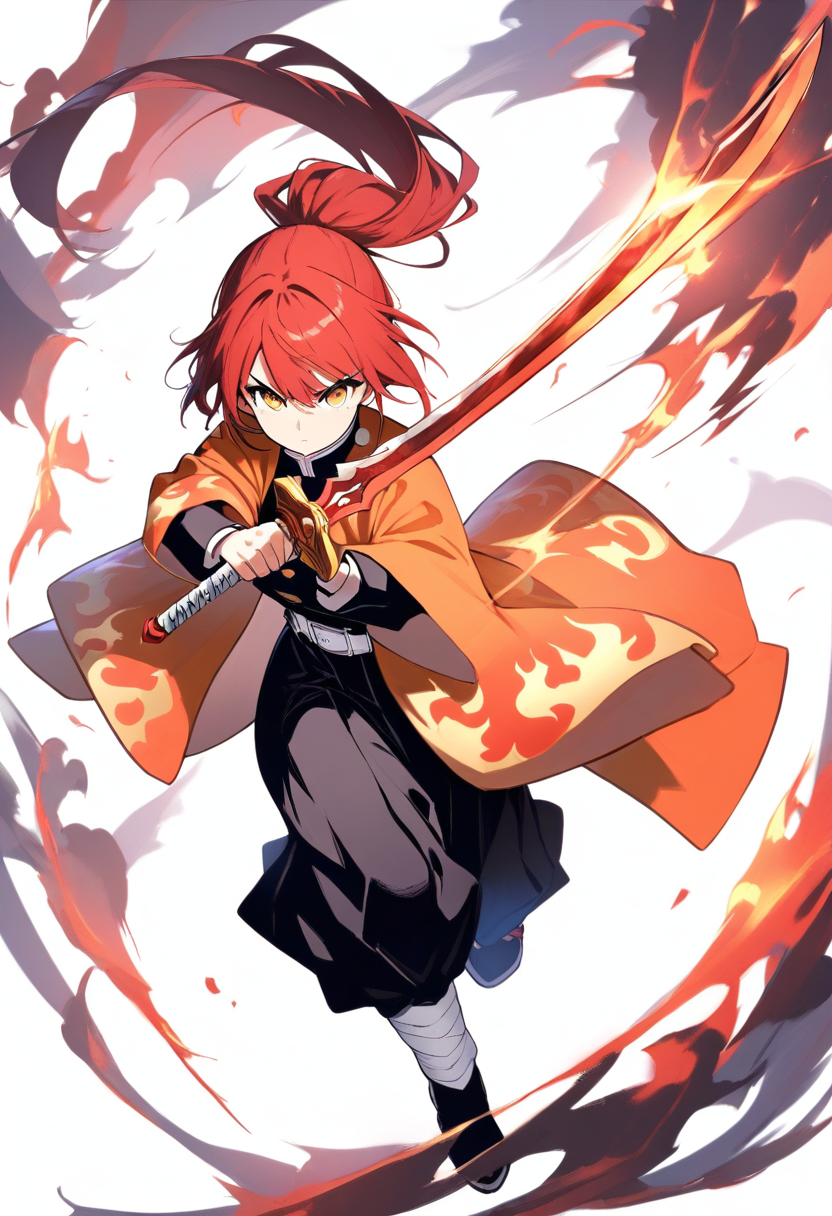
Designing Your Forms
Each Breathing Style contains numbered forms—discrete techniques with names, specific sword motions, and signature visual effects. Canon styles have between 6 and 11 forms. Here's how to structure yours.
Form naming conventions:
- Forms are numbered ordinally: First Form, Second Form, etc.
- Each form has a poetic subtitle that describes the motion or visual: Water Surface Slash, Unknowing Fire, Obscuring Clouds
- The name should evoke both the element AND the physical action of the sword
Form design template—fill this out for each form:
- Number and Name: Third Form — [Elemental Image] + [Motion Descriptor]
- Sword Motion: Horizontal sweep? Vertical draw-cut? Spinning slash? Thrust?
- Visual Effect: What does the breathing technique look like as it trails the blade?
- Tactical Purpose: Is this offensive, defensive, evasive, or a finishing move?
- Body Position: What stance does the user take before executing?
Most styles follow a progression: early forms are simple single-strike techniques, middle forms handle multiple enemies or specific situations, and the final form is the most powerful but draining.
The Nichirin Sword Color System
Your OC's Nichirin blade changes color when first drawn, reflecting the wielder's affinity. The color locks in permanently.
| Blade Color | Associated Style | Visual Effect |
|---|---|---|
| Blue | Water Breathing | Flowing water trails |
| Red | Flame Breathing | Fire and ember effects |
| Yellow | Thunder Breathing | Lightning crackles |
| Grey | Stone Breathing | Rock/earth fractures |
| Green | Wind Breathing | Swirling air currents |
| Pink | Love/Flower Breathing | Petal/heart trails |
| Lavender | Serpent/Mist Breathing | Coiling or obscuring wisps |
| Indigo | Beast Breathing | Jagged, claw-like trails |
| Black | Sun Breathing (or unknown affinity) | Extremely rare—marks an enigma |
For a custom Breathing Style, choose a color that isn't already claimed or pick a shade between existing colors. A "Frost Breathing" derivative of Water might carry a pale ice-blue blade rather than standard blue.
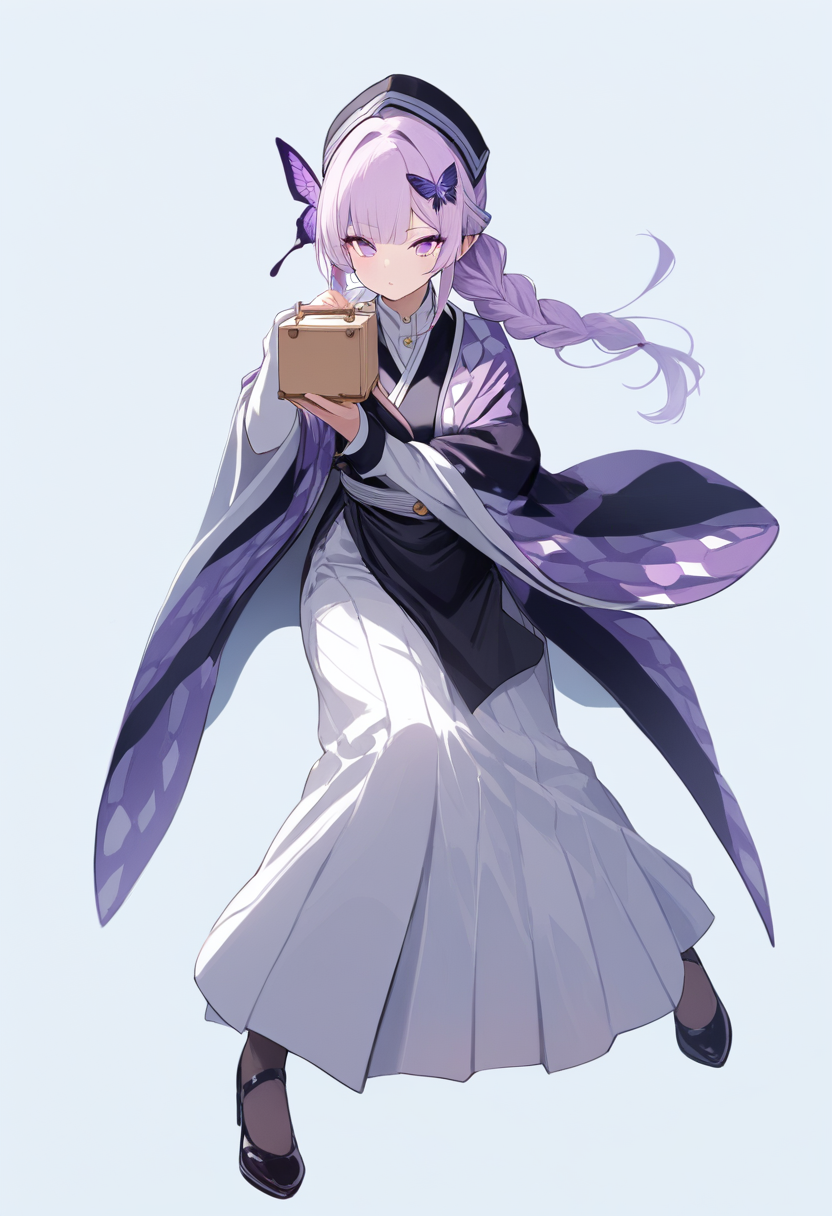
Building a Demon OC: Blood Demon Arts
Not every OC needs to be a slayer. Demon OCs use Blood Demon Arts—supernatural abilities powered by consuming humans. The stronger the demon, the more elaborate the art.
Key design rules for Blood Demon Arts:
- Tied to human life: The ability should metaphorically connect to who the demon was before turning. Rui's threads reflect his obsession with family bonds. Daki's sashes reflect her vanity.
- Scales with consumption: The more humans a demon has eaten, the more powerful and refined the art becomes. A newly turned demon has crude, barely controlled abilities.
- Vulnerability to sunlight and Nichirin: No Blood Demon Art bypasses these two weaknesses. Ever.
- Upper Moon tier requires centuries: If your demon OC rivals an Upper Moon, they need a backstory spanning hundreds of years of hunting and accumulating power.
Demon design prompt structure: Start with the human they once were. What emotion consumed them? What did they lose? The Blood Demon Art is that emotion made literal.
Prompt Crafting for Demon Slayer OCs
The Demon Slayer aesthetic is distinctive: Taisho-era Japanese clothing, bold geometric haori patterns, visible breath effects, and highly dynamic sword poses.
For a Slayer OC: "A Demon Slayer Corps member in a black uniform with a [color] geometric-patterned haori, [hair description], gripping a [color] Nichirin katana in a low stance, [breathing effect] visual trailing from the blade, Taisho-era Japan background"
For a Demon OC: "A powerful demon with [physical mutation—horns, markings, unusual eyes], wearing [tattered/elegant clothing], [Blood Demon Art manifestation visible], dark atmospheric background with moonlight, menacing expression"
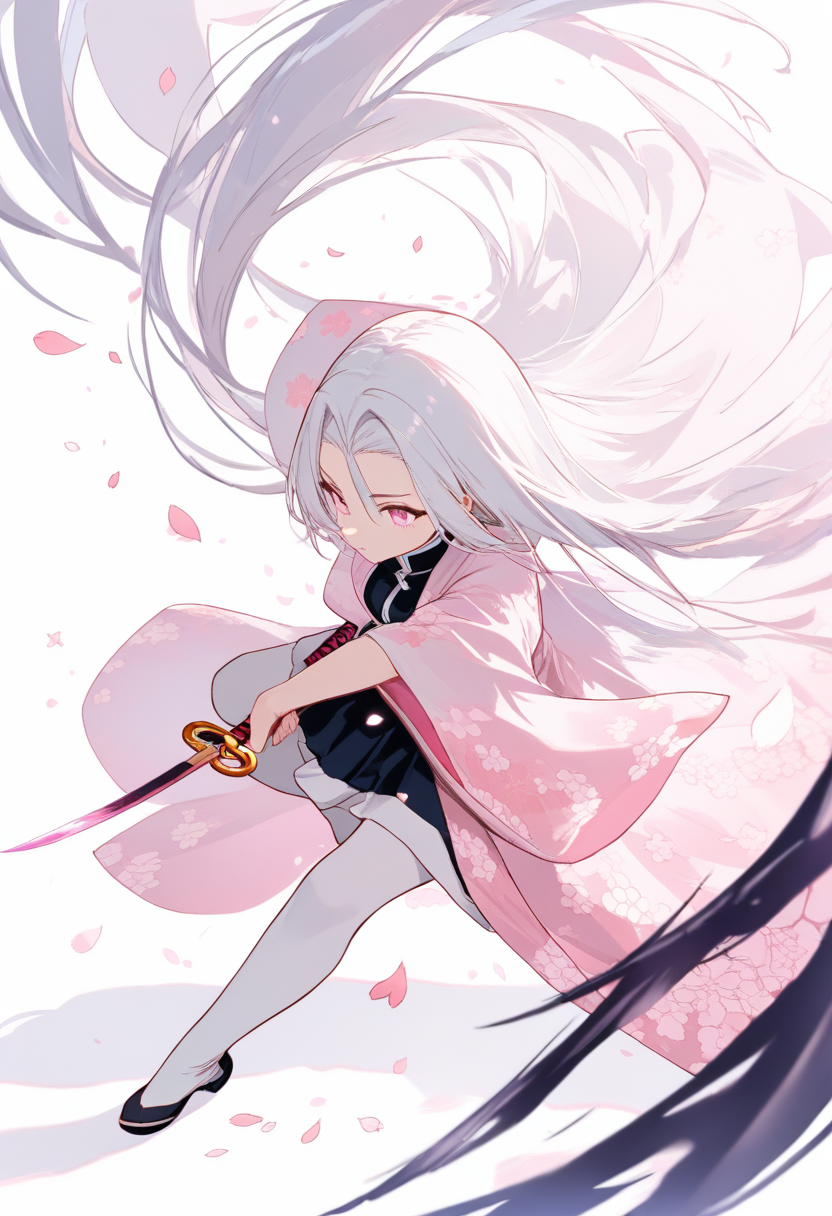
The Haori Pattern Guide
The haori (outer jacket) is the most iconic piece of a Slayer's visual identity. Canon characters all have unique geometric patterns:
- Tanjiro: Black-and-green checkered (ichimatsu)
- Zenitsu: Yellow-and-orange gradient triangle pattern
- Giyu: Split half-and-half solid pattern (mismatched halves from two people)
- Shinobu: Butterfly wing gradient
Design your OC's haori pattern to reflect something personal. A character who lost a mentor might wear their mentor's pattern on one sleeve. A character from a mountain village might use a peak-and-valley zigzag.
Hashira OC Maker: Design Considerations
If your OC is Hashira rank, they need to earn it through design, not just declaration. Hashira-level characters share specific traits:
- A fully mastered Breathing Style with all forms developed
- A distinctive visual silhouette recognizable at a distance
- A clear combat specialty that fills a role no other Hashira covers
- A marked sword with their title engraved: "Destroyer of Demons" (惡鬼滅殺)
- Enough narrative weight that their death would reshape the Corps
Frequently Asked Questions
Can my OC invent a completely new Breathing Style? Yes—canon establishes that styles can be created. Beast Breathing was invented by Inosuke with zero formal training. But new styles should still follow the branching logic: derived from a fundamental style or adapted from personal experience.
How many forms should my custom style have? Between 6 and 11 is the canon range. Start with 4-5 core forms and add more as you develop the character. Not every form needs to be combat-focused — some can be movement techniques or defensive stances.
Can a Demon Slayer also be part demon? Tanjiro and Nezuko blur this line in canon. It's possible but should be treated as extraordinary and come with severe narrative consequences.
What rank should my OC be? Start lower than you think. A Kanoe or Tsuchinoto rank character has far more room to grow and far more interesting stories than an instant Hashira.
Related Character Tools
Naruto OC Maker
Create original Naruto ninja characters with village affiliations and jutsu styles.
JJK OC Maker
Design Jujutsu Kaisen original characters with cursed techniques and sorcerer styles.
Bleach OC Maker
Design Bleach original characters with Zanpakuto releases and Soul Reaper uniforms.
Attack on Titan OC Maker
Create Attack on Titan characters with ODM gear and Survey Corps uniforms.
One Piece OC Maker
Design One Piece original characters with Devil Fruit powers and pirate crews.
OC Generator
Create original characters for any fandom or original universe with AI.
Gawin ang Iyong Demon Slayer OC
Gawing kamangha-manghang artwork ang iyong Demon Slayer character idea. Subukan ang Demon Slayer OC Maker ngayon!