해리 포터 OC 메이커
해리 포터 OC 메이커
Hogwarts Enrollment File
Welcome to the enrollment process. This document walks you through every decision that shapes a witch or wizard from their first Hogwarts letter to their chosen career in the wizarding world. Each section corresponds to a stage of magical identity formation — and each one matters more than surface-level personality quizzes suggest.
Section A: House Assignment
The Sorting Hat doesn't measure personality. It measures values — what you prize above all else, not how you act on a Tuesday. This distinction is critical for OC creation.
Gryffindor values nerve, daring, and chivalry. Not bravery in the abstract — the specific willingness to act when the cost is visible. Neville Longbottom is the purest Gryffindor in the series: terrified of everything but willing to stand up anyway. A Gryffindor OC should have a line they won't let anyone cross, and the willingness to suffer for crossing it.
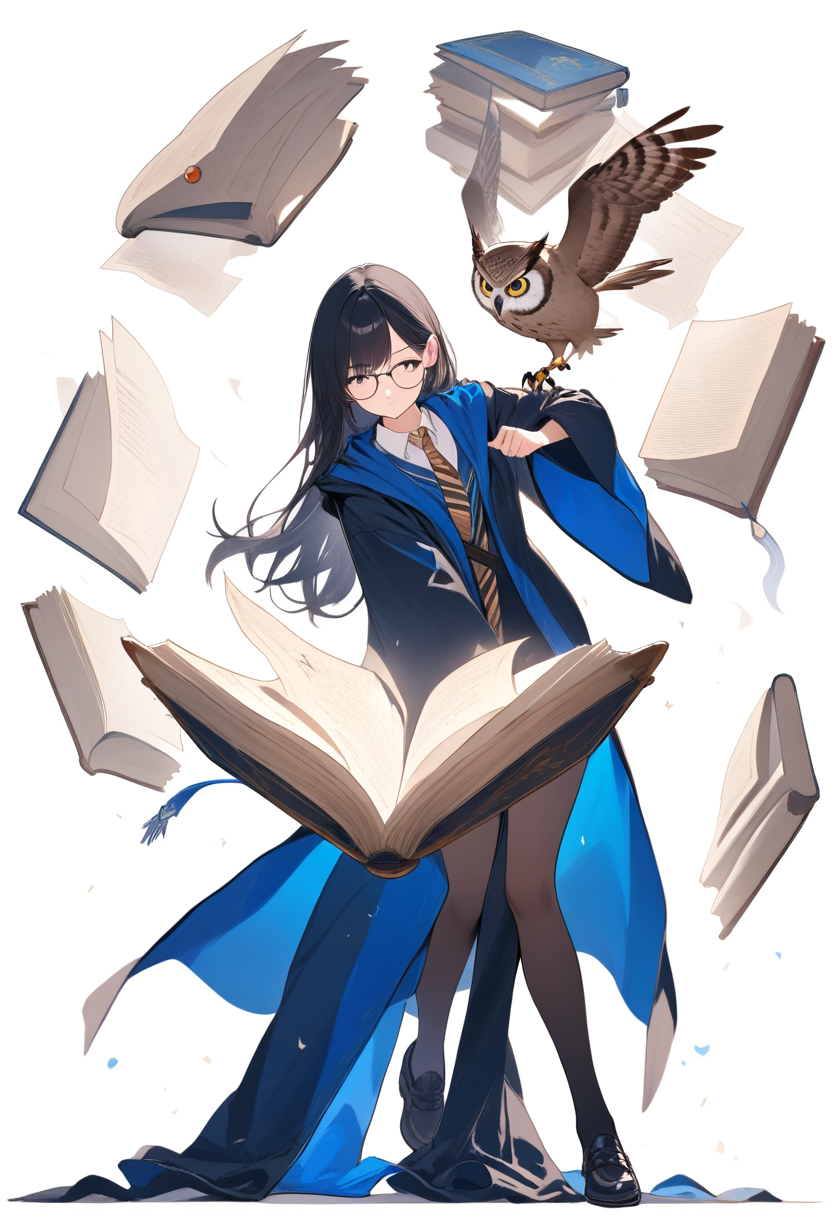
Ravenclaw values wit, learning, and wisdom. Not intelligence — curiosity. Luna Lovegood is a Ravenclaw not because she's smart in a conventional way, but because she follows her own logic wherever it leads, regardless of social pressure. A Ravenclaw OC should have a question they can't stop chasing.
Hufflepuff values hard work, patience, loyalty, and fair play. The most misunderstood house. Hufflepuffs aren't the "leftovers" — they're the ones who show up every day, do the work, and stand by people when it's thankless. A Hufflepuff OC should be someone you'd trust with a secret and a long task.
Slytherin values ambition, cunning, resourcefulness, and fraternity. NOT evil. Merlin was a Slytherin. Slughorn is a Slytherin. Ambition means wanting something badly enough to be strategic about getting it. A Slytherin OC should have a clear goal and the willingness to play the long game.
The most interesting OCs are "hatstalls" — characters who could have gone to a different house. Hermione was almost Ravenclaw. The Hat considered Slytherin for Harry. What's your OC's second house? That tension creates depth.
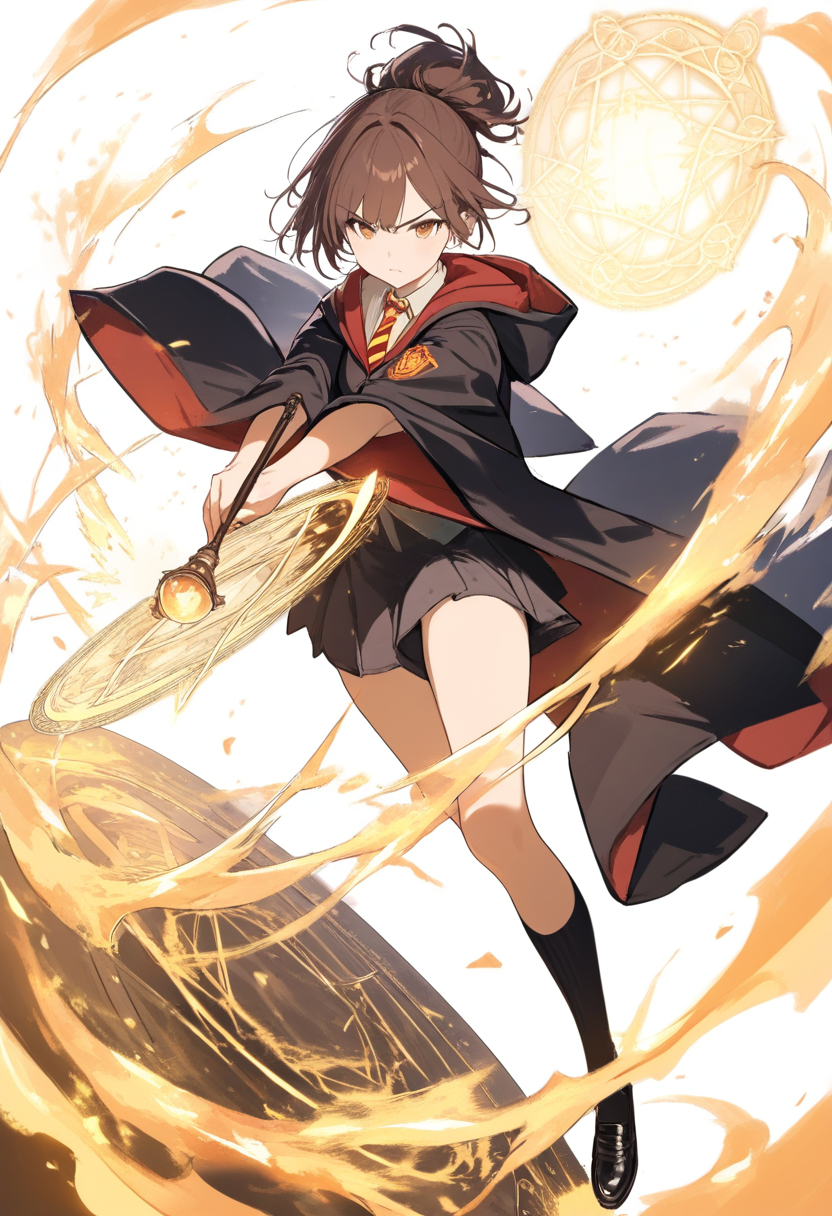
Section B: Wand Specification
In Rowling's system, the wand chooses the wizard. Every wand has three properties that interact:
Wood — tied to personality and temperament.
| Wood | Associated Traits | Ideal Wielder |
|---|---|---|
| Holly | Protective, drawn to danger | Those on spiritual quests |
| Elder | Rare, powerful, "the deathstick" | Only the truly remarkable |
| Vine | Depth, vision, higher purpose | Those with hidden ambitions |
| Willow | Insecurity masking great potential | Those with untapped talent |
| Yew | Fierce protector, life-and-death power | Both dark wizards and heroes |
| Hawthorn | Complex, conflicted nature | Those in turmoil |
| Cherry | Lethal power, revered in Japan | Disciplined, self-possessed wielders |
| Ebony | Combative, striking, non-conformist | Those who hold convictions regardless of popularity |
| Rowan | Clear-headed, pure-hearted, protective | Never owned by a dark wizard in canon |
Core — tied to magical temperament.
- Phoenix feather — Greatest range of magic, hardest to win allegiance, sometimes acts independently. Choosy.
- Unicorn hair — Most consistent, least likely to fluctuate. Faithful to first owner. Slightly harder to use for Dark Arts.
- Dragon heartstring — Most powerful, learns fastest, most prone to accidents. Bonds strongly but can shift allegiance.
Length and flexibility — longer wands suit bolder personalities and broader gesturing styles. More rigid wands suit precise, disciplined minds. Flexible wands suit adaptable, open characters.
The combination tells a story. A short, rigid yew wand with a dragon heartstring core is a weapon built for focused, lethal precision. A long, flexible willow wand with a unicorn hair core belongs to someone gentle and uncertain who hasn't yet realized how powerful they are.
Section C: Patronus Form
A Patronus reflects the caster's innermost self — not what they want to be, but what they fundamentally ARE at their most positive.
Patronus design principles:
- The animal should make sense for the CHARACTER, not for the creator's aesthetic preference
- Unusual Patronuses aren't inherently better — a mouse Patronus on a quiet, determined character is more authentic than a dragon Patronus on one because it sounds cool
- Matching Patronuses between characters indicates a deep connection (Snape/Lily)
- A Patronus can change if the caster undergoes severe emotional upheaval (Tonks)
Categories to consider:
- Predators (wolf, hawk, fox) — protective, instinct-driven characters
- Herd animals (horse, stag, doe) — characters defined by their connections to others
- Solitary creatures (cat, hare, otter) — independent spirits
- Magical creatures (very rare — phoenix, thestral, unicorn) — extraordinary circumstances only
Section D: Magical Specialization
Every competent witch or wizard gravitates toward a magical discipline. This shapes their Hogwarts elective choices, study habits, and eventual career.
Charms — versatile, creative, the Swiss army knife of magic. Flitwick's domain. Characters who value elegance and problem-solving.
Transfiguration — complex, precise, intellectually demanding. McGonagall's domain. Characters with discipline and conceptual thinking.
Defense Against the Dark Arts — combat-oriented, reactive, requires nerve. Characters who put themselves between danger and others.
Potions — methodical, precise, independent of wand talent. Characters who are patient, detail-oriented, and often underestimated.
Herbology — nurturing, practical, connected to the living world. Characters grounded in patience and care.
Divination — intuitive, spiritual, controversial. Most wizards consider it unreliable. Characters drawn to it tend to be either genuinely gifted or desperate for answers.
Ancient Runes / Arithmancy — academic, theoretical, the "hard sciences" of the magical world. Characters who prefer books to wands.
Care of Magical Creatures — hands-on, empathetic, often dangerous. Characters who connect with non-human intelligence.
Section E: Wizarding Career Path
Post-Hogwarts careers determine your OC's adult identity and social position.
- Auror — dark wizard catcher. Requires N.E.W.T.s in Potions, Defense, Transfiguration, Charms, Herbology. Three years additional training. The wizarding world's special forces.
- Healer — St. Mungo's Hospital staff. Requires N.E.W.T.s in Potions, Herbology, Charms, Transfiguration. Demanding, respected, underpaid.
- Curse-Breaker — Gringotts tomb raider. Bill Weasley's job. Requires Ancient Runes, Defense. Travel-heavy, dangerous.
- Magizoologist — studies magical creatures. Newt Scamander's field. Requires Care of Magical Creatures, Herbology. Fieldwork, conservation, occasional dragon burns.
- Unspeakable — Department of Mysteries researcher. Nobody knows what they actually do. Selection criteria unknown. Your OC can't talk about their work. Literally.
- Professor — Hogwarts teaching staff. Requires mastery of a subject and the ability to not curse students who ask questions at 8 AM.
- Quidditch player — Professional league. Requires talent, nothing academic. Short career, high injury rate, enormous fame.
- Wandmaker — Extremely rare. Apprenticeship-based. Requires deep understanding of magical materials and the sensitivity to match wand to wizard.
Section F: Blood Status and Its Weight
Blood status is the political axis of the wizarding world. It doesn't affect magical ability (Hermione is Muggle-born and the best student in her year), but it affects how society treats your character.
- Pure-blood — both parents magical. Some families (Malfoys, Blacks) are supremacist about it. Others (Weasleys) don't care. Your OC's relationship to blood politics is a character choice.
- Half-blood — one magical parent, one Muggle or Muggle-born. The most common status. Harry, Snape, Voldemort are all half-bloods.
- Muggle-born — no magical parents. First-generation wizard. Faces prejudice during Voldemort's rise. Brings an outsider's perspective to the magical world.
Prompt Tips for AI Generation
The Harry Potter visual identity is rooted in British school aesthetics crossed with medieval wizardry.
"A seventeen-year-old Slytherin witch with dark curly hair and sharp green eyes, silver-and-green tie slightly loosened, wand (ebony, 12 inches) held at her side, standing in a torchlit Hogwarts corridor with stone walls and moving portraits in the background — manga style, warm candlelight atmosphere"
Include: house colors, wand in hand or holstered, Hogwarts setting (corridors, grounds, Great Hall, common room), and uniform details (tie, robes, scarf). The school uniform is the visual anchor of any Hogwarts OC.
Frequently Asked Questions
Can my OC be related to a canon character? Yes, but the further the relation, the better. A distant cousin of the Weasleys gives you connections without canon interference. A secret child of Snape creates more lore problems than it solves.
What year should my OC be in? The Harry Potter era (1991-1998) is the most popular but also the most constrained by canon events. Consider the Marauders era (1970s), the Founders era (medieval), or a post-war era for more freedom.
Can my OC have a unique magical ability? Canon has a few — Parseltongue, Metamorphmagi, Seers. These are extremely rare and often hereditary. One unique ability is fine if well-justified. A character with multiple unique abilities breaks the power scale.
Should my OC be good at everything? Absolutely not. Hermione is bad at Divination. Harry is bad at Potions without Snape's textbook. Ron is bad under academic pressure. Every great HP character has gaps. Your OC should have a subject or two they struggle with.
Related Character Tools
Star Wars OC Maker
Design Star Wars original characters with lightsabers, Force powers, and species.
Marvel OC Maker
Create original Marvel superhero and villain characters with unique powers.
D&D Character Art Generator
Generate fantasy character art for your Dungeons & Dragons campaigns.
Avatar OC Maker
Design Avatar: The Last Airbender characters with bending styles and nations.
OC Generator
Create original characters for any fandom or original universe with AI.
나만의 해리 포터 OC 만들기
오리지널 마법사를 디자인하세요. AI로 마법과 모험이 담긴 호그와트 캐릭터를 만들어 보세요!