AI 일러스트 생성기
AI 일러스트 생성기
Composition and Mood: The Illustration Difference
A character portrait shows you a person. An illustration shows you a world.
The gap between an AI illustration generator and a simple character portrait tool is not about rendering quality. It is about composition—the deliberate arrangement of every element in the frame to tell a story, evoke an emotion, or guide the viewer's eye along a specific path.
This illustration maker AI guide—equally useful as a concept art generator primer—is about thinking like an illustrator, not just a character designer.
Composition Principles That Actually Matter
Art education teaches dozens of composition rules. For AI illustration prompting, five do most of the work.
Rule of Thirds
Divide the frame into a 3x3 grid. Place your focal point at one of the four intersections—not dead center. This creates tension and visual interest. A character placed at the left-third intersection with open space to their right implies they are looking or moving into that space. Placed at the right-third with empty space behind them, they feel like they are leaving something behind.
In your prompt: "character positioned at left third of frame, looking right, open landscape stretching ahead"
Leading Lines
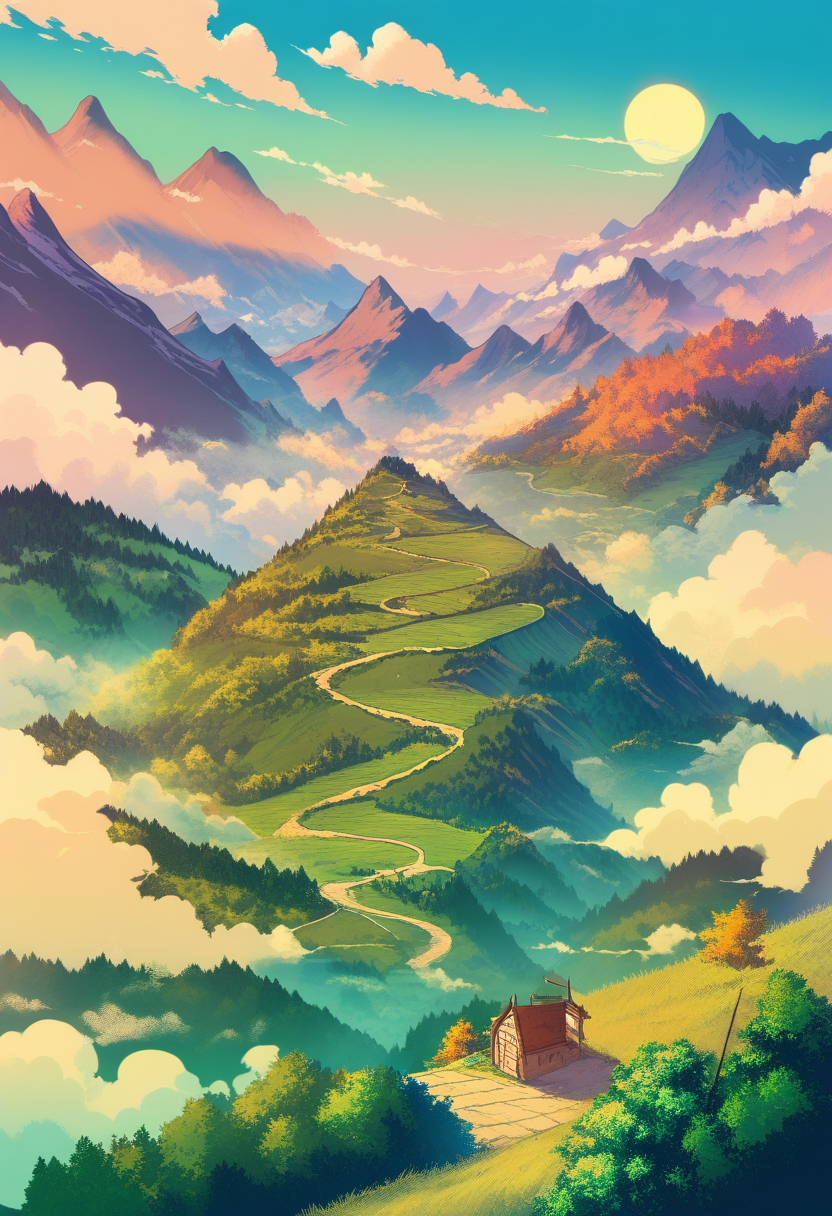
The viewer's eye follows lines—a road disappearing into the distance, a sword pointing upward, a row of buildings converging on a vanishing point. Every element in your scene either leads toward or away from the focal point.
Strong leading lines to request in prompts:
- Paths, roads, rivers curving toward the subject
- Architectural lines (hallways, bridges, staircases)
- Light beams cutting through darkness
- Weapon angles pointing toward the action
- Tree branches framing the scene
Foreground-Midground-Background Layering
Flat illustrations feel flat because everything sits at the same distance from the camera. Professional illustrations create depth through layers:
- Foreground: Slightly blurred elements close to the camera—grass, fallen leaves, a railing, a hand reaching toward us
- Midground: The main subject, in sharp focus
- Background: The environment, slightly less detailed or atmospheric (haze, distance blur)
Prompt this explicitly: "foreground wildflowers out of focus, character standing in midground clearing, misty mountain range in far background"
Value Contrast at the Focal Point
The area of highest contrast (darkest dark next to lightest light) is where the eye goes first. Professional illustrators plan this deliberately. A character in a dark cloak against a bright sky. A glowing spell in a dark cave. A sunlit face in a shadowed room.
Tell the AI where the contrast should peak: "bright golden light illuminating the character's face against the shadowed interior of the cathedral"
Negative Space
Empty space is not wasted space. It creates breathing room, implies scale, and focuses attention. A small figure in a vast empty field tells a story of loneliness more effectively than any facial expression could.
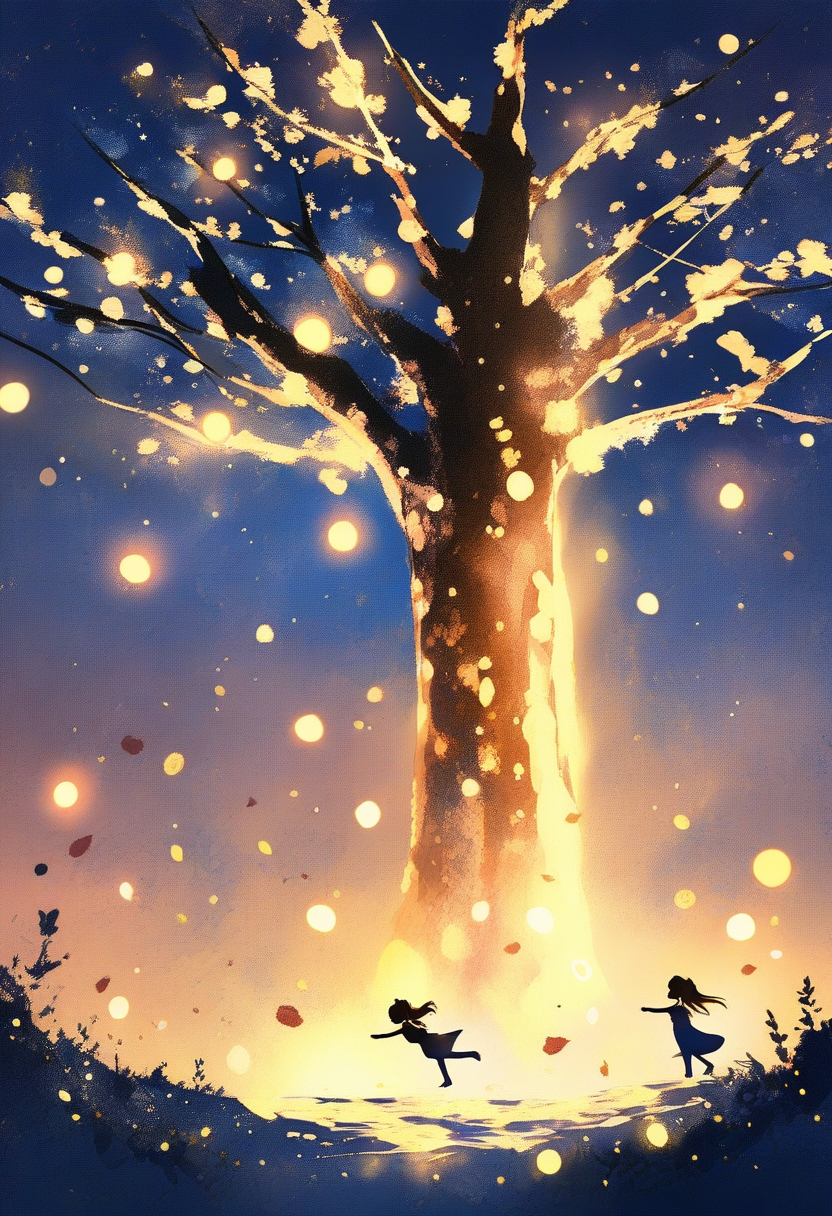
Lighting as Storytelling
Lighting is the single most powerful mood tool in illustration. The same character, same pose, same environment—change only the lighting, and you change the entire emotional meaning.
Warm front light (golden hour, campfire): Safety, nostalgia, romance, homecoming. The most emotionally comforting lighting setup.
Cool back light (moonlight, neon): Mystery, isolation, tension. The subject becomes a partial silhouette. Details are hidden. What you cannot see matters.
Harsh overhead light (noon sun, interrogation lamp): Exposure, vulnerability, judgment. Shadows pool in the eye sockets and under the chin, making faces look gaunt and haunted.
Rim light (edge lighting from behind): Drama and separation. The subject glows against the background. Used for heroic reveals, divine moments, or making a character feel untouchable.
Underlighting (from below): Unnatural and unsettling. Used almost exclusively for horror, villains, or campfire storytelling scenes. The face looks wrong because we never see people lit from below in nature.
Dappled light (through leaves, blinds, lattice): Pattern on the subject. Creates visual complexity and implies a layered environment between the light source and the character.
Specify lighting direction and quality in every illustration prompt. "Warm golden hour side-lighting from the left, long shadows stretching right" transforms a flat character render into a scene.
Style Modes for Different Illustration Goals
Different illustration styles serve different purposes. Name the style you want.
Cel-shaded / Anime illustration: Hard-edged shadows, clean lines, flat color fills with limited gradient. Best for character-focused pieces, anime key visuals, and light novel covers. Prompt: "cel shaded, clean lineart, flat color, anime illustration style"
Painterly / Semi-realistic: Visible brushwork, blended edges, rich texture. Best for fantasy scenes, book covers, and environment art. Prompt: "digital painting, painterly brushstrokes, rich texture, semi-realistic"
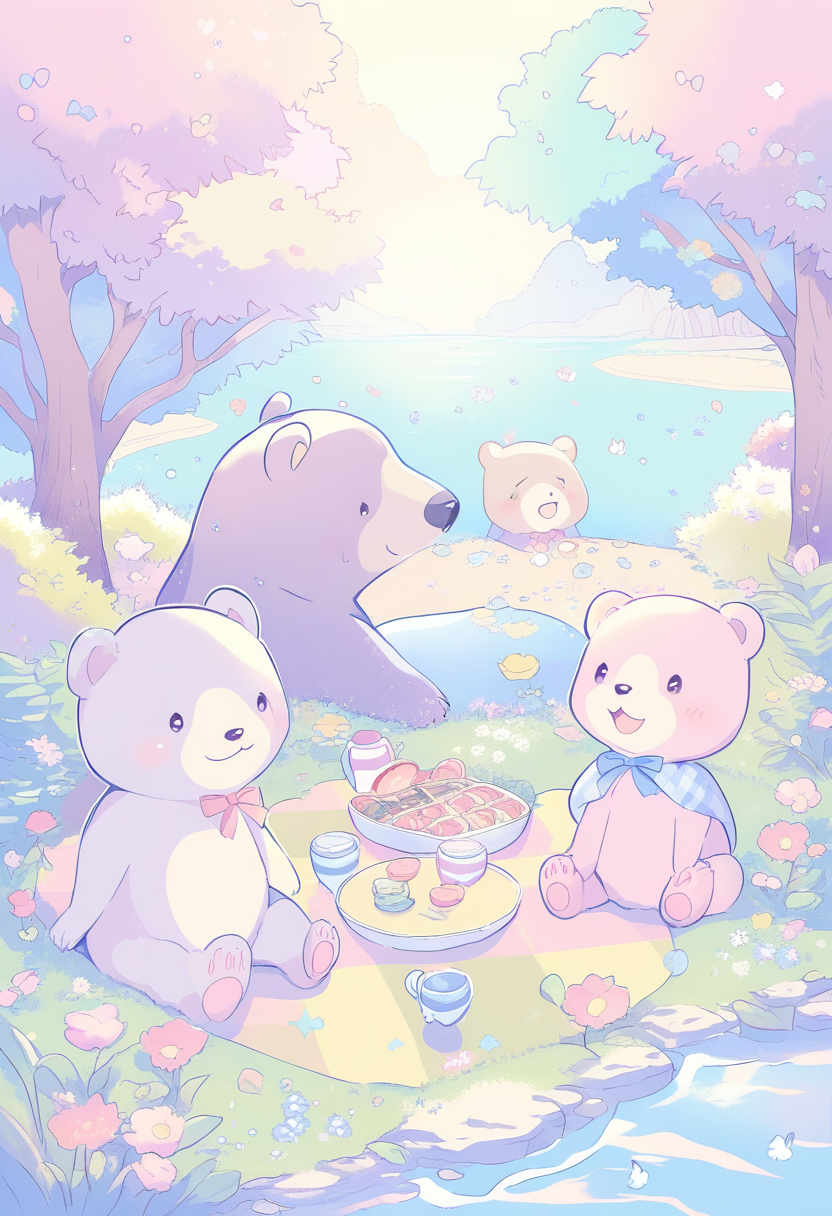
Watercolor: Soft edges, color bleeding, paper texture visible, white space where the paint did not reach. Best for gentle, atmospheric pieces. Prompt: "watercolor illustration, soft color bleed, paper texture, delicate washes"
Concept art: Loose rendering, strong silhouettes, mood over detail. Best for environmental storytelling and world-building. Prompt: "concept art style, loose brushwork, atmospheric, strong silhouette"
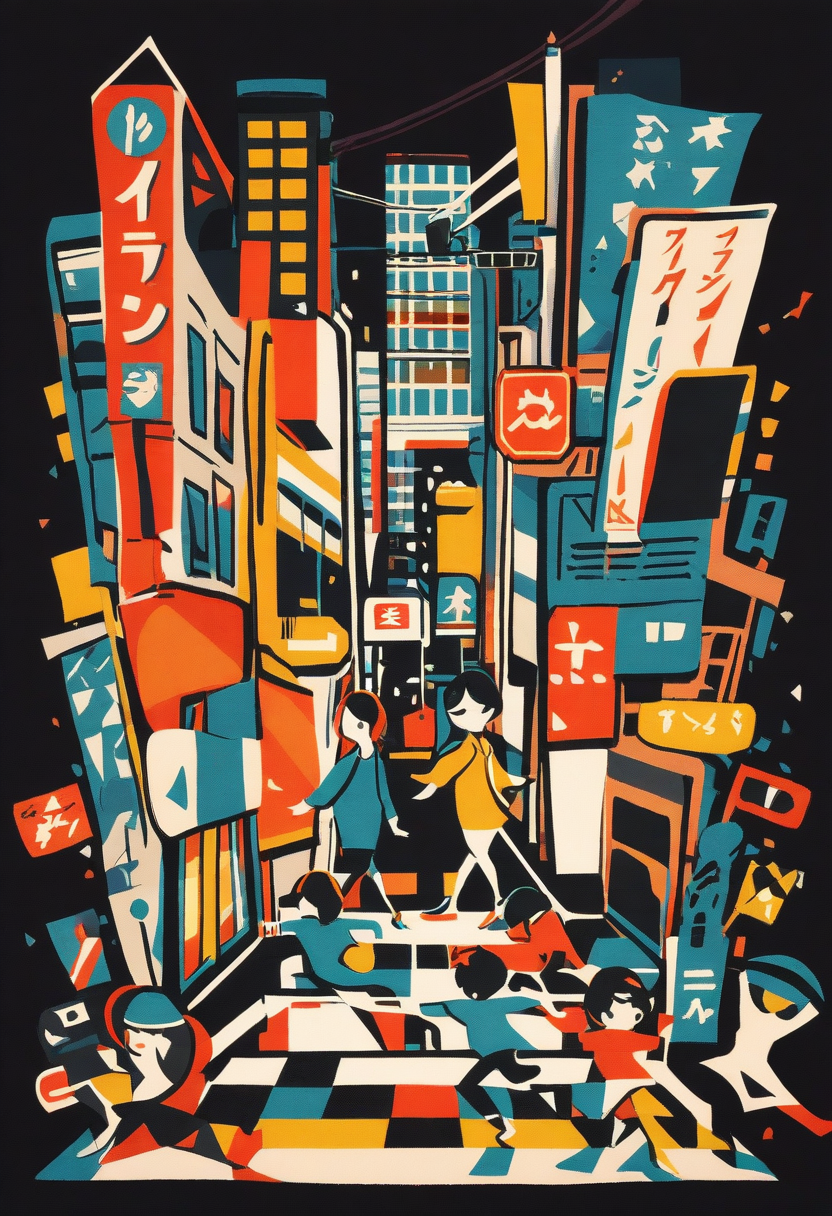
Flat vector / Graphic: Clean shapes, no texture, bold color blocks. Best for posters, book illustrations, and editorial art. Prompt: "flat vector illustration, bold shapes, minimal detail, graphic poster style"
Building a Scene: The Layered Prompt Method
Illustration prompts need more structure than character prompts. Use this layering approach:
Layer 1—The environment. Where are we? What time is it? What is the weather? "Ancient library at dusk, rain visible through tall arched windows, warm candlelight inside contrasting with blue-grey rain light outside."
Layer 2—The subject. Who or what is the focal point? Where are they in the frame? "A young scholar sits at a desk piled with open books, positioned at the right third of the frame, quill in hand."
Layer 3—The interaction. How does the subject relate to the environment? "Candlelight casts the scholar's shadow large against the bookshelf behind them. Rain streaks on the window reflect soft light across the floor."
Layer 4—The mood modifier. What should this feel like? "Cozy, studious atmosphere. Warm amber tones dominate. The world outside is cold and grey but the interior is a sanctuary."
Layer 5—Technical direction. "Painterly digital illustration, rich texture, detailed environment, atmospheric perspective on distant bookshelves."
Each layer adds depth. Skip one, and the illustration flattens.
Atmosphere and Particle Effects
Small environmental particles transform static scenes into living moments:
- Dust motes in light beams = old, abandoned, or sunlit spaces
- Cherry blossom petals = spring, transience, Japanese aesthetic
- Falling snow = quiet, isolation, cold beauty
- Fireflies / floating lights = magic, enchantment, twilight
- Embers / ash = destruction, aftermath, warmth fading
- Rain streaks = melancholy, cleansing, urban noir
- Floating paper / pages = chaos, magic libraries, wind
One or two particle types per illustration. More than that becomes visual noise.
The Illustration Mindset
Character generation asks: "What does this person look like?"
Illustration asks: "What does this moment feel like?"
That shift in question is everything. When you prompt for an illustration, you are not describing a subject—you are describing an experience. The subject, the environment, the lighting, the composition, and the atmosphere all serve that single emotional target.
Start every illustration prompt by deciding the feeling. Then build every element to serve it.
Related Character Tools
오늘 바로 일러스트 만들기
아이디어를 몇 초 만에 멋진 일러스트로. AI 일러스트 생성기를 지금 사용해 보고 간단한 텍스트 프롬프트로 프로 수준의 아트워크를 얼마나 쉽게 만들 수 있는지 확인하세요.