AI Creepypasta OC Maker
AI Creepypasta OC Maker
The Horror Writing Workshop
Making a creepypasta OC that actually unsettles people is harder than it looks. The genre's graveyard is full of pale-skinned knife-wielders with tragic backstories and no personality beyond "insane." The characters that endure — Slenderman, the Rake, Smile Dog — work because they tap into something primal, not because they're edgy.
This is a workshop-style guide. We're going to build a horror character from the ground up, and at every step, we'll talk about what works, what doesn't, and why.
Lesson 1: Choose Your Horror Archetype Honestly
Before designing anything visual, decide what kind of fear your character represents. Horror archetypes map to deep psychological triggers.
The Stalker — a presence that follows, watches, and waits. Fear of being observed. Slenderman, the Tall Man.
Best for: characters defined by what they DON'T do. The less they act, the more threatening they become.
The Mimic — something that looks almost human but isn't. Uncanny valley fear. The Rake, SCP-096.
Best for: visual horror. The wrongness is in the design itself.
The Corruption — something that changes you. Body horror, loss of self. BEN Drowned, the Backrooms.
Best for: narratively driven characters. The horror is the process, not the monster.
The Trickster — something that plays games. Fear of powerlessness within rules. Laughing Jack, the Midnight Game.
Best for: characters with personality. They engage with victims, which gives you dialogue and motivation.
The Remnant — something left behind. Ghosts, echoes, cursed objects. Haunted gaming cartridges, cursed tapes.
Best for: mystery-driven stories. The character is a puzzle to decode.
Lesson 2: Origin Stories — The Minefield
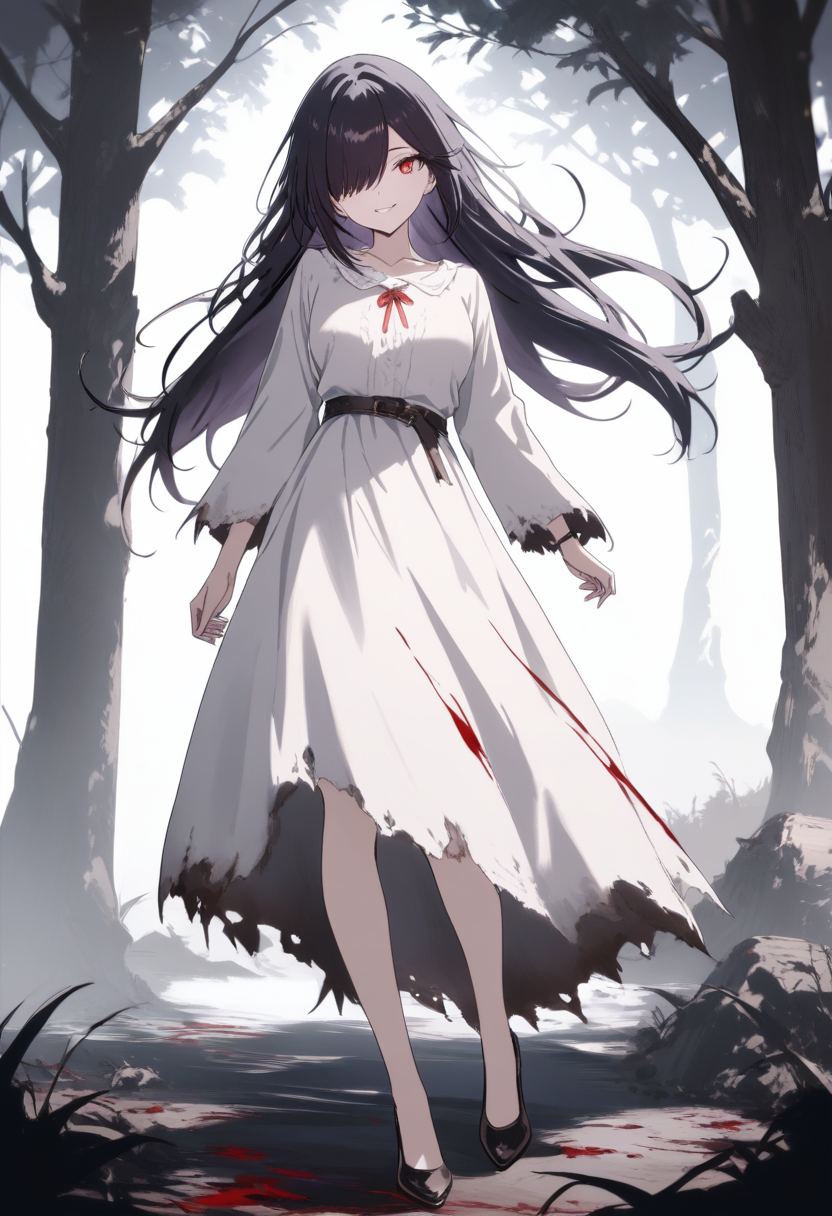
This is where most creepypasta OCs die. The origin story is the single biggest trap in the genre because the most emotionally satisfying backstories are also the most overused.
Origins to avoid (or at least subvert):
- "Bullied kid snaps and becomes a killer" — This is the Jeff the Killer template. It's been done thousands of times. If you use it, you need a genuinely fresh angle.
- "Abused by parents, now haunts abusers" — Sympathetic motivation, but it's been the default creepypasta backstory since 2011.
- "Science experiment gone wrong" — Works occasionally, but usually reads as a shortcut to justify impossible powers.
- "Made a deal with a demon" — Instantly deflates tension. If a bigger evil exists, your character isn't the scariest thing in the room.
- "Was normal, then found a cursed item" — The item is doing the work, not your character.
Origins that still have mileage:
- The character that was never human. No tragic backstory because there's nothing to be tragic about. It simply IS. Slenderman has no origin — and that's terrifying.
- The character who chose this willingly. Not through madness, but through cold calculation. The horror is that a rational mind looked at monstrousness and said yes.
- The character that doesn't know what it is. Self-awareness is scary. A creature trying to understand its own nature while hurting people has genuine pathos.
- The slow transformation. Not a snap, not an event — a gradual erosion documented in real time. Found footage, journal entries, forum posts.
Lesson 3: Visual Design Do's and Don'ts
Horror character design follows different rules than action or fantasy character design. The goal isn't to look cool — it's to look wrong.
DO:
- Give them one signature visual element. Slenderman's tentacles. Jeff's carved smile. Eyeless Jack's... well, the name says it. One memorable feature beats ten generic ones.
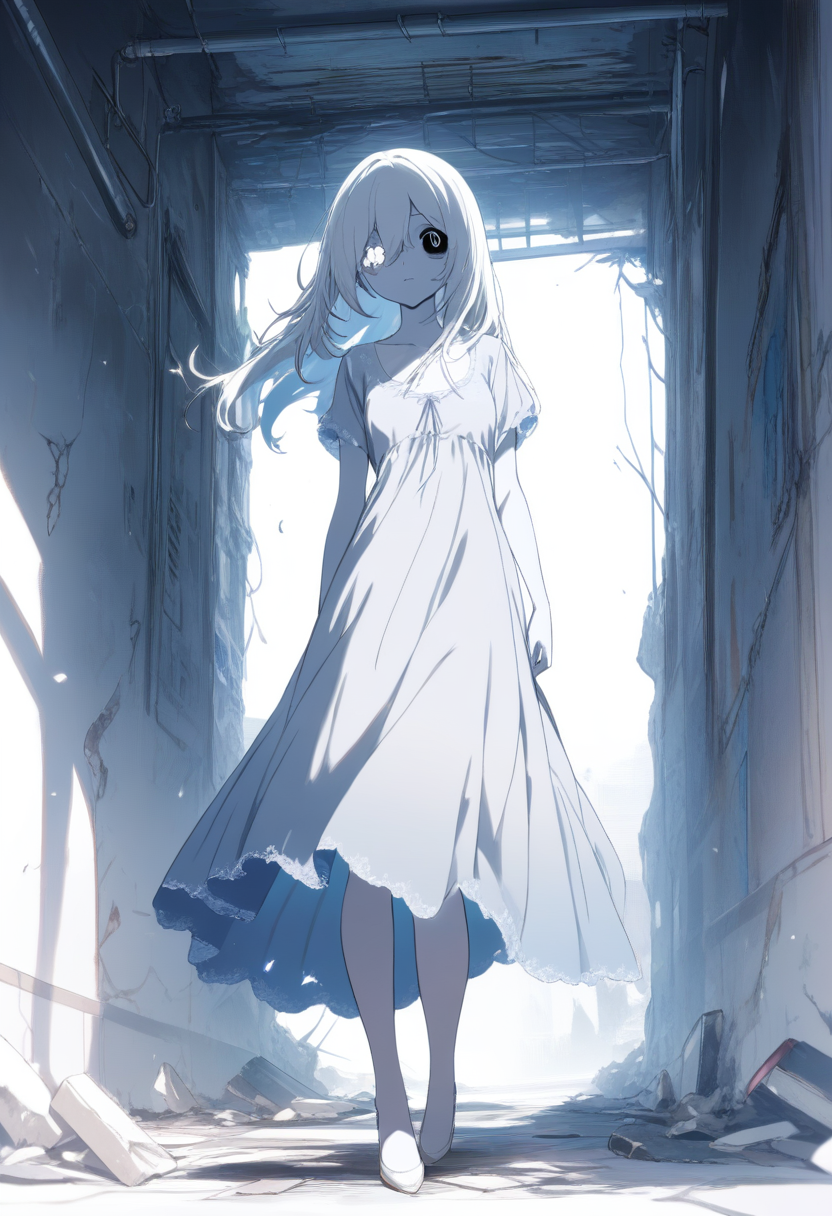
- Use negative space. What's missing is scarier than what's added. Empty eye sockets, absent facial features, a silhouette with no detail.
- Let the environment be part of the design. A character that only appears in static, in fog, at the edge of a treeline — the context is the character.
- Use subtle wrongness over extreme gore. A figure that's two inches too tall. Fingers with one too many joints. A smile that extends past where the cheekbone should end.
DON'T:
- Pile on weapons. A character carrying a knife, an axe, AND a machete looks like a hardware store, not a horror icon.
- Use blood as the primary visual element. Blood is an outcome, not a design. If your character's visual identity depends on being covered in blood, the underlying design needs work.
- Make them conventionally attractive with one "creepy" feature. The "hot but with black eyes" template is cosplay bait, not horror design.
- Over-detail the face. The most effective creepypasta characters have faces that are simple, obscured, or absent entirely. Complexity reduces fear.
Lesson 4: The Signature — What Makes Them THEM
Every iconic creepypasta character has a calling card. Not a weapon — a behavior pattern that victims and readers learn to recognize and dread.
Ask yourself: if someone encountered evidence of your OC without seeing them, what would they find?
- Slenderman: missing persons, distorted photographs, children's drawings
- BEN Drowned: corrupted save files, reversed audio, a statue that follows
- The Rake: scratch marks at the foot of the bed, whispered words at 3 AM
Your OC needs this kind of forensic signature. It's what transforms a character from "a thing that kills people" into a presence that haunts the reader's environment.
Lesson 5: Writing the Prompt for AI Generation
Horror characters benefit from atmospheric prompts more than detailed physical descriptions. Set the mood, then describe the figure within it.
"A tall, impossibly thin figure standing at the far end of a hospital corridor, fluorescent lights flickering, face obscured by long matted hair, one hand pressed flat against the wall with fingers bent at wrong angles — manga horror style, heavy shadows, high contrast"
Compare that to: "A scary character with white skin and black eyes holding a knife." The first creates an image. The second creates a generic halloween costume.
Atmosphere keywords that work well: static, surveillance footage, found photograph, rain-streaked window, half-open door, liminal space, analog horror, long exposure, VHS distortion.
Lesson 6: The "Edgy vs. Effective" Gut Check
Before finalizing your OC, run it through these five questions:
-
Would this character be scary if they never hurt anyone? If the answer is no, the fear depends on violence, not on the character. Slenderman was terrifying before anyone wrote him killing people.
-
Can you describe them in one sentence without using the words "insane," "psycho," or "killer"? If not, the character lacks identity beyond their threat level.
-
Would a stranger reading about this character feel uneasy, or would they roll their eyes? Be honest. If the reaction is "oh, another one of those," redesign.
-
Does the design work in silhouette? The strongest horror characters are recognizable from their shape alone. If yours needs color and detail to be identified, the base design is weak.
-
Is there something they want besides causing harm? Characters with alien motivations are scarier than characters who are just "evil." The Rake observes. Slenderman collects. BEN wants to be remembered. What does yours want?
Building Your OC: The Sequence
Unlike most OC creation guides, horror characters should be built outside-in — start with the fear, then work backward to the character.
Step 1: Pick the fear. Not "scary" — a specific phobia or discomfort. Trypophobia, scopophobia (fear of being watched), kenophobia (fear of empty spaces), automatonophobia (fear of human replicas).
Step 2: Design the signature. What evidence do they leave behind? How do victims first encounter them?
Step 3: Design the silhouette. One body, one wrongness, one recognizable shape.
Step 4: Add context. Where do they appear? When? What's the pattern?
Step 5: Origin is optional. If a backstory makes the character scarier, include it. If it makes them sympathetic in a way that deflates the horror, leave it ambiguous.
Frequently Asked Questions
Does my creepypasta OC need a "pasta" (written story)? Technically no — some characters originate from images or games. But a well-written story is what separates memorable creepypasta characters from forgettable ones. Even a short incident report or found document adds enormous depth.
Can my OC interact with existing creepypasta characters? The community generally respects this as long as your OC doesn't overpower established characters. Crossovers work best as shared-universe encounters, not power contests.
How graphic should the horror be? The best creepypasta is suggestive, not explicit. "I found teeth in the sink drain" is scarier than a paragraph of gore. Let the reader's imagination do the heavy lifting.
My OC has a human form and a monster form. Is that overdone? Transformation characters are common but not inherently bad. The key is making the human form unsettling in its own right — too still, too polite, something slightly off — rather than using it as a disguise that gets discarded.
Related Character Tools
FNAF OC Maker
Create Five Nights at Freddy's original animatronic and character designs.
Undertale OC Maker
Create Undertale original characters with pixel-art style and unique soul traits.
Tokyo Ghoul OC Maker
Design Tokyo Ghoul original characters with kagune types and ghoul masks.
Helluva Boss OC Maker
Create Helluva Boss original characters with imp designs and hell ring lore.
OC Generator
Create original characters for any fandom or original universe with AI.
Gawin ang Iyong Creepypasta OC
Gawing kamangha-manghang artwork ang iyong Creepypasta character idea. Subukan ang Creepypasta OC Maker ngayon!