Marvel OC Maker: Create Your Own Superhero Character
Learn how to design Marvel-style superhero OCs with AI. From mutant powers to tech suits, this guide covers everything you need to build your own Avengers-worthy original character.
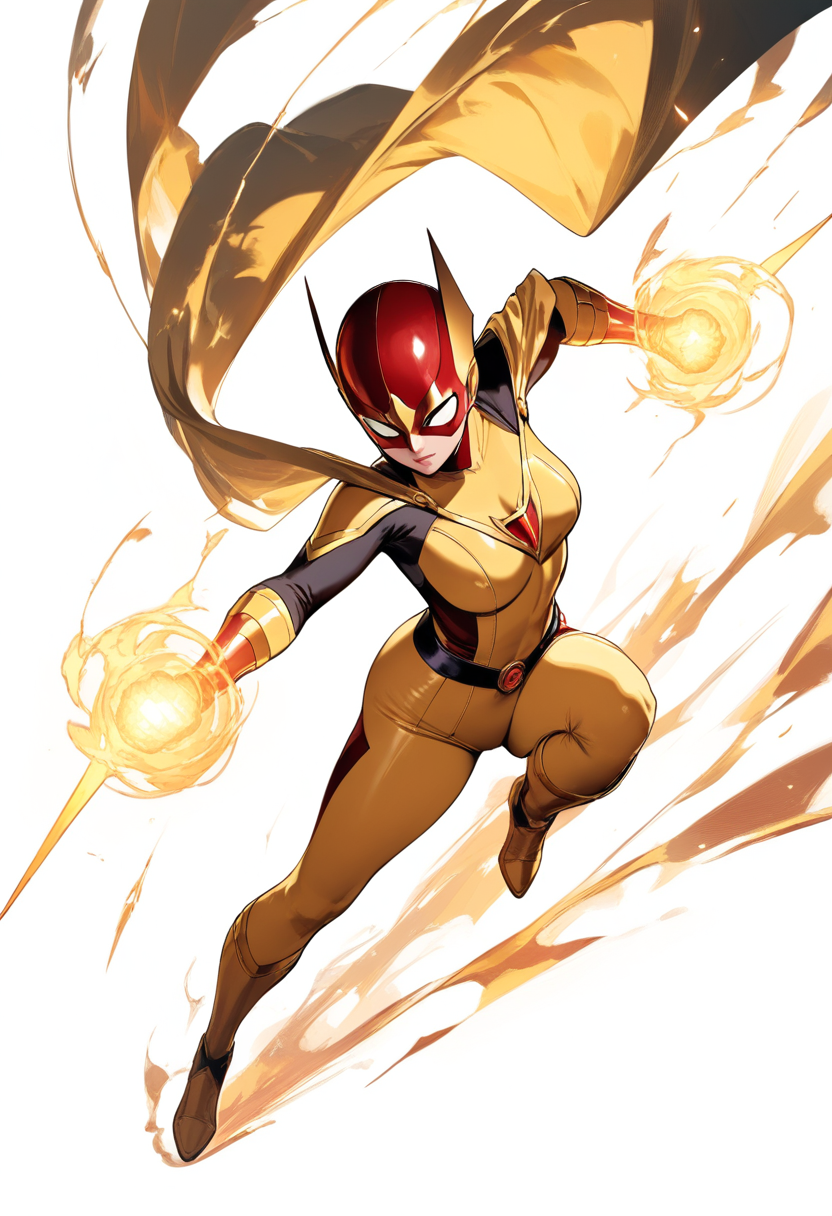
Every Marvel fan has imagined their own superhero at some point. Maybe you pictured yourself swinging through New York alongside Spider-Man, training at Xavier's School, or standing shoulder-to-shoulder with the Avengers against a cosmic threat. The difference between that daydream and a fully realized original character is just a bit of structured creativity and the right tools.
This guide walks you through the entire process of building a Marvel-style superhero OC, from concept to finished character art.
What Makes a Marvel Character Feel Like a Marvel Character
Before you start sketching costumes and picking powers, it helps to understand what separates a Marvel-style hero from a generic superhero.
Personal stakes come first. Peter Parker is not just Spider-Man. He is a broke college student worried about rent, relationships, and his aunt's health. The best Marvel OCs are people first and heroes second.
Powers create problems as often as they solve them. Rogue cannot touch anyone without draining their life force. The Hulk's power is inseparable from Banner's trauma. Think about what your character's abilities take away from them, not just what they grant.
The world is shared and layered. Marvel heroes exist in a universe where Wakandan technology, Asgardian magic, mutant genetics, and cosmic forces all coexist. Your OC should fit into this ecosystem rather than floating in a vacuum.
Choosing Your Character Archetype
Marvel's roster covers an enormous range. Picking an archetype early gives you a foundation to build from.
The Mutant
Mutants are born different. Their powers manifest during adolescence, usually triggered by stress or trauma, and the world fears them for it. A mutant OC automatically comes with built-in conflict: society rejects them, Sentinels hunt them, and they must choose between Xavier's dream and Magneto's philosophy.
When designing a mutant, think about how their power first appeared. Was it public and catastrophic, or private and slow? Did they hurt someone?
Power ideas: bioelectric field generation, organic crystal armor, probability distortion, emotional projection, molecular density control.
The Tech Hero
Tony Stark proved that genius with enough resources can stand alongside gods. The key to a good tech hero is specificity. Do not just give them a generic power suit. Define what the tech does, where they got the resources, and what happens when the tech breaks.
Power ideas: adaptive nanoweave armor, hardlight weapon projection, neural interface combat systems, drone swarm coordination, gravity lens manipulation.
The Cosmic Powered
Characters like Captain Marvel, Nova, and Silver Surfer draw strength from forces beyond Earth. The challenge is keeping them grounded enough to be relatable. Carol Danvers works because she is still a human from Boston who happens to channel stellar power.
Power ideas: stellar energy channeling, dimensional phasing, cosmic awareness, void manipulation, photon burst generation.
The Street-Level Vigilante
Daredevil, Moon Knight, Jessica Jones, Punisher. These heroes deal with crime, corruption, and personal demons rather than world-ending threats. Their powers are often modest or absent, and their stories are defined by grit and moral ambiguity.
Power ideas: enhanced senses, peak human conditioning, tactical precognition, pain suppression, fear-based intimidation presence.
The Spider-Verse Original
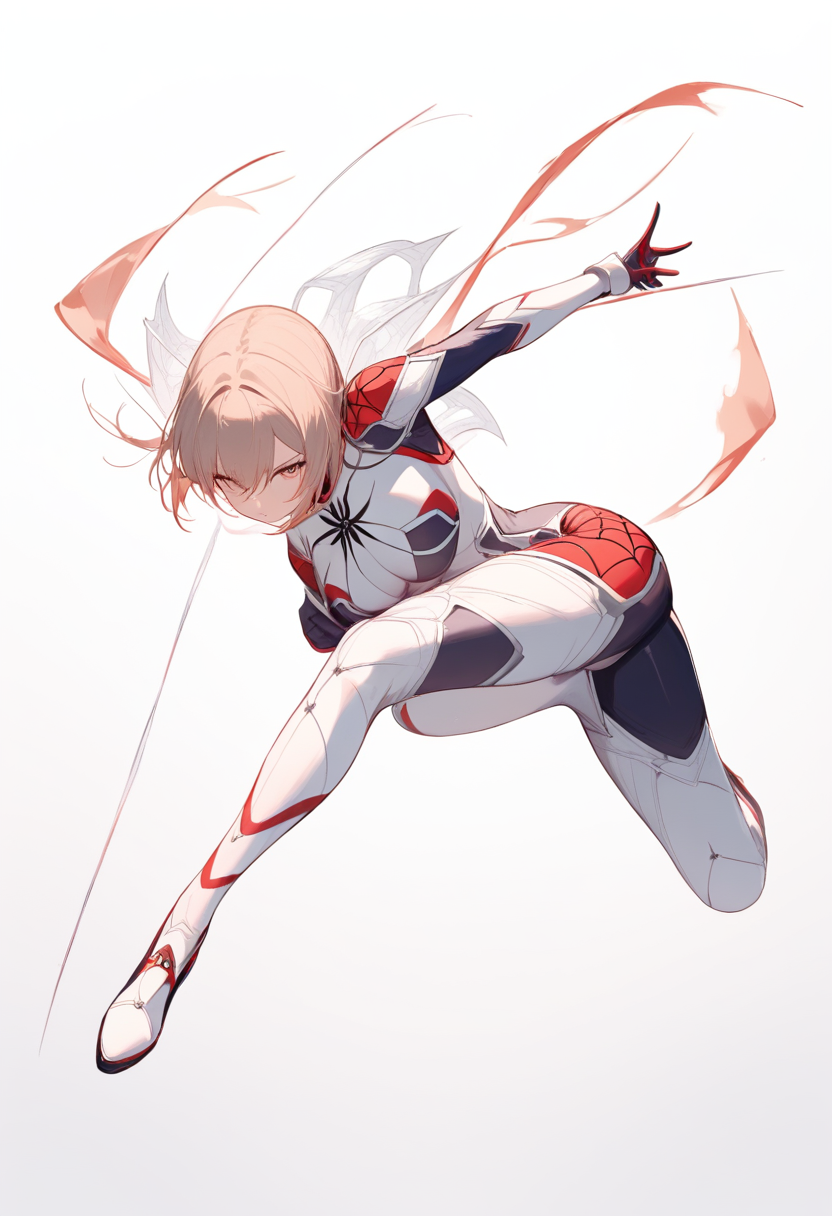
The Spider-Verse has proven the spider-powered archetype is endlessly flexible. Wall-crawling, web-slinging, and spider-sense form the base, but what you add on top makes the character unique.
Think about what dimension your spider character comes from, what their version of "great responsibility" looks like, and how their suit reflects their personality.
Archetype Comparison
| Archetype | Power Source | Story Scale | Built-in Conflict |
|---|---|---|---|
| Mutant | Genetic | Personal to global | Social rejection, identity |
| Tech Hero | Engineering | Corporate to global | Resource dependence, ethics |
| Cosmic | Universal forces | Galactic | Losing humanity, overwhelming power |
| Street-Level | Minimal/none | Neighborhood | Moral ambiguity, personal cost |
| Spider-Verse | Spider mutation | City to multiverse | Responsibility, isolation |
Designing the Costume
A superhero costume is not just clothing. It is visual storytelling. Every element communicates something about the character.
Color Palette
Marvel costumes use bold, saturated colors with high contrast. Pick two or three main colors and commit. Look at how classic designs work: Spider-Man's red and blue, Wolverine's yellow and navy, Scarlet Witch's red and black.
- Darker palettes for street-level and anti-hero characters
- Brighter, saturated schemes for cosmic and classic heroic archetypes
- Metallics and glowing accents for tech-based powers
The Mask and Emblem
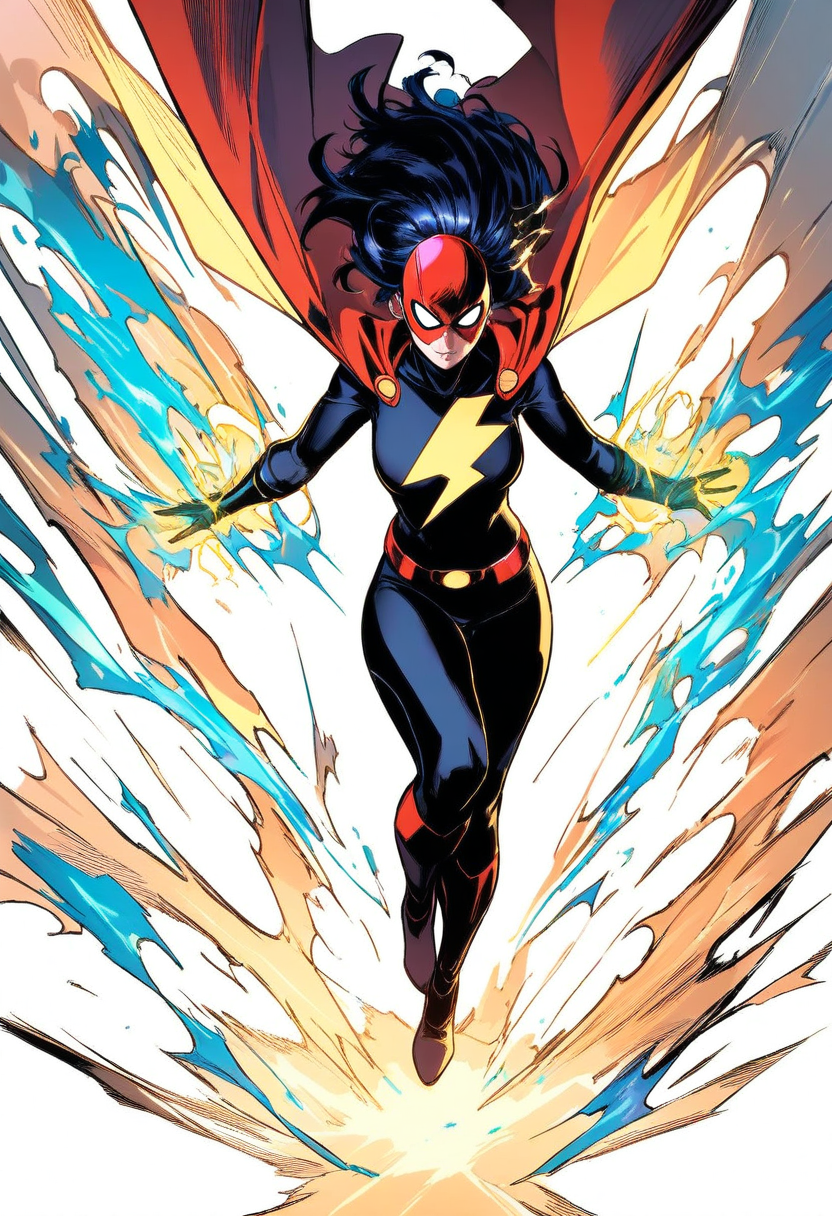
Most Marvel heroes have a distinctive mask and a chest emblem. These two elements make a character instantly recognizable in silhouette.
Your mask should serve a narrative purpose: protecting a secret identity, intimidating opponents, or interfacing with technology. The emblem should represent powers, origin, or philosophy in a single graphic symbol.
Practical Details
The best Marvel costumes feel like they could exist. Add texture and material variation: a costume mixing leather, metal, and fabric panels looks more believable than one made of undefined material.
Think about:
- Where the character stores their gear
- How the costume handles damage
- Whether it is self-repairing nanotech or kevlar that needs stitching
Tip: When designing, sketch the silhouette first. If your character is not recognizable from just their outline, the costume needs simplification. The strongest Marvel designs read clearly at any size.
Building the Backstory
A Marvel backstory does not need to be complicated, but it does need emotional weight. The best origin stories can be summarized in a sentence or two while carrying real depth.
Four Essential Backstory Elements
-
The inciting event. What changed your character's life? A lab accident, genetic activation, mentor's death, alien encounter. The moment before and after.
-
The choice. Marvel heroes are defined by what they choose to do with their power. Some spend years running from responsibility before accepting it.
-
The cost. What did becoming a hero take from them? Relationships, safety, normalcy, innocence. The cost is what makes the audience care.
-
The world connection. Where does your character fit? Are they connected to S.H.I.E.L.D., Wakanda, the X-Men, the Defenders? Institutional connections give ready-made allies, enemies, and story hooks.
Bringing Your OC to Life with AI
Once you have your concept locked down, Oniichan's Marvel OC Maker can turn it into actual visual art.
What Makes It Work for Superheroes
Costume detail control. Specify materials, color placement, emblem design, mask type, and accessories. The generator handles complex elements like glowing energy effects, metallic armor plating, and flowing capes.
Multiple poses and angles. A single description can produce action poses, portraits, and full-body reference views --- essential for seeing how the costume works from multiple perspectives.
Style consistency. Once you find a look, generate variations that maintain the core design while exploring different poses and lighting conditions.
Iterative refinement. Start broad and progressively add detail. The first generation gives you a base to react to, then specify adjustments.
Prompting Tips for Superhero Characters
Structure your prompt to cover these elements in order:
- Character build and posture --- Athletic, imposing, lean, compact
- Costume description --- Top to bottom: mask, chest, arms, legs, boots, cape
- Power visual effects --- Glowing hands, energy aura, crackling electricity
- Setting and mood --- Rooftop at night, destroyed city, training facility
Before: "cool superhero girl"
After: "Athletic female hero in dark blue and silver armor, angular visor with glowing blue lenses, chest emblem of a cracked star, gauntlets crackling with bioelectric energy, standing on a rain-soaked rooftop"
Character Concept Starters
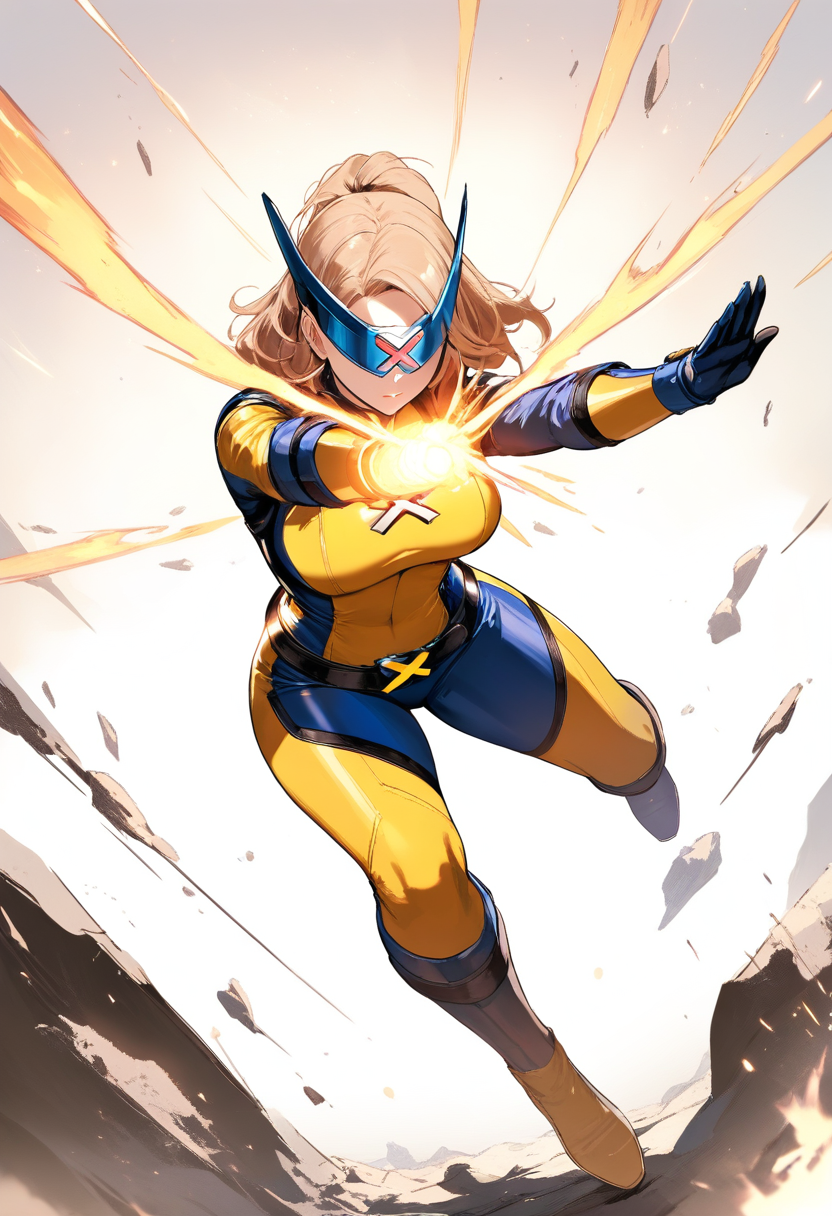
If you need a jumping-off point, here are concepts designed to fit naturally into the Marvel universe:
Threshold -- A young mutant whose power lets them exist in two places simultaneously, but only within line of sight. Recruited by Xavier's school after accidentally duplicating during a panic attack. Costume splits down the middle in two contrasting colors.
Alloy -- A former Stark Industries engineer who developed a liquid metal exoskeleton that bonds to the nervous system. Grants shapeshifting weapon capabilities but gradually overwrites their sense of touch. Left the company after discovering the project was being weaponized.
Perihelion -- Absorbed a fragment of a dying star's consciousness. Channels stellar radiation as both destructive force and healing light, but the star fragment is slowly consuming their human memories. Connected to the Nova Corps through a distress signal.
Red Line -- A street-level vigilante and former paramedic who gained limited precognitive flashes after a near-death experience during a Chitauri attack aftermath. Can see injuries before they happen. Operates in Hell's Kitchen, overlapping with Daredevil's territory.
Tip: Notice how each concept includes a power, a cost, a connection to existing Marvel lore, and a visual hook for costume design. Use this same structure when building your own.
From OC to Manga
One of the most satisfying things you can do with a finished superhero OC is put them into an actual story. Oniichan is built for exactly this.
The Workflow
- Design your character in the Marvel OC Maker
- Save them to your character library
- Start a new manga project and drop your character into the story
- Write the outline with scene descriptions
- Generate pages with your OC appearing consistently across every panel
The AI maintains your character's costume, build, and visual identity throughout the entire manga. This is where an OC stops being a concept and starts being a character with actual stories attached to them.
Final Thoughts
Building a Marvel-style OC is one of the most creatively rewarding things a fan can do. It forces you to think about what makes these characters work on a structural level: the personal stakes, the visual language, the world-building, the cost of power.
The tools to bring that character to life visually are more accessible now than ever. You do not need to be an artist. You need a clear vision and a willingness to iterate.
- Start with who your character is as a person
- Layer on the powers and costume
- Connect them to the world
- Generate the art that makes them real
Want to explore other franchise universes? Try the My Hero Academia OC Maker for anime-style superheroes, or browse all available franchises in our franchise OC makers guide.
Try the Marvel OC Maker on Oniichan and build the hero you have been imagining.
Ready to create your own character?
Turn your OC ideas into polished anime character art with consistent designs. No drawing skills needed.