Créateur d'OC My Hero Academia
Créateur d'OC My Hero Academia
My Hero Academia OC Maker: The Quirk Design Lab
My Hero Academia's worldbuilding rests on a single premise: 80% of the population has a superpower, and society rebuilt itself around that fact. The difference between a compelling mha oc maker output and a forgettable one almost always comes down to Quirk design — or more specifically, quirk generator design. Not how powerful the Quirk is — how thoughtfully it's built.
This my hero academia oc maker guide treats Quirk creation as an engineering problem. Every Quirk has a power output, and that output must be balanced against costs, failure modes, and hard ceilings. Think of it as a balance worksheet.
The Four Pillars of Quirk Balance
Horikoshi designs every Quirk with four built-in constraints. Your OC needs all four.
Pillar 1 — Physical Limit What happens to the body when the Quirk is overused? Deku's arms shatter from One For All. Uraraka vomits from weightlessness overload. Todoroki gets frostbite on his right side. The body is not designed to channel supernatural power indefinitely, and the physical toll is what makes fights dramatic.
Ask yourself: What breaks first — muscles, bones, skin, organs, stamina, consciousness?
Pillar 2 — Activation Barrier What specific condition must be met before the Quirk works? Aizawa must maintain unblinking eye contact. Shinso needs a verbal response. Toga needs blood. If your Quirk activates with no preconditions — just thinking it makes it happen — there's no tactical depth.
Ask yourself: Can an opponent prevent the Quirk from activating? How?
Pillar 3 — Environmental Dependency How does the environment limit or enhance the Quirk? Todoroki is less effective in enclosed spaces where his fire risks friendly fire. Tsuyu weakens in cold weather. Tokoyami's Dark Shadow is harder to control in darkness.
Ask yourself: What terrain, weather, or situation makes your OC's Quirk useless or dangerous?
Pillar 4 — Scaling Ceiling How powerful can the Quirk theoretically get, and what's the cost of reaching that ceiling? All Might at peak power could change the weather with a punch — but it shortened his career to a few hours per day. Every Quirk has a maximum output, and hitting it should carry a price.
Ask yourself: If your OC went 100% with no restraint, what would happen to them afterward?
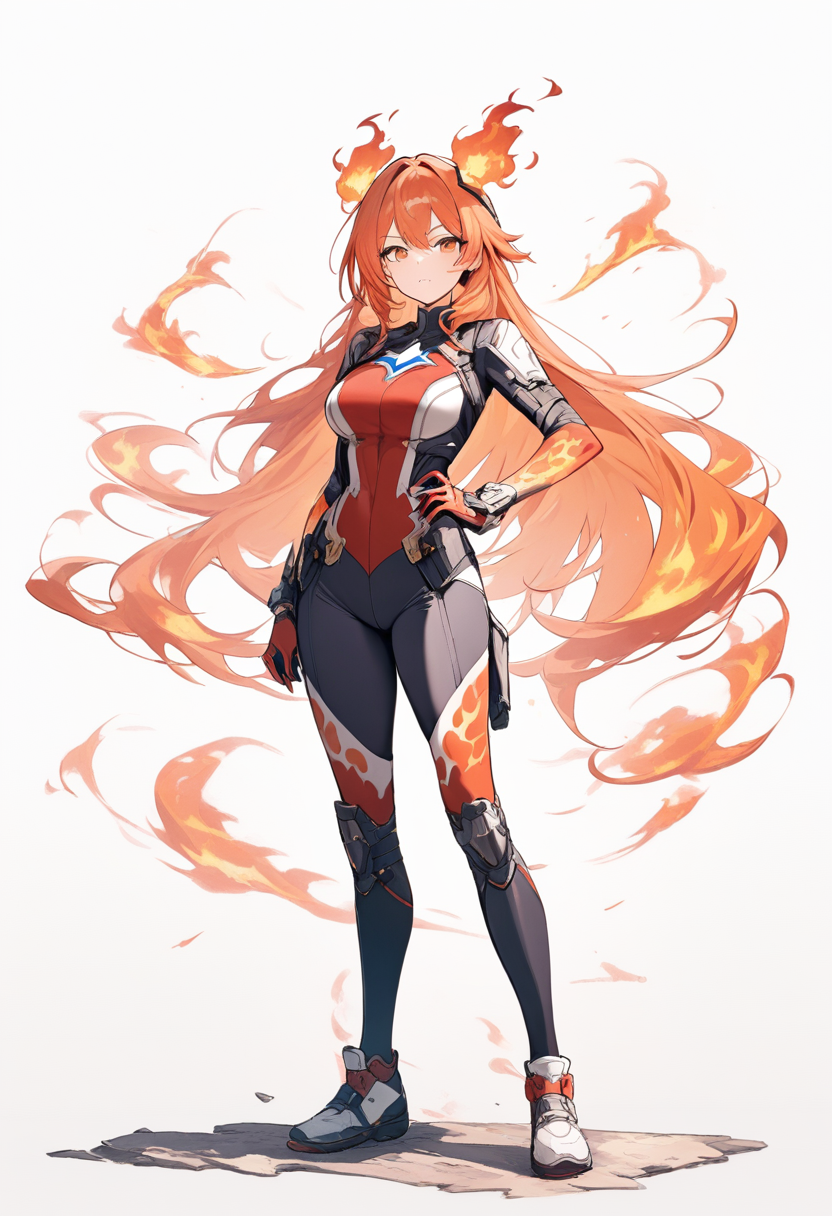
Quirk Balance Worksheet
Fill this out before generating your OC. If any field is blank, the Quirk isn't finished.
| Field | Your Answer |
|---|---|
| Quirk Name | (descriptive, often literal — Explosion, Half-Cold Half-Hot, Erasure) |
| One-sentence description | |
| Physical limit | |
| Activation barrier | |
| Environmental weakness | |
| Maximum output and its cost | |
| How an intelligent opponent exploits it | |
| Quirk type (Emitter / Transformation / Mutant) |
Quirk type breakdown:
- Emitter — Projects or generates something external (fire, gravity fields, shockwaves). Most common and most flexible. Can be turned off.
- Transformation — Changes the user's body temporarily (gigantification, hardening, shapeshifting). Active during use, reverts after. The transformation itself often telegraphs the power to opponents.
- Mutant — Permanent physical alteration (extra limbs, animal features, altered biology). Always on, can't be suppressed. Carries social implications in MHA's world — mutant-type Quirk users face discrimination.
Hero Name Conventions
Hero names in MHA follow specific patterns. Study them before naming your OC:
Descriptive names: Describe the Quirk directly. Earphone Jack (Jirou), Cellophane (Sero), Creati (Yaoyorozu). Functional, professional, immediately tells you what the hero does.
Aspirational names: Evoke an ideal or feeling. Deku (can-do), Lemillion (saving a million people), Suneater (consuming the sun's power). These work for characters with ambitious arcs.
Intimidation names: Project threat. Endeavor, Hawks (birds of prey), Mirko (derived from Miruko, a fierce rabbit). Good for combat-focused or aggressive heroes.
Pun names: This is an MHA tradition. Ingenium (engine + ingenious), Present Mic (he's loud), Mt. Lady (she gets big). Wordplay is encouraged.
Villain names follow different rules — they tend toward the dramatic, the mythological, or the unsettling. Shigaraki (from a real Japanese place name), Dabi (cremation), Twice (duality), Overhaul (remaking).
Costume-Quirk Synergy
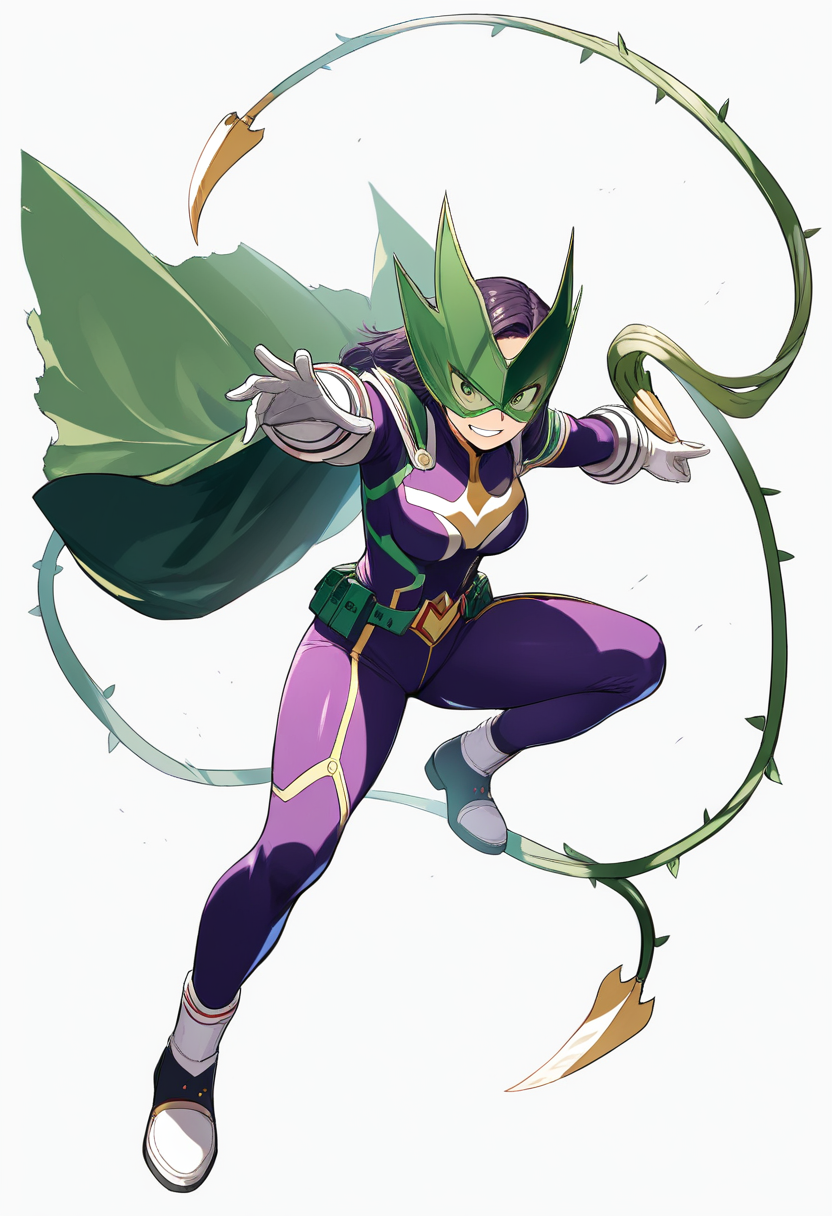
In MHA, hero costumes aren't just aesthetic — they're support gear engineered for the Quirk. Bakugo's gauntlets store sweat for bigger explosions. Uraraka's suit has pressure points to manage nausea. Iida's armor has radiators for his engine calves.
Design your costume by answering:
- What does the Quirk need to function better? (storage, amplification, cooling, protection)
- What body part is most involved in the Quirk? (highlight it visually)
- What's the Quirk's failure mode? (design a countermeasure into the costume)
- What's the hero's fighting style? (ranged needs mobility, melee needs armor, rescue needs utility)
A well-designed costume tells the story of the Quirk without a single word of explanation.
The U.A. Entrance Exam Power Check
If your OC is a U.A. student, they passed the entrance exam. This is a useful calibration tool — the exam requires destroying robots, which means your Quirk needs some form of combat application. Characters with purely supportive or utility Quirks (like Shinso's Brainwashing) had to take the recommendation path or prove themselves in alternative assessments.
Does your Quirk pass the robot test?
- Can it damage or disable large metal targets? Direct combat type.
- Can it immobilize or obstruct robots without damage? Tactical type — your OC probably rescued civilians for rescue points instead.
- Can it do neither? Your OC entered through recommendations, the support course, or the general studies department with a transfer arc.
None of these paths is inferior. Shinso's journey from General Studies to Hero Course is one of the most popular arcs in the series precisely because he couldn't punch robots.
Villain and Anti-Hero Quirk Design
Villain Quirks in MHA are often the same type of Quirk a hero might have, but used without restraint or twisted by trauma. Shigaraki's Decay could be used for demolition work. Toga's Transform could be used for undercover hero work. The Quirk isn't evil — the person is.
What makes a villain Quirk feel villainous in design:
- The visual effect is unsettling (decay, disintegration, body horror)
- The Quirk is inherently invasive (controlling others, stealing abilities, forced transformation)
- Society rejected the user because of the Quirk's nature (too dangerous, too disturbing, mutant discrimination)
The best MHA villains are people whose Quirks society failed to accommodate. Design your villain OC's Quirk first, then ask: how did the world react to this power in a child?
Class Dynamics and Character Roles
If your OC is in a hero class, their role in the group matters as much as their individual Quirk.
Frontline combatant — High-output offensive Quirk. Bakugo, Todoroki tier. These characters define the pace of battle but often struggle with teamwork.
Support/control — Quirks that enable teammates or restrict enemies. Shinso, Aizawa type. Strategically invaluable but vulnerable in solo situations.
Rescue specialist — Quirks oriented toward saving civilians. Thirteen, early Deku. Often physically fragile but morally unshakeable.
Reconnaissance — Sensory or infiltration Quirks. Jirou, Hagakure. Essential for information but rarely in the spotlight during combat.
Wildcard — Quirks that are unpredictable or situationally nuclear. Tokoyami at night, Monoma with a good copy. High ceiling, low floor.
Prompt Guidance
"A U.A. hero student / pro hero / villain in [costume description tied to Quirk], [Quirk visual effect manifesting], [body type and age], [pose — combat stance / rescue reach / dramatic villain entrance], My Hero Academia anime art style, dynamic action lines"
Frequently Asked Questions
Can my OC have multiple Quirks? In canon, this is extraordinarily rare and associated with All For One's power or extreme scientific modification. A single well-designed Quirk with multiple applications is always more compelling than stacking two mediocre powers.
How strong should my OC be compared to canon characters? If they're a student, below pro heroes. If they're a pro hero, below the top 10 unless you're writing a specific power-scaling story. MHA's most beloved characters (Mirio, Hawks, Aizawa) are interesting because of HOW they use limited power, not because they're the strongest.
Should my OC be a hero or villain? The line between them in MHA is thinner than in most series. Some of the most interesting OCs are characters who could have gone either way — where a single moment of kindness or cruelty tipped the scale.
Can my Quirk be similar to an existing one? Variations on a theme are fine. Canon already has multiple fire users (Endeavor, Dabi, Burnin), multiple strength enhancers, and multiple transformation types. Make yours mechanically distinct — same element, different application.
Related Character Tools
Naruto OC Maker
Create original Naruto ninja characters with village affiliations and jutsu styles.
JJK OC Maker
Design Jujutsu Kaisen original characters with cursed techniques and sorcerer styles.
One Piece OC Maker
Design One Piece original characters with Devil Fruit powers and pirate crews.
Dragon Ball OC Maker
Create Dragon Ball characters with Saiyan transformations and energy attacks.
Blue Lock OC Maker
Design Blue Lock original characters with unique soccer skills and playstyles.
OC Generator
Create original characters for any fandom or original universe with AI.
Créez votre héros MHA
Donnez vie à votre personnage My Hero Academia original. Essayez le créateur d'OC gratuit et découvrez votre Alter !