Créateur de personnages anime
Créateur de personnages anime
Anime Character Maker: Sheet Production Guide
In professional animation studios, a character does not exist until it has a character sheet. Not a single pretty illustration — a complete reference document that lets any artist on the team draw that character consistently from any angle, in any emotion, wearing any outfit.
An anime character maker or anime character generator can now produce these sheets — acting as a character sheet generator and anime character creator ai in one tool. But knowing what to ask for requires understanding what a character sheet actually contains and why each component exists.
What Goes on a Professional Character Sheet
A full character sheet (called a settei in Japanese animation production) typically includes these components:
1. Turnaround Views (Model Sheet)
The foundation. Three to five views of the character in a neutral standing pose:
- Front view (most important — this is the "canonical" face)
- Three-quarter view (the most commonly drawn angle in animation)
- Side/profile view (reveals nose shape, hair depth, body silhouette)
- Back view (hair from behind, outfit details not visible from front)
- Three-quarter back view (optional but useful for over-the-shoulder shots)
All views must share the same height, proportions, and level of detail. A horizontal line drawn at any body landmark (eyes, shoulders, waist, knees) should hit the same point across all views.
2. Expression Sheet
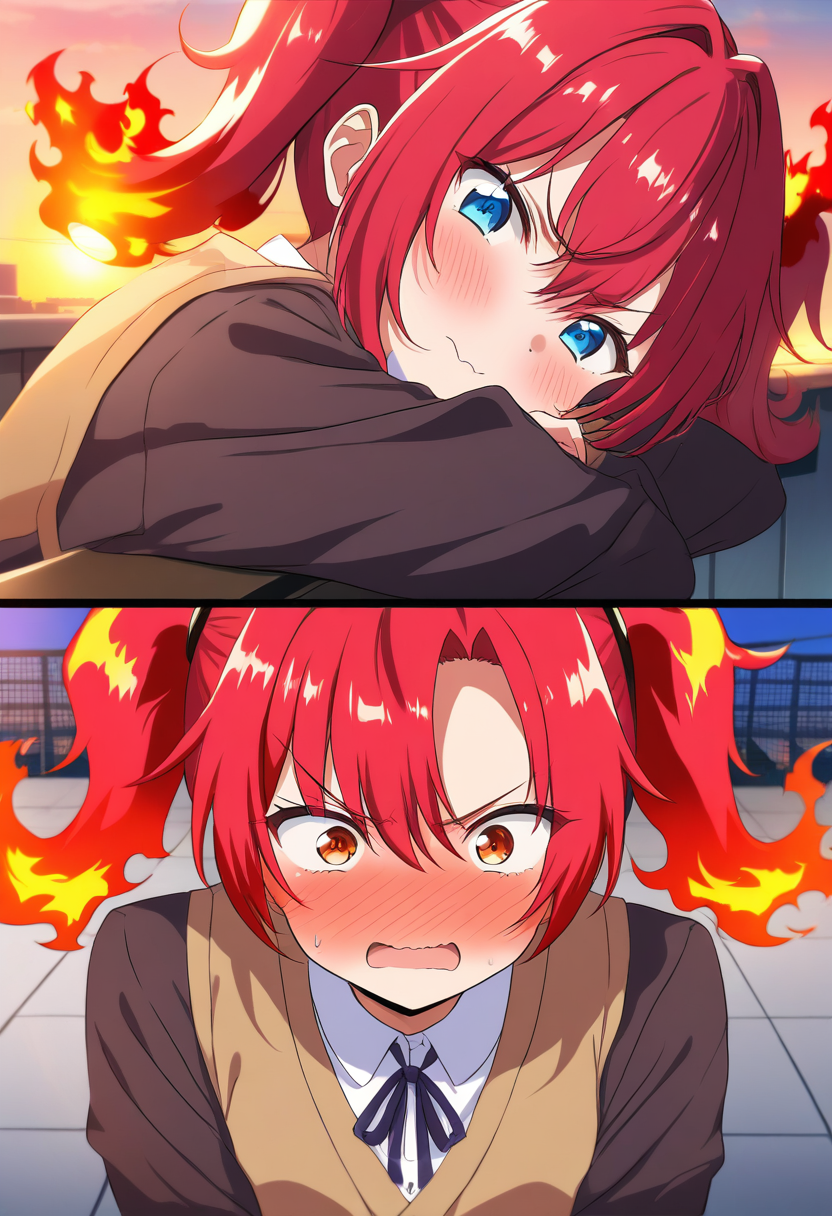
The character's face in a grid of emotions. Standard expressions include:
| Expression | What It Shows |
|---|---|
| Neutral | Default resting face — the "zero state" |
| Happy / Smiling | How the face changes when relaxed and positive |
| Angry | Eyebrow angle, mouth tension, how the eyes narrow |
| Sad | Downturned features, eye highlight reduction |
| Surprised | Wide eyes, open mouth, raised eyebrows |
| Embarrassed | Blush placement, averted gaze direction |
| Determined | Set jaw, focused eyes, slight lean forward |
| Laughing | Open mouth shape, closed eyes, head tilt |
The expression sheet proves the design works emotionally. A character who looks great in neutral but whose face falls apart when angry has a design problem.
3. Height Comparison Chart
Characters drawn side by side at correct relative heights. This is critical for any project with multiple characters. A chart might show the main cast lined up, with horizontal lines marking key height relationships (Character A's eyes are at Character B's nose level, etc.).
4. Outfit Variations
Most characters wear more than one outfit across a story. Each outfit gets its own mini-sheet showing:
- Full body front view
- Detail callouts for unique elements (a specific buckle, a pattern, a logo)
- Color reference (flat color blocks next to the outfit)
- Notes on how the outfit moves (where fabric is loose vs tight)
5. Accessory and Prop Details
Close-up drawings of items the character carries or wears regularly. A weapon, a bag, a piece of jewelry, glasses. These are drawn large enough to show construction details that would be too small on the full-body reference.
The Production Sequence
Do not try to generate everything at once. Follow the studio production order.
Step 1: Lock the front view.
This is the canonical representation. Everything else derives from it. Generate variants until the front view nails the character. Get the face shape, hair style, outfit, proportions, and color palette exactly right. Do not move to the next step until this is locked.
Prompt structure: "Full body front view, character sheet style, white background, neutral standing pose, detailed anime character design, [full character description], clean lineart, reference sheet"
Step 2: Generate the three-quarter view.
Using the locked front view as reference, generate the three-quarter angle. The most common problem here is the AI changing the face shape or hair volume. Be explicit about matching the front view.
Prompt structure: "Three-quarter view of the same character, matching proportions and design from the front view reference, character sheet style, white background, consistent details"
Step 3: Profile and back views.
These reveal information not visible from the front: the nose profile, the depth of the hair, back details of the outfit. Profile views are where many designs reveal hidden inconsistencies — hair that made sense from the front might not have a logical profile silhouette.
Step 4: Expression sheet.
Generate the face at consistent size across 6-8 expressions. The key constraint is that the face shape, eye size, hair framing, and general proportions must remain identical — only the movable features (eyebrows, mouth, eyelids, blush) change.
Prompt structure: "Expression sheet, anime character face, [character name/description], 6 expressions in a grid: neutral, happy, angry, sad, surprised, embarrassed, consistent face shape across all expressions, white background, reference sheet style"
Step 5: Outfit variations.
Each distinct outfit the character wears in the story gets a full front view render. Keep the body pose identical to the base sheet so the only variable is the clothing.
Consistency Techniques
The hardest part of character sheet creation — whether traditional or AI-assisted — is maintaining consistency across views and expressions. Here are techniques that help.
Use the same seed and modify only what needs to change. If your generator exposes seed control, lock the seed from your best front view and adjust only the angle/expression descriptors for subsequent generations.
Describe proportions in ratios, not absolutes. "Eyes positioned at the halfway point of the head height, nose at three-quarters, mouth at seven-eighths" gives the AI geometric anchors that survive across angles.
Reference your own previous outputs. When generating the side view, attach the front view as a reference image. The AI uses it as a visual anchor for the same character's features.
Color-code the sheet. Include flat color swatches next to the character: "hair: #2C1810, eyes: #4A90D9, skin: #F5D6C3, jacket: #1A1A2E." This prevents color drift between generations.
Common Character Sheet Mistakes
Drawing the "cool pose" instead of the neutral pose. Character sheets are technical documents. The turnaround must be a neutral, straight standing pose — no lean, no action, no attitude. Cool poses go in a separate illustration. The sheet is the blueprint.
Ignoring hair from behind. Front-view hair design often creates problems when you turn the character around. Twin tails need attachment points. A ponytail's volume and position need to be established. Bangs wrap differently around the head profile. Design the hair in 3D, not just as a front-facing shape.
Inconsistent eye size. This is the most common AI artifact in character sheets. The eyes in the three-quarter view should be the same size as in the front view, just perspectively compressed. Watch for the AI making eyes larger or smaller across views.
Forgetting height proportions. If your character is "tall" in the front view and "average" in the side view, the sheet is useless. Specify height in head-count proportions (7 heads tall, 6.5 heads tall) and enforce it across all views.
Beyond the Basic Sheet: Advanced References
Professional productions include additional reference pages:
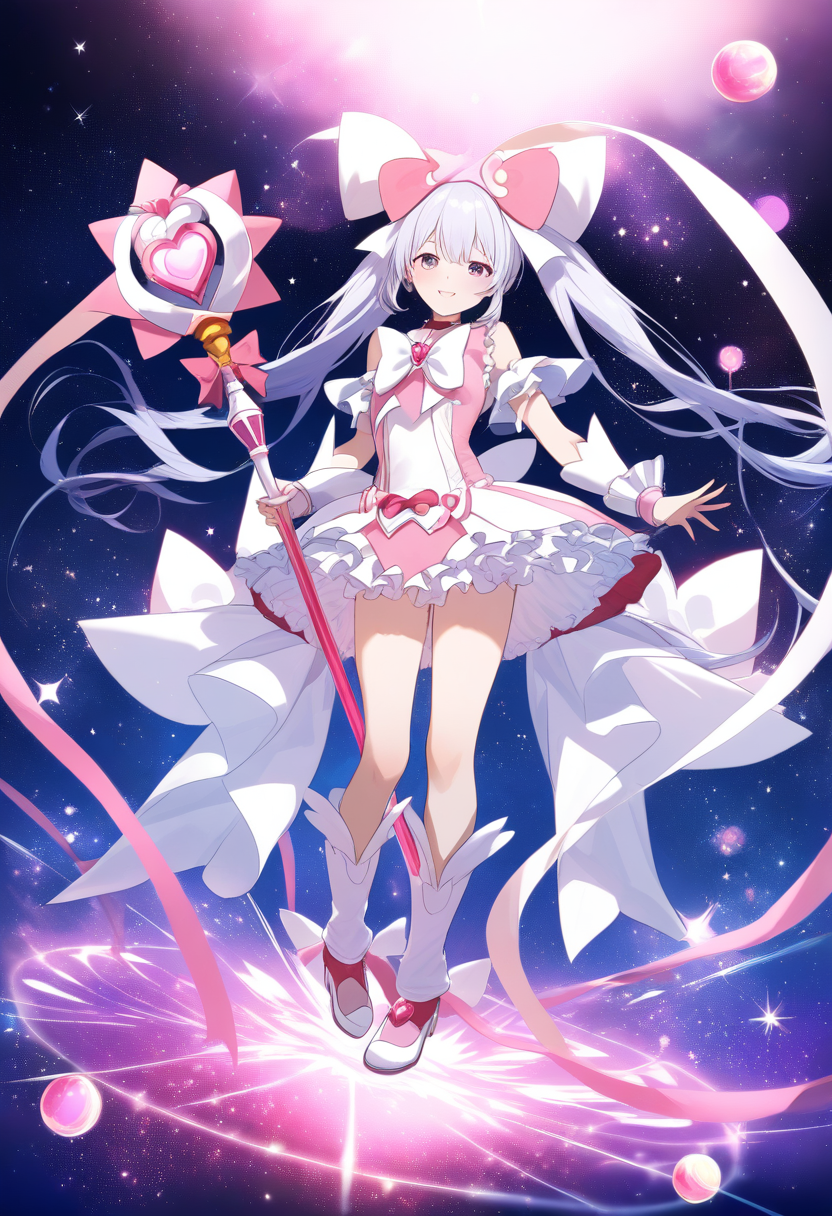
Action pose sheet: 3-4 dynamic poses showing how the character moves. A fighter's combat stance. A mage's casting pose. A runner's mid-stride. These test whether the design works in motion, not just at rest.
Damage / alternate state sheet: The character injured, dirty, powered-up, or transformed. These states need to be designed, not improvised during production.
Chibi reference: If the project uses super-deformed comedy moments, the chibi version of the character needs its own mini-sheet with consistent proportions.
The Sheet Is the Character
A common misconception is that the character sheet is a step you do before the "real" art. In professional animation, the character sheet IS the character. It is the single source of truth. Every frame of animation, every manga panel, every game sprite points back to the sheet.
Invest the time to make your character reference sheet thorough and consistent. Everything downstream — from manga pages to fan art to merch designs — depends on this foundation being solid.
Related Character Tools
Character Creator
Design original anime characters with unique outfits, hairstyles, and expressions.
Original Character Generator
Generate diverse character designs and concept art from text prompts.
OC Generator
Create original characters for any fandom or original universe with AI.
AI Waifu Generator
Generate beautiful anime waifu characters with unique designs and personalities.
Chibi Maker
Create adorable chibi-style character art with oversized heads and cute proportions.
AI Anime Art Generator
Create stunning anime artwork and illustrations with AI-powered generation.
Commencez à créer des personnages anime dès aujourd'hui
Donnez vie à vos idées de personnages anime en quelques secondes. Essayez le Créateur de personnages anime maintenant et concevez des personnages originaux, avatars et OC avec la puissance de l'IA.