Creador de OC de Undertale
Creador de OC de Undertale
Every Encounter Is a Conversation
Undertale redefined what a character can be in a game. Every monster you meet — from the final boss to a snowflake selling ice cream — has a personality, a vulnerability, and a reason they're fighting you. Most of them would rather not. That's the design principle your OC has to embody: they're not just a creature with stats, they're a person you meet in combat who might prefer to talk.
The genius of Undertale's character design is that the battle system IS the personality. A monster's attacks are their emotions made physical. Toriel's flames avoid you when she doesn't really want to hurt you. Papyrus's attacks spell out words. Undyne's spears reflect her direct, uncompromising nature. When you design an Undertale OC, you're designing a conversation as much as a character.
The Soul Trait System
In Undertale, human souls have a color-coded trait that defines their fundamental nature. If your OC is human (or human-adjacent), their soul color determines everything about how they interact with the world.
| Soul Color | Trait | Gameplay Mechanic | Personality Implications |
|---|---|---|---|
| Red | Determination | Free movement in battle box | Refuses to give up. Literally cannot stay dead. The protagonist's trait. |
| Orange | Bravery | Must keep moving to survive | Charges forward, confronts danger head-on, uncomfortable standing still |
| Yellow | Justice | Shoot projectiles (inverted combat) | Fights for fairness, judges others, struggles with moral grey areas |
| Green | Kindness | Shield-based defense, cannot move freely | Protects others first, self-sacrificing, may neglect own needs |
| Cyan | Patience | Must stay still to avoid damage | Waits, observes, endures — but patience has a breaking point |
| Blue | Integrity | Gravity-affected platforming in battle | Honest, principled, weighed down by their own standards |
| Purple | Perseverance | Constrained to fixed paths | Keeps going no matter what, follows through, possibly obsessive |
Each of the six fallen humans in Undertale had one of these traits and left behind a signature weapon and armor piece in the Underground. Your OC's soul trait should shape not just their personality but their fighting style, their movement, and even their dialogue patterns.
The red soul — Determination — is special. It's the only trait that enables saving and loading. If your OC has a red soul, you're writing a character with power over the timeline itself. Handle that carefully.
Monster vs. Human OC Paths
The two creation paths in Undertale aren't just cosmetic — they represent fundamentally different existences.
Human OCs
- Possess a soul trait (one of seven colors)
- Physically stronger than monsters by default
- Fell into the Underground through Mt. Ebott (or are they from the surface post-Pacifist?)
- Can SAVE, LOAD, and RESET if they have enough Determination
- Design freedom: any appearance, any age, any background — humans in Undertale are barely described visually, leaving room for interpretation
- The big question: are they the kind of person who fights, runs, or talks?
Monster OCs
- Made primarily of magic, physically fragile but magically diverse
- Their body reflects their nature (fire monsters are fire, dog monsters are dogs, goat monsters are goat)
- Killed permanently by a human with intent — monster dust
- Live in a specific region of the Underground (or the surface post-Pacifist)
- Can absorb a human soul to become godlike (but at what cost?)
- Design freedom: literally anything. Monsters in Undertale range from skeleton brothers to a plane that's also a person
The visual gap matters: Undertale humans are simple, almost blank-slate designs (striped shirts, minimal features). Monsters are wildly creative and varied. Your choice affects how much visual complexity your OC gets.
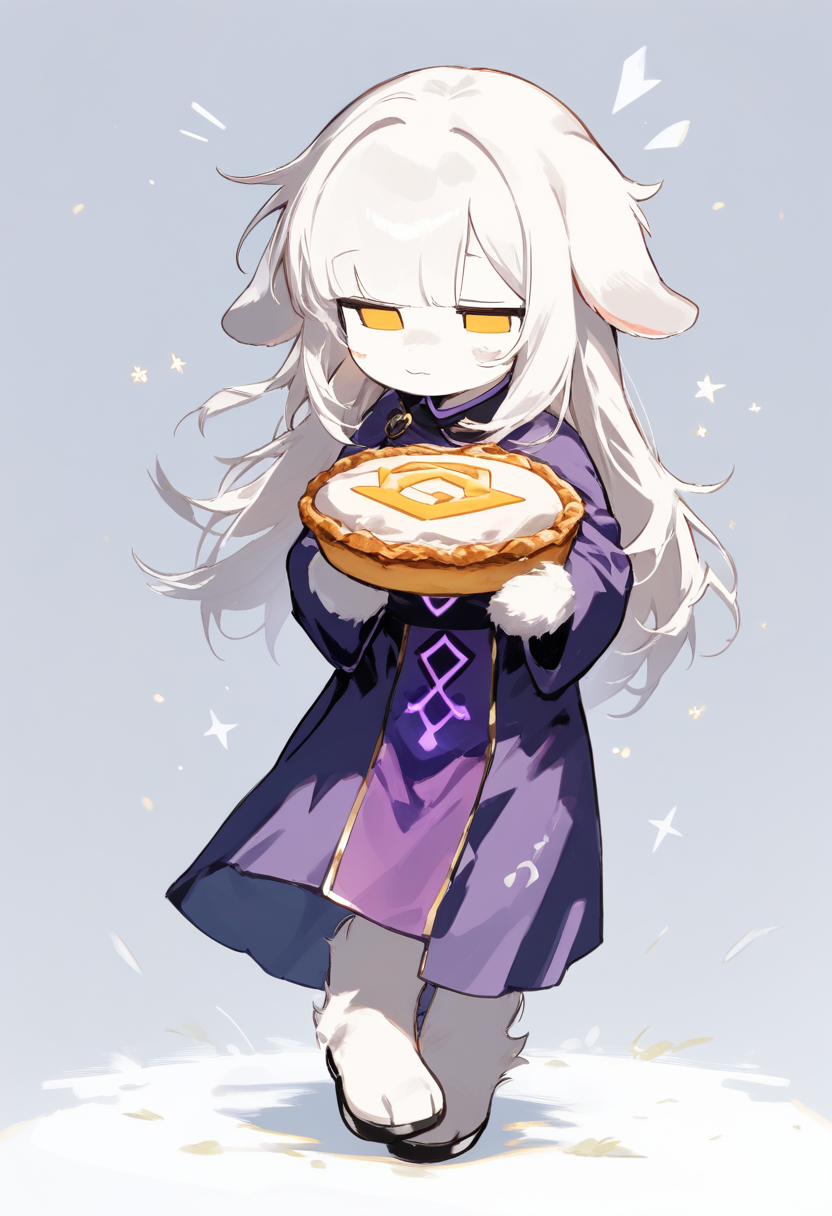
Bullet Pattern Design: Your OC's Emotional Fingerprint
This is the single most creative element of Undertale OC design, and the most often skipped. In Undertale, every monster's attack pattern in the bullet board is an expression of their personality. Designing your OC's attacks is designing their inner world.
Canon pattern-to-personality examples:
- Toriel: Fire magic that deliberately avoids the soul when her HP is low — she can't bring herself to kill you
- Papyrus: Bone attacks that spell words, blue attacks that require you to stand still (patience with his puzzles)
- Undyne: Directional spears, forces you to face attacks head-on (Green soul mode) — you WILL fight her fairly
- Muffet: Spider webs with safe zones you have to pay to use — even her attacks are a business
- Mettaton: Attacks are a TV show with ratings — performance IS the combat
Designing your OC's bullet pattern:
- What emotion does your OC express most during combat? (Anger = fast, chaotic. Sadness = slow, unavoidable. Playfulness = pattern-based, puzzle-like.)
- What shape are their projectiles? (Relate to their nature: a baker throws rolling pins and cupcakes, a musician fires musical notes, a librarian throws letters)
- Do they have a special soul mode? (Canon modes: Blue/gravity, Green/shield, Yellow/shooter, Purple/rail)
- How does the pattern change as the fight progresses? (Softening if you ACT kindly? Intensifying if you threaten?)
- What does the pattern look like when they don't want to fight? (Gaps, slower speed, projectiles that curve away)
Underground Locations and Character Design
Where a monster lives in the Underground shapes their appearance, culture, and daily life. Each region has a distinct aesthetic that should bleed into your OC's design.
Ruins — Purple stone, fallen leaves, spider webs, old architecture. Monsters here are often small, timid, and stuck in the past. The Ruins feel like a retirement community for monsters who gave up on the rest of the Underground.
Design cues: muted purples, leaf motifs, weathered textures, small stature, old-fashioned manner
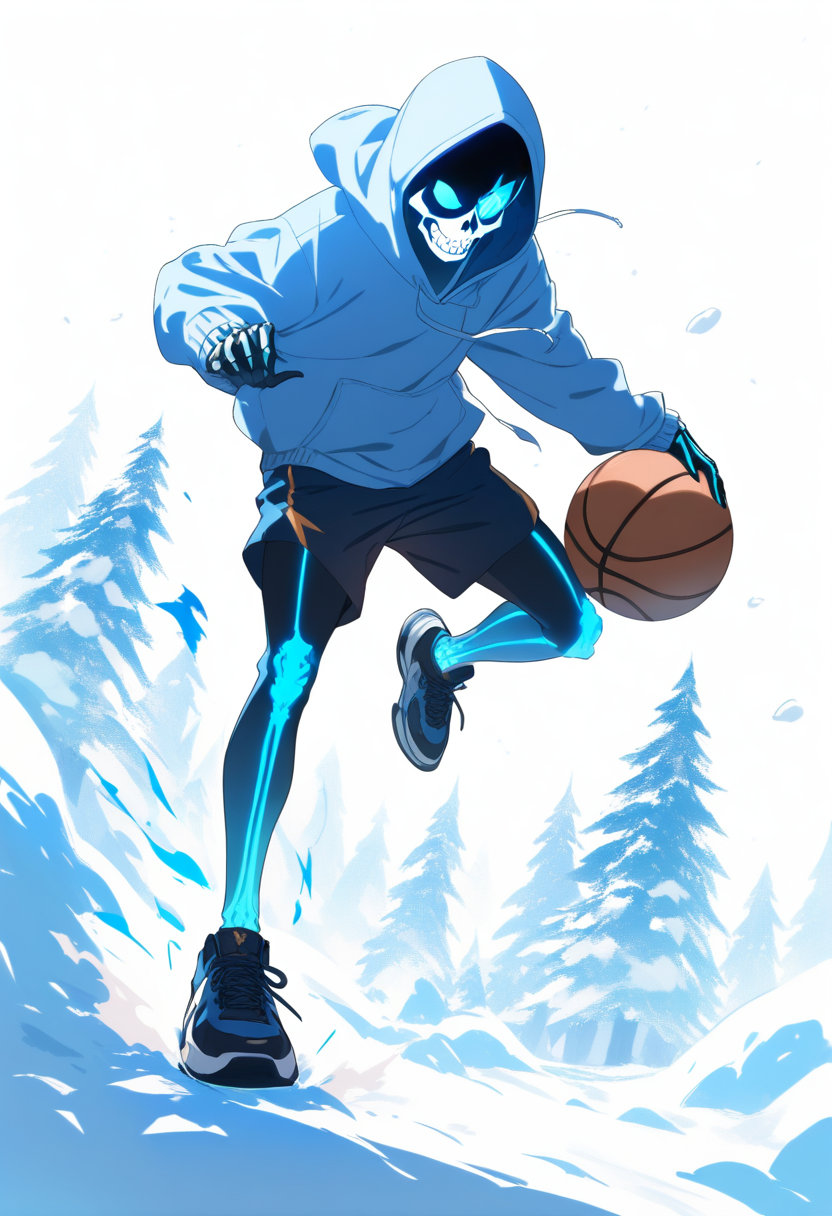
Snowdin — Eternal winter, pine trees, holiday decorations, a warm community in a frozen place. Snowdin monsters are friendly, cozy, and deeply weird. It's a small town where everyone knows everyone and the local celebrity is a skeleton who makes puns.
Design cues: winter clothing, warm colors on cold bodies, snowflake patterns, comfort food imagery, approachable demeanor
Waterfall — Bioluminescent caves, echo flowers, waterfalls, ancient glyphs. The most atmospheric region. Monsters here are often contemplative, artistic, or ancient. Waterfall is where the Underground remembers its history.
Design cues: blue/teal glow, translucent elements, aquatic features, glowing patterns, quiet presence
Hotland — Volcanic, technological, Alphys's lab, the CORE. The Underground's industrial heart. Monsters here are heat-resistant, tech-adjacent, or working at the MTT Resort. The vibe shifts from natural to artificial.
Design cues: reds/oranges, metallic elements, lab coats, lava-proof features, geometric shapes
New Home / The CORE — Grey, geometric, humming with energy. The royal capital. Monsters here are close to the king's court or the barrier itself. The atmosphere is heavy with the weight of what's about to happen.
Design cues: grey tones, crown/royal motifs, electrical patterns, solemnity
Pacifist vs. Genocide: What Route Your OC Exists In
Undertale's route system doesn't just affect gameplay — it affects which version of the world your OC lives in. This is a worldbuilding decision.
Pacifist context — Everyone lives. Monsters reach the surface. Your OC's story is about what comes after: adapting to human society, finding purpose above ground, dealing with the trauma of centuries underground. The tone is hopeful but complicated.
Neutral context — Some survived, some didn't. The Underground continues. Your OC exists in the ambiguity of a world where the player made imperfect choices. Some friends are dead. Some aren't. Nobody got a clean ending.
Genocide context — Your OC is either dead, hiding, or Chara. This is the bleakest timeline. An OC who survived a Genocide run has witnessed the extinction of their people. That character is fundamentally different from one who lived through Pacifist. They've seen the worst a human can be.
Post-route context — The meta layer. If your OC is aware of SAVE/LOAD/RESET mechanics (like Sans, Flowey, or Chara), they exist in a fundamentally different reality from characters who aren't. A monster who can feel when the timeline resets carries a unique and terrible burden.
Undertale's Visual Style for AI Generation
Undertale's original art is pixel-based, but the fandom has developed a rich tradition of interpreting characters in fully rendered styles. For AI generation, you have two valid approaches:
Pixel-faithful: Retro pixel art, limited palette, expressive through simplicity. Best for battle sprites and overworld representations.
Fandom-style rendering: Fully shaded, detailed interpretations that expand on the pixel designs. This is what most Undertale fan art looks like and what AI generation handles best.
Key visual elements to include:
- Striped shirt (if human — it's practically a uniform for Underground visitors)
- Soul color visible in some way (as an aura, a heart on their clothing, or literal floating heart)
- Region-appropriate environment
- Expressive face (Undertale characters emote hard)
- Bullet pattern elements as decorative motifs
Frequently Asked Questions
Can my OC be a skeleton like Sans and Papyrus? Yes, but skeleton monsters are implied to be very rare in the Underground. Your skeleton OC needs a distinct personality and visual identity that doesn't just copy the existing two. Different bone structure, different outfit style, different magic color.
What about Deltarune? Are those OCs the same? Deltarune is a parallel universe with different rules. Deltarune OCs can pull from the Dark World aesthetic (spade/diamond/heart/club motifs, Darkner vs. Lightner distinction), but they're a separate design space from Undertale proper.
How do I handle the meta-awareness problem? Most Undertale characters don't know they're in a game. Sans suspects. Flowey knows. Chara knows. If your OC is meta-aware, they need a clear reason (Determination, repeated resets eroding the fourth wall, being directly connected to a SAVE point). Don't give this ability casually — it fundamentally changes the character.
Can my monster OC be more powerful than Undyne or Asgore? Power in Undertale is tied to intent and emotional state, not raw stats. A monster who genuinely wants to kill is more dangerous than one who's conflicted. Rather than making your OC numerically stronger than canon bosses, make them strong in a specific way — their bullet pattern is uniquely hard to dodge, their ACT options are limited, their mercy conditions require real effort to meet.
What makes a good Undertale OC name? Undertale names are often puns, wordplay, or thematic references. Papyrus and Sans are fonts. Undyne sounds like "undine" (water spirit). Toriel contains "tutorial." Asgore is bad at naming things (canon). Your OC's name should either be clever wordplay or deliberately, endearingly bad — both are on-brand for the series.
Related Character Tools
FNAF OC Maker
Create Five Nights at Freddy's original animatronic and character designs.
Danganronpa OC Maker
Design Danganronpa characters with ultimate talents and distinctive designs.
Creepypasta OC Maker
Create original creepypasta characters with horror-themed designs and backstories.
FNF OC Maker
Design Friday Night Funkin' original characters with rhythm-battle style art.
OC Generator
Create original characters for any fandom or original universe with AI.
Crea Tu Personaje de Undertale
Diseña tu propio monstruo o humano del Underground con personalidad única y un diseño encantador. ¡Gratis!