FNF OC制作器
FNF OC制作器
The Mod Character Sheet
Friday Night Funkin' lives and dies by its mod community. The base game has a handful of characters, but the modding scene has produced thousands — and the ones that blow up all share something in common: a design so tight you can identify the character from a 32x32 sprite.
This guide treats your OC like a mod character sheet. We'll cover visual design, music identity, animation requirements, and the unwritten rules that separate forgettable FNF OCs from characters people actually want to rap-battle against.
The FNF Visual Language
FNF characters follow a specific design philosophy inherited from Newgrounds flash animation. Understanding these rules is non-negotiable.
Bold outlines, flat colors. FNF characters are drawn with thick black outlines and limited color palettes — usually 3-5 colors per character including the outline. This isn't a suggestion; it's a technical requirement. Characters need to read clearly at small sizes during gameplay.
Exaggerated proportions. Heads are large relative to bodies. Hands are oversized (they need to hold microphones and make gestures visible at gameplay scale). Legs are often simplified or stylized.
Limited animation frames. Every FNF character needs these core animation states:
- Idle (bouncing to the beat)
- Left note
- Right note
- Up note
- Down note
- Losing/danger state
- Win pose
Your character design must work across ALL of these poses. A design that looks great standing still but can't express directional movement clearly is a failed FNF character.
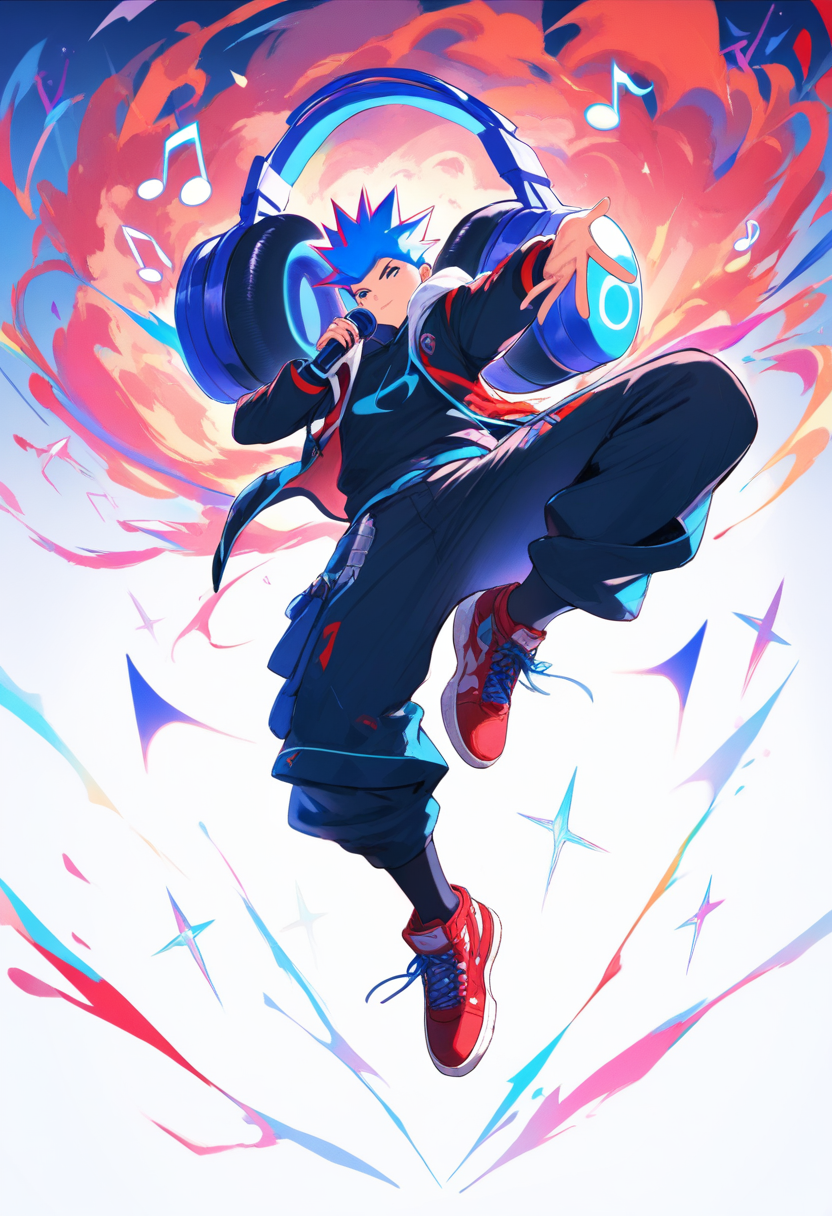
Music Genre as Personality
In FNF, your character's music genre IS their personality. The connection is 1:1. Senpai is a dating sim character who fights with chiptune J-pop. Whitty is an explosive, anxious character whose music escalates from rock to breakcore as he loses composure. Garcello is a laid-back smoker whose tracks are smooth jazz and lo-fi.
Genre-to-personality mapping for OC creation:
| Music Genre | Character Personality | Visual Cues | Tempo Feel |
|---|---|---|---|
| Chiptune / 8-bit | Nostalgic, retro, playful or glitchy | Pixel elements, CRT scan lines, bright neon | Bouncy, precise |
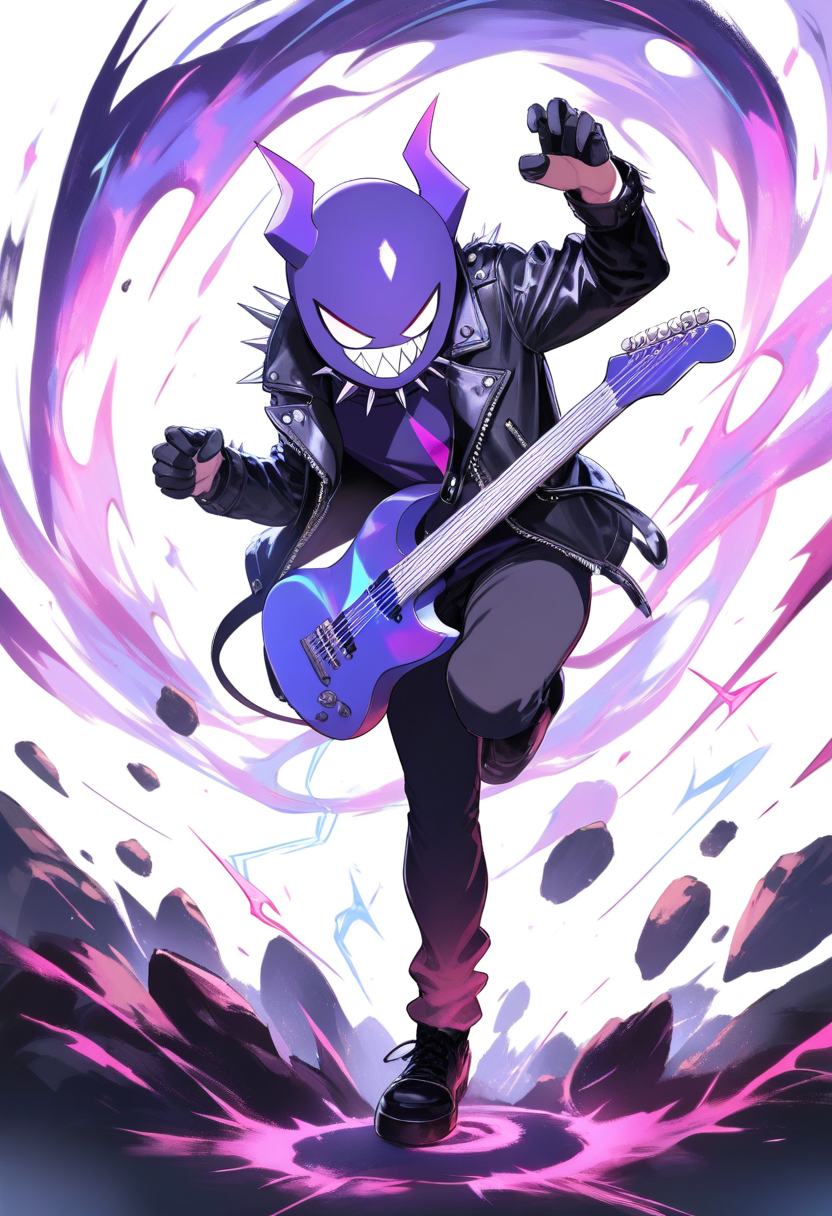
| Heavy metal | Aggressive, confrontational, loud | Spikes, leather, fire motifs, sharp teeth | Fast, relentless |
| Jazz / lo-fi | Chill, mysterious, confident | Smooth clothing, half-lidded eyes, smoke/mist | Slow groove, syncopated |
| EDM / dubstep | Energetic, chaotic, overwhelming | Glow effects, geometric shapes, speakers | Builds and drops |
| Horror ambient | Creepy, unsettling, otherworldly | Distortion, static, body horror elements | Irregular, off-beat |
| Funk / disco | Cocky, flashy, performative | Bell bottoms, sunglasses, gold accessories | Groovy, danceable |
| Breakcore | Unhinged, fractured, dangerous | Glitch effects, broken geometry, wild eyes | Chaotic, accelerating |
| Classical | Refined, arrogant, powerful | Formal wear, conductor motifs, elegant poses | Complex, dynamic |
The golden rule: Your character's music should escalate across songs. FNF weeks typically have three tracks that increase in difficulty. Design your character's emotional arc to match — calm in song 1, pushed in song 2, unleashed in song 3.
The Speaker and Microphone
Every FNF character interacts with music hardware. Boyfriend has his boombox. Most opponents have speakers, instruments, or some music-producing element in their scene.
Design your character's music source:
- Traditional mic + speaker setup — default, clean, works for any genre
- Instrument — guitar, keyboard, turntable — ties them to a specific genre visually
- Body-integrated — speakers built into clothing or body (cyborg/robot characters), mouth IS the speaker
- Supernatural — music emanates from magic, possession, corruption (horror mod characters)
- Environmental — the entire stage is the instrument (industrial, mechanical characters)
Color Palette Rules
FNF's visual clarity depends on color discipline.
Your character needs:
- A dominant color (50-60% of the design) — this is what people remember
- A secondary color (20-30%) — contrasts with the dominant
- An accent color (10-15%) — used for small details, eyes, accessories
- Black outlines — non-negotiable
Palettes that work in FNF:
- High saturation, limited hue range (Boyfriend's blue-and-red)
- Monochromatic with one pop of color (Garcello's grey-green with orange cigarette glow)
- Complementary pairs pushed to maximum saturation (Whitty's orange-and-black)
Palettes that fail:
- Pastels across the board (disappear against stage backgrounds)
- More than 5 distinct hues (reads as messy at sprite scale)
- Dark-on-dark without value contrast (the character becomes a silhouette blob)
The Three-Song Arc
Structure your character's mod week as an emotional escalation:
Song 1 — Introduction. The character is in control. Music is their comfort genre at moderate difficulty. Visuals are clean. This is who they are when everything's fine.
Song 2 — Tension. Something shifts. Maybe Boyfriend is keeping up and the opponent didn't expect it. Maybe something external disrupts the battle. The music gets harder, the character's animations get more intense, the stage might change.
Song 3 — Transformation. The character goes all-out. This is where FNF mods get creative — visual glitches, form changes, impossible note patterns, screen distortion. The music hits its hardest genre variant. Whitty goes ballistic. Tabi literally breaks the game UI. Your character needs a "final form" moment.
Boyfriend/Girlfriend Dynamics
Your OC is fighting Boyfriend — that's the FNF framework. But WHY?
Common motivations that work:
- Territorial ("this is my stage/domain/world and you wandered in")
- Personal ("you remind me of someone" or "I have history with GF's family")
- Ego ("I'm the best musician and I'll prove it")
- Circumstantial ("we're both trapped here and only one leaves")
- Playful ("this looks fun, let's go")
Motivations to avoid:
- "I want to kill Boyfriend" — escalation without buildup feels cheap
- "I'm dating GF" — the love triangle angle is exhausted in the mod scene
- No motivation at all — even a thin reason gives the battle stakes
Prompt Tips for AI Generation
FNF characters need to look like they belong on a Newgrounds flash game stage. Emphasize the art style:
"A punk rock girl with a bright red mohawk, thick black outlines, oversized fingerless gloves gripping an electric guitar, torn fishnet stockings, combat boots, 3-color palette (red, black, white), standing on a concert stage with speakers — Newgrounds flash art style, bold flat colors, exaggerated proportions, rhythm game character"
Key terms: "thick black outlines," "flat colors," "Newgrounds style," "exaggerated proportions." Without these, the AI will default to a more realistic rendering that misses the FNF aesthetic entirely.
Character Sheet Checklist
Before finalizing your FNF OC, verify:
- Recognizable in silhouette? (shapes must be distinct)
- Readable at 200x200 pixels? (sprite test)
- 5 or fewer colors including outline? (palette discipline)
- Music genre matches personality? (1:1 connection)
- Three-song emotional arc planned? (intro-tension-transformation)
- Directional poses work with the body shape? (left/right/up/down must read clearly)
- Motivation for fighting Boyfriend is clear? (stakes matter)
- Stage/background concept exists? (characters don't float in void)
Frequently Asked Questions
Does my OC need to be an opponent? Can they replace Boyfriend? Technically yes (player-side reskins exist), but the FNF community overwhelmingly creates opponents. Opponents get more creative freedom because they control the stage, the music, and the narrative framing.
How important is the stage design? Very. FNF stages are as much a part of the character as the character itself. Whitty fights in a back alley. Senpai is trapped inside a dating sim. Your stage should be your character's home turf.
Can my character have multiple forms? Absolutely — transformation is one of FNF's strongest mod traditions. Just make sure each form is visually distinct enough to be a separate character at sprite scale. A color swap isn't a transformation; a silhouette change is.
My character doesn't sing — they play an instrument. Does that work? Yes. The vocal channel in FNF mods can be any instrument. Guitar, violin, synth, even environmental sounds. The notes still map to the rhythm game arrows.
Related Character Tools
FNAF OC Maker
Create Five Nights at Freddy's original animatronic and character designs.
Undertale OC Maker
Create Undertale original characters with pixel-art style and unique soul traits.
Sonic OC Maker
Create Sonic the Hedgehog original characters with unique abilities and designs.
Roblox OC Maker
Design Roblox-style avatar characters with unique outfits and accessories.
OC Generator
Create original characters for any fandom or original universe with AI.
创建你的FNF OC
设计你的原创说唱者。用AI创建充满节奏与节拍的FNF角色!