Anime-KI-Generator
Anime-KI-Generator
Technical Deep Dive: How Anime AI Generation Actually Works
Most guides tell you what to type into a prompt box. This one tells you what happens after you hit generate — and why that knowledge makes you better at getting results.
You do not need a machine learning degree. But understanding the basic mechanics of anime AI models eliminates the guesswork from your creative process.
Diffusion Models: The Engine Behind Anime AI
Nearly every modern anime AI generator runs on some variant of a diffusion model. Here is the simplified version of what that means.
The model starts with pure random noise — TV static. Over many steps (typically 20-50), it gradually removes noise while being guided by your text prompt. Each step makes the image slightly less random and slightly more like what you described. The final step produces a clean image.
Think of it as sculpting. You start with a rough block. Each diffusion step carves away material that does not match the prompt, until the desired shape emerges.
Why this matters for you: The number of diffusion steps directly affects quality and generation time. More steps = finer detail but slower generation. Most generators let you adjust this (or choose a quality preset). For quick drafts, fewer steps are fine. For final artwork, maximize steps.
Why Anime Models Are Different From Photorealistic Models
A model trained primarily on photographs (like early Stable Diffusion or Midjourney) produces photorealistic output by default. To make anime, you have to fight its instincts. Anime-specific models exist because the visual rules are fundamentally different.
Training data composition: Photorealistic models train on billions of photographs. Anime models train on millions of anime/manga illustrations — sourced from platforms like Danbooru, pixiv, and curated anime art datasets. The training data teaches the model what anime "looks like" at every level: line weight, eye style, shading conventions, color palette, body proportions.
Learned conventions vs learned reality: A photo model learns that noses are 3D forms with complex shadow shapes. An anime model learns that noses are often a single line, a small triangle, or omitted entirely. A photo model learns that hair follows gravity. An anime model learns that hair follows character design — spikes, impossible curls, and floating strands are all valid.
This is why a generic AI art generator given the prompt "anime girl" produces something uncanny — it tries to apply photographic rules to anime aesthetics. A purpose-trained anime model natively understands the visual language.
Key anime-specific models:
- Animagine XL — fine-tuned on high-quality anime art, strong at character design
- NovelAI's models — trained specifically for anime illustration and storytelling art
- Anything v5 — community fine-tune with broad anime style coverage
- Counterfeit — photorealistic anime hybrid style
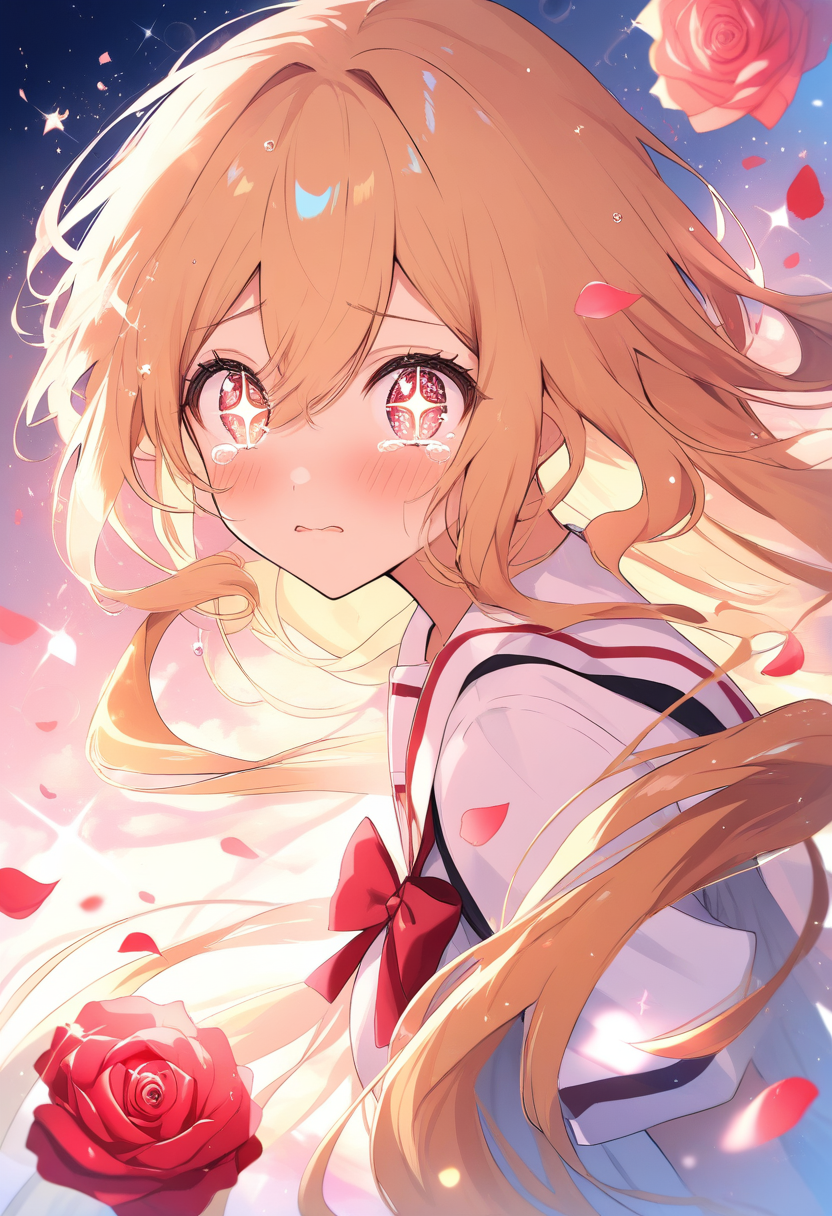
Anatomy of a Prompt (What the Model Actually Sees)
When you type a prompt, it does not reach the image model as English text. It passes through a text encoder (usually CLIP) that converts your words into numerical vectors — a mathematical representation of meaning.
This has practical consequences:
Word order matters, but not how you think. CLIP does not read left-to-right like English. It processes the entire prompt and weights concepts by various factors. However, most anime generators apply custom weighting where earlier tokens receive slightly more emphasis. Putting your most important descriptors first is a reasonable heuristic.
Tags beat sentences. Because anime models are trained on tagged image datasets (Danbooru-style tags), they respond better to tag-format prompts than natural English sentences.
Sentence format: "A girl with long blonde hair wearing a school uniform standing under cherry blossoms at sunset"
Tag format: "1girl, long blonde hair, school uniform, cherry blossoms, sunset, standing, full body, masterpiece, high quality"
The tag format is not prettier English, but it maps more directly to the model's training data labels. Most experienced anime AI users prompt in tags.
Negative prompts are not opposites. A negative prompt does not mean "don't do this." It pushes the diffusion process away from certain visual patterns. "Negative: bad hands" does not make hands perfect — it reduces the probability of common hand-generation failures. Negative prompts are noise-reduction tools, not precision instructions.
Common Artifacts and How to Address Them
Every anime AI model has predictable failure modes. Knowing them saves you frustration.
Extra fingers / malformed hands. The most notorious AI art artifact. Hands are geometrically complex and highly variable in the training data. AI models struggle with the precise count and arrangement of fingers.
Mitigation:
- Add "detailed hands, five fingers" to positive prompt
- Add "extra fingers, malformed hands, bad hands" to negative prompt
- Generate hands at larger resolution or use inpainting to fix them
- Pose hands in simpler positions (fist, open palm, behind back) when hands are not the focus
Asymmetric eyes. One eye larger than the other, or different shapes. More common in profile and three-quarter views.
Mitigation: "symmetrical eyes, balanced face" in positive prompt. Fix with targeted inpainting.
Melted/blurred accessories. Small details like earrings, hair clips, buttons, and belt buckles often fuse together or become unrecognizable blobs.
Mitigation: Describe accessories simply. "A single red hair ribbon" generates better than "an ornate silver butterfly hair clip with crystal inlays." Keep accessories large and simple.
Background bleeding into character. The character's outline dissolves into the background, especially with complex environments.
Mitigation: "sharp outline, clear separation from background" or specify a simple background to avoid the issue entirely.
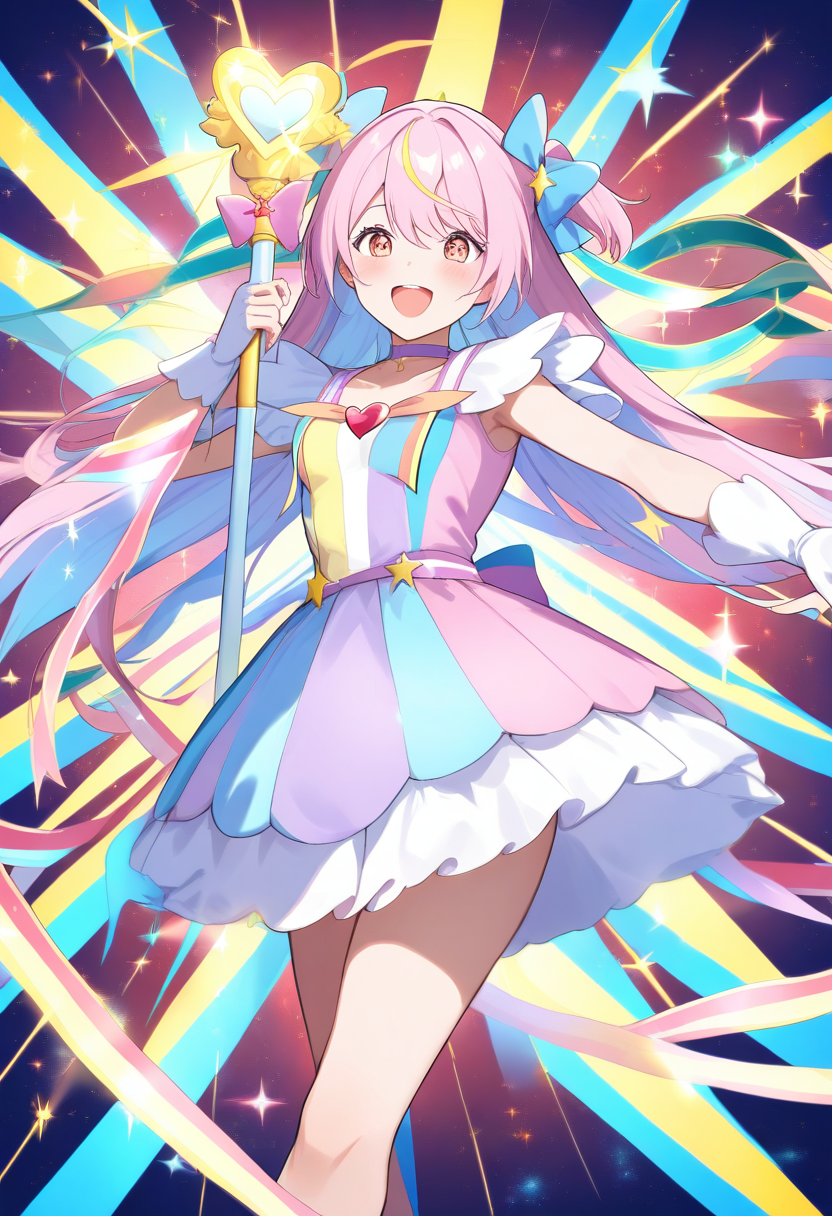
Quality Settings Decoded
Most anime generators expose settings that directly affect output quality. Here is what each one does.
Resolution / Image Size Higher resolution means more pixels for the model to work with, which means more detail. But there is a catch — most models are trained at a specific resolution (commonly 512x512 or 1024x1024). Generating far above the training resolution can cause composition problems (duplicated subjects, weird proportions). Many generators handle this with a two-pass approach: generate at native resolution, then upscale.
CFG Scale (Classifier-Free Guidance) Controls how strictly the model follows your prompt. Low CFG (1-5): creative, loose, may ignore parts of your prompt. Medium CFG (7-12): balanced adherence. High CFG (15+): strict adherence but can produce oversaturated, harsh images. For anime, 7-9 is typically the sweet spot.
Sampling Steps Number of noise-removal iterations. More steps = more refined output. Diminishing returns kick in around 30-40 steps. Going beyond 50 rarely improves quality but doubles generation time.
Sampler Method The mathematical algorithm used for each denoising step. Common options: Euler, Euler A, DPM++ 2M Karras, DDIM. Each produces subtly different aesthetics. Euler A adds slight randomness (good for creative variation). DPM++ 2M Karras is currently considered the best general-purpose sampler for anime. Experiment, but do not overthink this — the differences are subtle.
Seed The random number that initializes the noise pattern. Same seed + same prompt + same settings = same image. Change the seed, get a different image. When you find a result you like, save the seed so you can reproduce it or make incremental adjustments.
Comparison of Anime AI Approaches
| Approach | Strength | Weakness |
|---|---|---|
| Purpose-trained anime model | Native understanding of anime conventions | Limited to anime/manga styles |
| General model + anime LoRA | Flexible base with anime fine-tuning | Style consistency can be inconsistent |
| General model + style prompt | No setup required | Anime output often feels "off" |
| Img2img from sketch | Maximum control over composition | Requires drawing ability for the input |
| Inpainting on generated base | Targeted fixes without full regeneration | Only works for local edits |
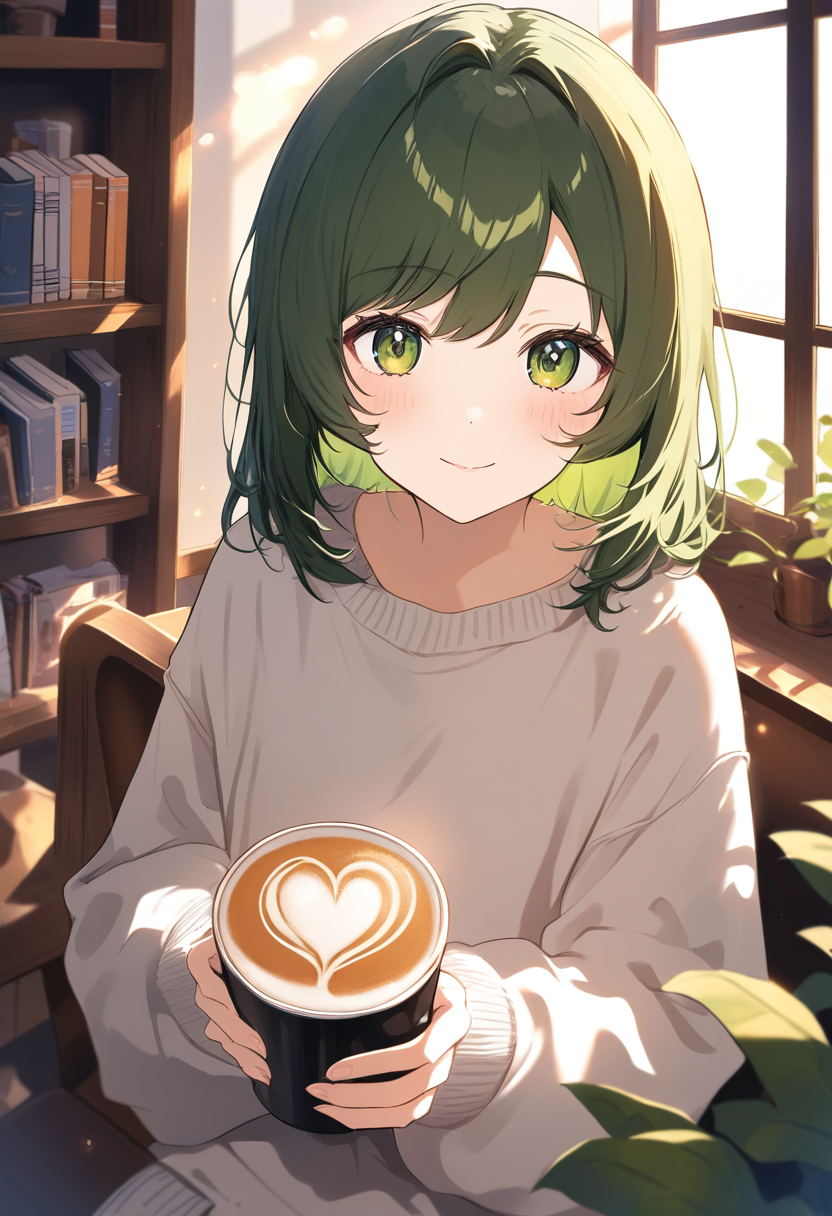
Practical Takeaways
- Use anime-specific models, not general-purpose ones with anime prompts
- Prompt in tag format, not natural English sentences
- Put your most important descriptors early in the prompt
- Use negative prompts to suppress known artifact patterns, not to describe what you want by exclusion
- CFG 7-9, sampling steps 25-35, DPM++ 2M Karras is a reliable starting configuration
- Save seeds when you get good results
- Fix artifacts with inpainting rather than re-rolling the entire image
- Higher resolution is not always better — match the model's native resolution and upscale after
The AI is a tool with specific mechanical properties. Understanding those properties turns unpredictable generation into a controlled creative process.
Related Character Tools
AI Anime Art Generator
Create stunning anime artwork and illustrations with AI-powered generation.
Character Creator
Design original anime characters with unique outfits, hairstyles, and expressions.
AI Illustration Generator
Generate detailed anime and character-focused illustrations from text descriptions.
Anime Character Maker
Design anime-style characters with customizable features and art styles.
Anime Filter
Apply anime and manga art filters to your photos instantly.
Generiere sofort Anime-Kunst
Verwandle deine Ideen mit einer einzigen Eingabe in wunderschöne Anime-Kunstwerke. Probiere den Anime-KI-Generator kostenlos aus und erstelle jetzt atemberaubende Anime-Charaktere und -Szenen.